












Regardless of the market your product is in, one thing is for sure: there is always stiff competition with a similar offering. Interestingly, organizations tend to focus solely on product innovation and underestimate the competitive advantage of investing heavily in the customer experience transformation.
The evidence that customer experience affects an organization’s bottom line is staggering and conclusive. According to PwC, 73% of customers say experience is a key factor in purchasing decisions, behind price and product. Not only that, but according to Forrester, companies that lead in customer experience outperform laggards by nearly 80% in revenue growth.
Traditional customer service models built around static systems, reactive responses, and siloed support can no longer meet the needs of today’s digital-first customers, yet many companies are still stuck in the old school approach to customer experience.
If your team is serious about remaining competitive in the market, transforming your customer service model isn’t optional—it’s a crucial growth lever. In this guide, we’ll explore customer service transformation, what it means, and what practical steps you need to take to provide an ideal customer experience that affects your bottom line.
Key Areas of Customer Support Transformation
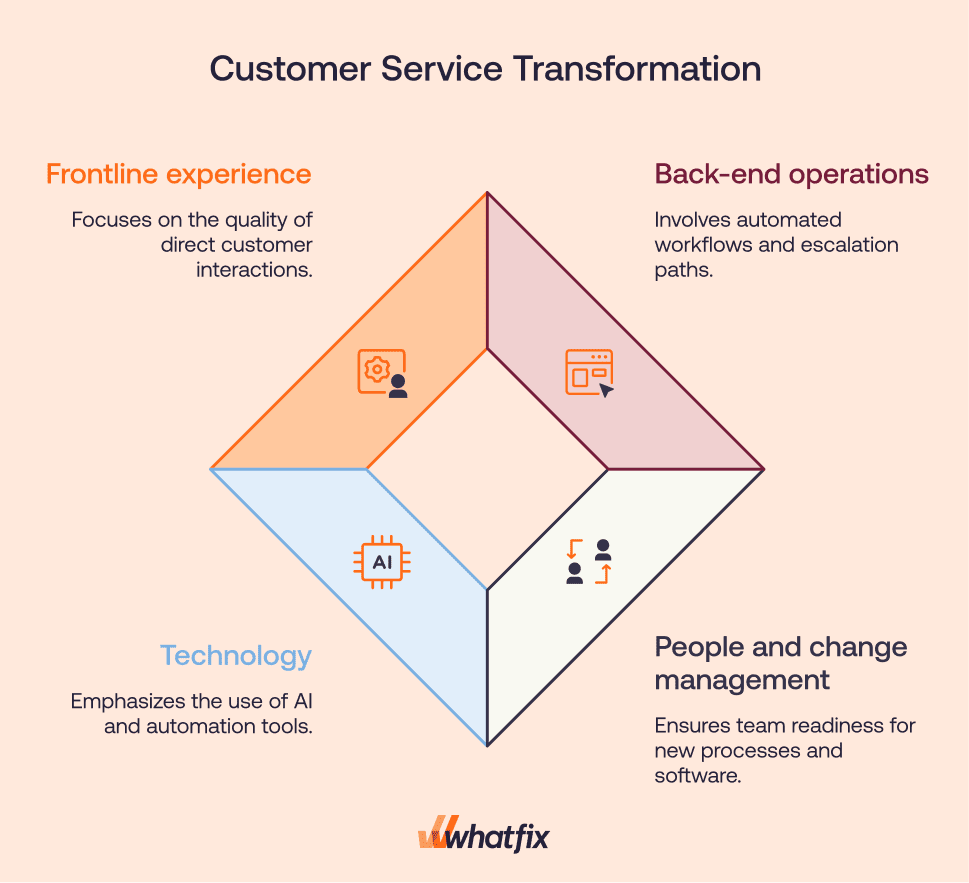
Once you’ve decided to initiate customer support transformation at your organization, it’s important to grasp the four key elements of the transformation process that will inform your strategy going forward. Let’s take a look at each.
Frontline experience
This refers to the quality and effectiveness of actual interactions with customers. When customers interact with your support team or platform elements like AI agents, this is their frontline experience. These interactions can be anywhere, by email, phone, video call, AI agents, or via your knowledge base, for example.
The frontline experience is crucial because when customers refer to their knowledge, this is typically what they have in mind when making purchasing decisions or other choices that affect your organization’s business KPIs.
Back-end operations
Backend operations like AI agent workflows and escalation paths largely define the frontline experience. These automated workflows are effectively your decisions about where to send customers when they need help, and if your choices don’t lead them to the ideal place, they won’t have a positive experience.
In your transformation process, you’ll establish or re-examine your back-end operations to ensure they’re supporting significant customer interactions with your team.
Technology
Another key element of your transformation process will be choosing the right technology to fuel your customer service operations. You should consider AI platforms, omnichannel tools, and platforms that help you automate your service processes.
Though the amount of tooling can feel overwhelming at the outset, you’ll find that as you understand the options better, these platforms offer incredible opportunities to transform your customer support experience.
People and change management
Since your transformation process will include new processes and software, you’ll need to ensure your team is fully equipped to succeed and support your customers despite several concurrent changes.
This part of customer service transformation includes initiatives such as hands-on training for support agents, embedded workflow support, and SOP evolution. Effective change management will be key as you train and motivate your employees to use your new tools and procedures to serve your customers better.
The Opportunity of Customer Service Transformation
When your team decides that the time is right for customer service transformation, you have an immense opportunity to transform how things work internally. These internal shifts increase your team’s efficiency and create a far better customer experience.
When you embark on a customer service transformation journey, you unlock key opportunities across your organization.
Shift from reactive support to proactive and predictive service
With the help of advanced tooling that is relatively simple to use, you can anticipate your customers’ precise needs and serve them the guidance that they need precisely when they need it.
For example, if you know that users tend to drop off at a certain point in a complex workflow, you can offer a tool-tip or in-app message with guidance that will enable users to complete the task without reaching out to support or having to search your knowledge base.
Move from general, one-size-fits-all service to personalized service
During your transformation process, you’ll be able to segment your users with a product analytics tool. For example, with Whatfix Product Analytics, you can use Cohorts to look at user behavior data by each different user type.
With this nuanced data, you can offer guidance and support based on what a specific type of user needs, taking a personalized approach to service. For example, if your product is a SaaS platform for marketers, it could be that marketing leadership has different platform needs and tasks to complete than the marketing managers who also use the platform.
Personalized service cuts the noise and gives users what they need, overall creating a much more elegant user experience.
Leverage AI and automation to reduce time-to-resolution and scale Tier 1 support
One of the primary inefficiencies of an outdated customer service operation is that even the simplest, most common customer queries require a manual response from a customer service agent. This is a waste of time in general, and it also creates an overwhelming feeling among agents, giving them less time to deal with more complex customer issues.
The good news is that when you undergo customer service transformation, one of the main opportunities for your team is to integrate AI and automation tools that will deal with these common and simple queries without an agent ever needing to intervene. This means that your customers get answers faster, and your agents are working on the queries that need their care the most.
Streamline support operations and lower cost-to-serve
Legacy support teams often operate in inefficient silos and have outdated routines, causing both time inefficiency and higher costs to provide basic service. When your team begins to work on redoing your support operation, these time and resource wasters are the first to go.
In your transformation process, you can streamline your service operations, reducing the cost to serve and increasing your bottom-line revenue.
Enable agents with real-time knowledge, workflows, and automation
The new or optimized tooling inherent in customer service transformation further enables your agents to best serve your customers by offering automated and intuitive workflows, along with the ability to get real-time information when needed.
In practice, the specific approach depends on your organization, but it could involve automated responses to simple customer questions and alerts when a customer problem requires their involvement. This saves the time and attention required by agents, who still have to comb the entire inbox and make decisions about when to use a canned response versus when to give 1:1 service.
Connect customer insights to product, marketing, and revenue teams
Since customer support is on the frontlines with your customers, it’s essentially a treasure trove of user insights. Support teams know firsthand what your users struggle with, what they value, and what their unsolved challenges are regarding your product. For this reason, a big part of customer service transformation is the development of processes that pass this information on to relevant teams.
For example, your team may decide to implement a support tool that automatically generates bug and pain point reports on a weekly or monthly basis. You can automate these reports and send them to the right product stakeholders to ensure critical issues are dealt with quickly.
Offer true omnichannel service with touchpoints including chat, in-app, SMS, and social
Today’s digital reality demands that customer service is available wherever and whenever your customers want it to be. Over time, this went from ‘nice to have’ to a hardline customer expectation. During your transformation process, you can offer customer service on an expanded range of channels.
For example, if you only offer email support and an in-app help center, you may consider launching a chatbot and social media support alongside your flagship service channels. Expanding the range of support channels increases the likelihood that your customers get the help they need in a way that aligns with their needs and expectations.
Overall, customer service transformation is not about reducing support headcount—it’s about increasing agility, service quality, and customer lifetime value. The specific opportunities outlined in this section are your roadmap for getting there.
The Vast Impact Modern Customer Service Has Across Key Business KPIs
This section’ll explore KPIs that customer service transformation will likely influence. We’ll look at how each metric impacts your core business metrics directly.
When your team begins its customer service transformation process, align on some key success metrics from this section. Set specific goals for how each chosen KPI should improve as a result of your efforts, and track your progress as you move forward with your strategy implementation.
- Customer Satisfaction (CSAT) and Net Promoter Score (NPS): Improved customer service directly boosts CSAT and NPS, indicating happier customers. These metrics correlate with increased retention and revenue—making them key indicators, not vanity stats.
- Time to Resolution (TTR) and First Contact Resolution (FCR): Omnichannel support and self-service tools reduce time spent on simple issues, freeing agents to resolve complex ones faster. Better TTR and FCR improve customer satisfaction and retention while signaling greater team efficiency.
- Support Cost Per Ticket: Automation and streamlined workflows reduce the time and resources needed to resolve tickets. Lower support costs positively impact margins and free up budget for strategic investments.
- Revenue Expansion Opportunities via better retention and upsell support: Efficient support enables quick issue resolution and builds long-term customer loyalty, increasing LTV. It also unlocks upsell opportunities through proactive agent suggestions or sales alerts triggered by customer signals.
- Employee Experience and Productivity (EX = better CX): A smoother support operation reduces burnout and improves agent satisfaction. Happy agents deliver better service, lowering attrition and creating stronger customer relationships.
- Digital Maturity Index (DMI) / Tech ROI metrics for CIO/CTO stakeholders: Service transformation improves tech adoption, automation, and reporting, driving up your DMI. This proves ROI on digital investments and aligns service teams with broader business and IT goals.
Examples of Customer Service Transformation
Now, let’s take a look at some examples of these service upgrades in action with a few real examples.
Omnichannel experiences
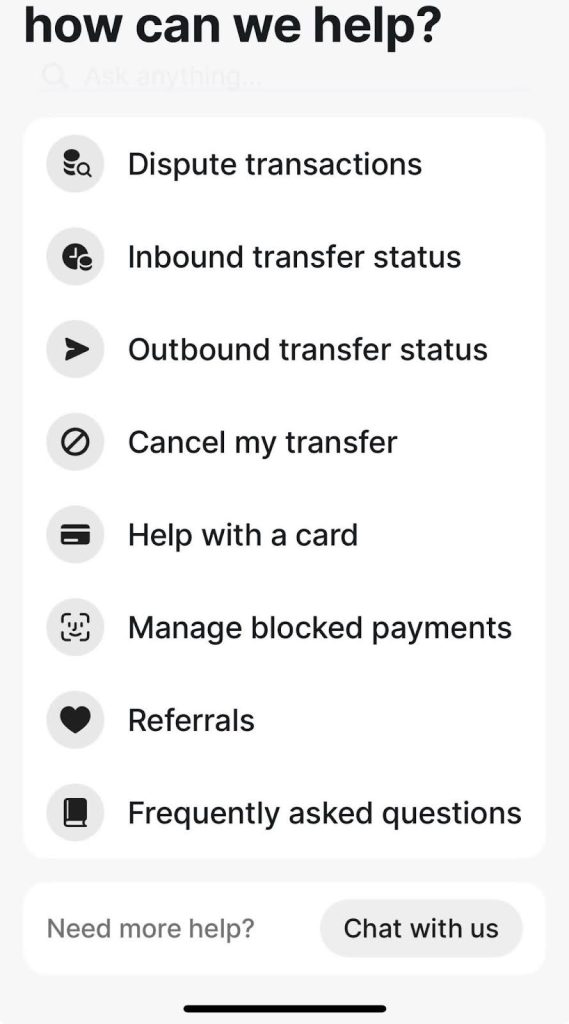
It’s difficult to know exactly how a customer will want to engage and get help in a given moment, and that could change depending on what task they’re trying to accomplish. Offering users different options for solving a problem is a great way to make sure that your customers get the help they need quickly and easily.
Revolut, an online banking app, is a great example. In the help section of the app, they show you three options right away – self-serve help based on what task you’d like to accomplish, browse FAQs, or join a live chat with a customer service agent.
Personalized experiences
Often, the help that customers need is specific to their role. If you crowd your help resources or give in-app messages that aren’t relevant to a specific user, you’re not providing an ideal customer experience.
One great example of this is that on Monday.com, a project management tool, when you’re the admin of a board, the Help page populates this video right at the top. Since they know that page admins have unique responsibilities and feature needs, they give a quick and easy resource before this user type even asks.

Self-service help
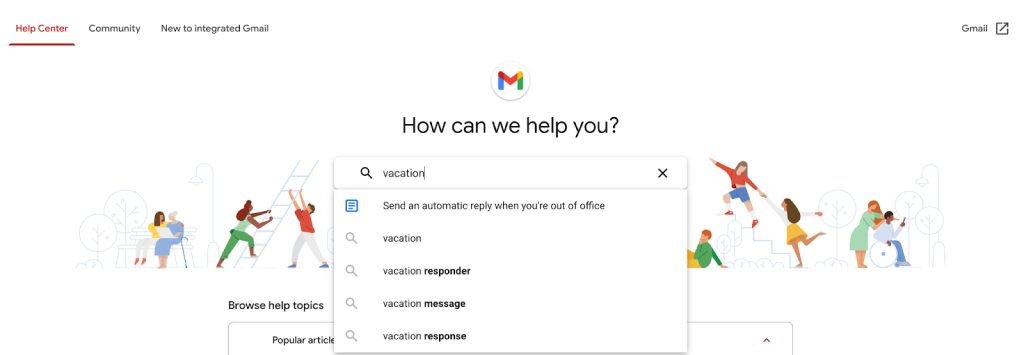
Any customer service transformation will likely involve creating or revamping a comprehensive, searchable knowledge base. Self-serve help is the cornerstone of great customer service because it allows users to find the precise information they need in the moment they need it most.
For example, Gmail offers a self-help knowledge base that shows articles not only based on keywords, but also based on general related themes. In the screenshot below, you can see that when you search for ‘vacation,’ it knows to show an article about automatic replies. This is proactive and intelligent, resulting in a seamless self-serve experience for Gmail users.
AI chatbots
As AI gets more and more accurate, the use of AI chatbots is transforming the customer service industry. What was once super frustrating is now a cornerstone of great support. AI chatbots decrease the need for human intervention and can answer customer queries 24/7, giving users help without any delay.
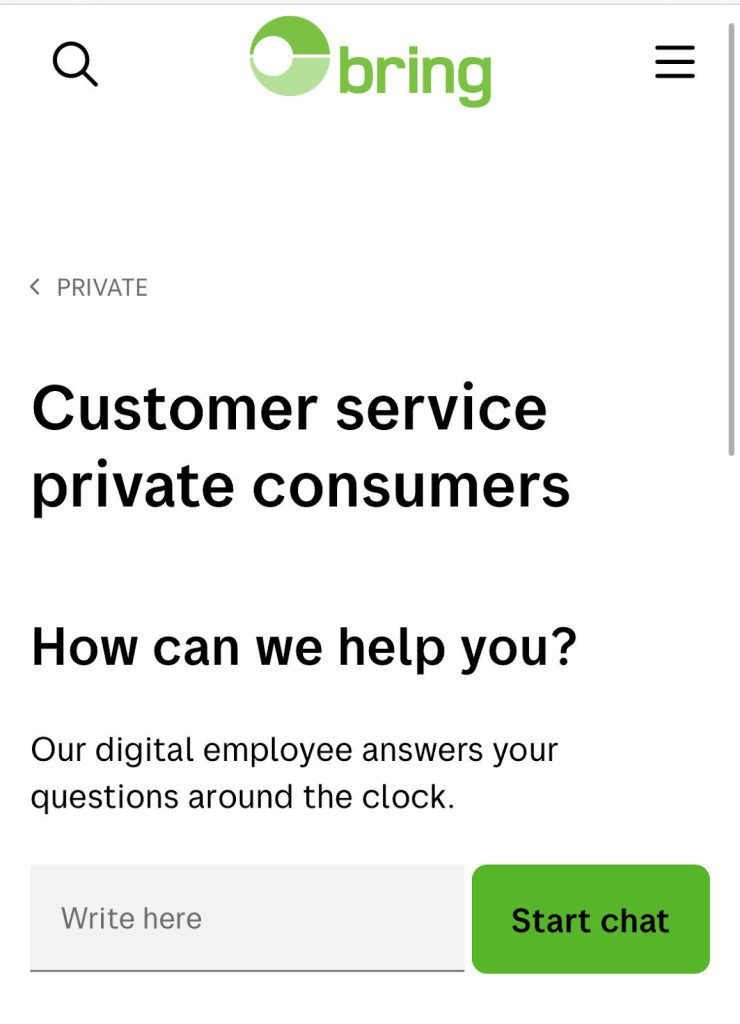
Bring, a popular shipping service, offers an AI chatbot that they refer to as their ‘digital employee,’ giving customers confidence that the chatbot can likely answer their questions, but also being transparent about the fact that it’s AI-powered.
Key Challenges Holding Organizations Back from Customer Service Transformation ROI
Customer service transformation is a large undertaking with inherent operational, cultural, and technical challenges. In this section, we’ll detail some of these potential difficulties so that your team can mitigate them as you plan your strategy.
Disjointed agent experience
Sometimes, teams fail to create a detailed plan for their transformation process, resulting in a haphazard experience for their service agents involving multiple tabs open at once, siloed tools, and no unified knowledge.
Your strategic plan should go into detail, including how each agent should experience the integration of new tools and new processes.
Underutilized support platforms
Though new tools can completely change the face of your support operation for the better, they won’t provide value if your team doesn’t adopt them. Sometimes, platforms like CLMs, CRMs, and help desks are implemented and then underutilized, which is a waste of both internal resources and transformation potential.
Poor change enablement
Transformation typically involves new tooling and other significant workflow changes, and some teams fail to prepare their agents for the change. This poor change enablement leads to employee frustration, longer workflows, mistakes, and slower response time for customers.
Lack of real-time guidance
Even with ample training, there are sure to be support tickets that require some sleuthing in order for your agents to be able to handle them properly. If the information isn’t easily accessible, they will need to escalate the ticket, which causes a longer wait for customers and more time from support or product leadership.
Rigid legacy SOPs
If your support team has been around for a while, you likely have several manual processes within your support workflows that don’t scale across channels or segments. For example, perhaps your outdated support inbox doesn’t handle social media channels, which is a key part of your new omnichannel support strategy.
Internal misalignment
Your transformation process will involve leadership, your tech team, and your support agents. If you’re not careful and thorough in your collaboration during the planning process, you can end up in a situation where you are misaligned. For example, it’s common for tech teams to invest time and energy into implementing something that doesn’t align with support agent needs, which is a frustrating waste of time.
You simply can’t transform service outcomes without transforming how agents experience and adopt your technology. Be sure to use the tips in this section to avoid common barriers to successful customer service transformation.
How to Maximize Service Technology ROI With Whatfix
The backbone of every successful service transformation is the right tooling. Hundreds of organizations like yours trust Whatfix to drive ROI from modern customer service platforms such as Zendesk, Salesforce Service Cloud, and more.
In this section, we’ll show how partnering with Whatfix unlocks the true potential of customer service transformation. Whatfix enables you to:
- Deliver in-app guidance to agents inside ticketing systems, CRMs, and help desks. This prevents long wait times for customers and frustrating fact-finding missions for your service reps.
- Empower agents with Flows, Smart Tips, and Self Help during live support interactions. This guidance is available in the flow of work so that your agents feel competent and can seamlessly help customers when they’re live.
- Streamline SOP adherence with just-in-time support and decision tree logic. With in-app messaging and Flows, you can guide your agents for the right actions to take directly in the flow of work. For example, you can include helpful tips and important things to remember for agents who are providing support on a particular workflow. This helps avoid mistakes and noncompliance with SOPs.
- Accelerate onboarding and training for new tools and workflows. With the Whatfix DAP, you can create custom onboarding experiences and training modules for new tools and workflows. These can be iterated on based on agent feedback without the help of a developer, enabling you to continuously improve the quality of your internal education. Additionally, with Whatfix Mirror, you can provide employees with a risk-free sandbox environment where they can test out new tools and processes without interfacing with real customers.
- Help Support Ops and enablement teams roll out process changes quickly without engineering cycles. Every Whatfix tool is no-code, meaning that you can iterate on training, guidance, analytics, and anything else without the help of your tech team. This makes the iterative transformation process much, much faster and requires fewer internal resources to execute.
- Provide usage analytics to identify friction points, drop-offs, and content gaps. With Whatfix Product Analytics, you can see where your agents drop out of key workflows, spend too much time, or search and don’t find the content that they need. This data will allow you to iterate on the agent experience so that they can better adopt new tools and workflows, better serving your end users.
What happens when you use Whatfix to power up your customer service transformation? The impact of Whatfix is robust and measurable. Here are some key outcomes:
- Shorter onboarding time: With dynamic onboarding and guidance in the flow of work, your agents will learn your new processes and adopt new tooling faster. This means that your agents are fully functional in your new and improved service operation sooner, ready to positively influence the customer experience.
- More productive agents: With Whatfix enabling your agents, the team loses far less time trying to learn what’s new, getting the help they need within your key support platforms. This increased efficiency makes for a better agent experience and happy customers who get the help they need faster.
- Reduced training costs: Since Whatfix enables you to create on-platform training with hands-on learning, you can reduce the number of team members required to teach new processes and new tooling. Not only that but since you’ll have powerful analytics about how your agents fare in training, you’ll be able to iterate on the fly and improve as you go.
- Increased CSAT through consistency: With automated guidance in the flow of agent work, your agents will provide a uniform experience for your customers. They’ll come to expect consistent care, increasing their satisfaction, loyalty, and retention. Whatfix makes your agents more efficient and capable, which in turn drives customer satisfaction.
- Scalable support operations with fewer escalations: When support agents have to escalate, customers wait, and internal resources are wasted. With Whatfix, your agents get the guidance and information they need, even after having been well-trained on-platform, so that they can solve problems autonomously and escalate less frequently.
Technology alone doesn’t transform customer service—adoption does. Whatfix turns your service stack into a guided, efficient, and outcome-driven experience for your agents. When you partner with Whatfix, the overall outcome is a happy and productive support team that inspires customer loyalty.
Customer Service Transformation Clicks Better With Whatfix
Hopefully, you’re convinced that customer transformation is essential for organizational growth, competitive advantage, and customer loyalty. Without investing in a customer service overhaul when it’s needed, you simply can’t provide an optimal customer experience that supports your business goals.
True transformation hinges on enabling agents with the right tools, processes, and real-time support, directly connecting adoption to business outcomes. Whatfix is the ideal strategic partner that simplifies this complex journey, ensuring that technology investments translate into measurable impact and long-term success.
Are you ready to transform your customer service operations with Whatfix? Schedule a demo today!