












Customer experience (CX) is the sum of every customer interaction with a company—from their first website visit to post-purchase support. Moreover, experts define CX as:
- Gartner defines CX as the way customers perceive their interactions with an organization.
- Forrester states customer experience is these interactions’ effectiveness, ease, and emotional impact.
Research shows that 73% of buyers prioritize CX when making purchasing decisions, proving that how a company engages with its customers can be as important as its products or services.
Yet, delivering exceptional customer experiences requires more than just good intentions. It demands a structured approach to CX transformation, encompassing everything from understanding your customers’ needs to reimagining processes and implementing new technologies. In this guide, we’ll explore the essential frameworks for CX transformation, the different types of CX initiatives, and industry-leading examples that demonstrate what success looks like.
Whether you aim to measure the ROI of CX improvements or learn how leading organizations revolutionize their customer strategies, this guide will equip you with the insights and tools needed to turn CX transformation into your competitive edge.
What Is Customer Experience (CX) Transformation?
Customer experience transformation is streamlining all customer touchpoints, ensuring excellent customer interaction experiences throughout the journey. CX transformation includes your customer support team but extends to all teams influencing customer experience, including marketing, product, sales, social, UX, etc.
Data shows that organizations that dedicate a focus to improving CX see an 80% revenue increase compared to those that don’t, which is why 80% of CX leaders plan to increase budgets over the next year. Examples of CX transformation include omnichannel customer service, self-service experiences, genAI chatbots, and personalization.
CX as a strategic growth driver
A strong CX strategy directly impacts business success by increasing customer retention, brand advocacy, and revenue. Customers are willing to pay a premium for better experiences, while negative interactions can quickly drive them to competitors.
For example, according to a Zendesk report, 74% of consumers will forgive a company for their mistake after receiving excellent customer service. On the other hand, poor CX costs U.S. businesses $136.8 billion annually.
CX covers the entire customer journey
CX is not confined to customer service—it extends across the entire customer journey, including:
- Marketing: Personalized messaging and engaging content to attract the right audience.
- Sales: Frictionless buying experiences and relationship building.
- Product experience: Seamless usability and personalized, intuitive user onboarding.
- Customer support: Fast service request management and proactive problem management.
- Loyalty and Retention: Rewards, personalized engagement, and continuous value.
Customer experience isn’t just a business function—it’s the foundation of loyalty, growth, and competitive advantage.
Why Is CX Transformation Important?
McKinsey that companies implementing enterprise-wide CX initiatives experience:
- 15-20% increase in sales conversion rates.
- 0-50% decline in service costs.
- 10-20% improvements in customer satisfaction.
But exceptional CX is not just about improving customer support or designing intuitive interfaces—it’s about embedding a customer-first focus into every part of the organization, ensuring seamless, personalized, and friction-free experiences across every touchpoint.
Why is engaging in this transformation process important for your organization? While an omnichannel, excellent CX provides trickle-down effects across the organization, here are a few of the most obvious benefits:
- Increases customer loyalty and retention: A great customer experience makes it much more likely that your customers will stick around. As you begin to implement a CX transformation process, you’ll likely see the fruits of your efforts quickly in metrics like user retention and customer lifetime value (LTV).
- Drives revenue growth through improved satisfaction: Engaging in a transformation process will help drive your key revenue metrics and support the business overall. Research has shown that companies that focus on CX experience an 80% increase in revenue compared to those that don’t.
- Differentiates brands in competitive markets: If your platform is in a saturated market with other platforms with similar value propositions, an excellent customer experience can make all the difference. If customers feel that your team is better at support and communication, they’re more likely to choose your platform just to have a great customer experience. 49% of customers who have switched to a competitor in the last year said that the main reason was poor CX.
- Enhances personalized and seamless customer journeys: Throughout the CX transformation process, your team will analyze the different types of customers who use your platform and customize their experience based on their needs. Ultimately, this process means that each customer has a more tailored experience, which results in both delight for the customer and upticks in KPIs like onboarding completion rate and user retention. For example, 88% of online shoppers say personalized shopping experiences positively influence their decision to become repeat buyers.
- Aligns organizational strategy with evolving customer expectations: No market is static, and this is particularly true because customers’ needs and expectations change over time. A CX transformation process will help you adjust your current customer touchpoints to reflect the current market conditions. This will make your customers happier and help increase loyalty to your platform.
Pillars of a CX Transformation Framework
While there are many different types of CX transformation, they all include similar elements that make up the foundation for your CX transformation framework. The core elements of a CX transformation framework include:
- Vision & Strategy: A successful transformation process relies on your team’s ability to align every decision and goal with your customers’ needs and expectations. Every macro or micro decision should involve revisiting what you know about your customers and aligning the outcome precisely. A customer-centric mindset dramatically increases the chances of a positive customer experience.
- Employees & Talent: Regardless of who initiates your CX transformation process, your entire team has to be on board for the process to truly influence the customer experience. Every team with customer touchpoints must work collaboratively and in tandem, rather than each team operating individually. This requires a unified, “one”-CX vision across your organization’s departments.
- Operations: Whether you’re talking about user onboarding, customer support, product roadmap vision, marketing communications – all must reinforce your team’s shared CX goals and give your customers consistent outcomes. As you move through your CX transformation process, you’ll need to ensure that every process suits your goals and your customers’ needs in the same way, every time.
- Technology: It’s almost impossible to provide a great experience to customers without a scalable tech infrastructure that supports real-time data sharing and a unified customer view.
- Measurement & Continuous Optimization: Your CX strategy must work towards shared business outcomes across departments that can be tracked. This provides north-star KPIs to track, benchmark, analyze, and improve on.
Types of Customer Experience Transformation
CX transformation can be implemented in a variety of ways. In this section, we’ll go through the different types of customer experience transformation and what they’re best suited for.
1. Digital CX transformation
A digital-led CX transformation involves leveraging new technologies to provide better online, digital customer interactions.
Examples include:
- Omnichannel customer communication and support experiences through website chatbots, mobile apps, email, and social media.
- Focusing on website improvements to create more personalized experiences, fix navigational issues, and improve UX.
- AI-driven recommendations for more tailored buying experiences.
2. Data-driven CX transformation
Data-driven CX transformation focuses on capturing key customer insights through product analytics, user event tracking, and feedback.
Examples include:
- Investing in customer data platforms and analytics teams to consolidate data into a single dashboard to analyze data sets and extract insights to influence decisions.
- Using predictive models to anticipate customer behaviors and decisions, as well as personalize experiences.
3. Cultural CX transformation
Cultural CX transformation hones in on fostering a customer-centric culture from leadership down to the customer facing employees at your organization. This includes thing like:
- Providing better employee training across all teams that focuses on customer needs.
- Organizational-wide KPIs and OKRs that align to CX metrics.
- Fostering a customer feedback loop culture.
4. Product-led CX transformation
Product-led CX transformation uses customer insights from analytics and feedback to improve product offerings. This includes things like:
- Taking a customer-led approach to new features and product development using customer feedback.
- Analyzing user behavior to identify areas of user friction and product improvement.
- Enabling new users with product-led onboarding experiences.
5. Service-led CX transformation
Service-led CX focuses on transforming the customer experience post-buying, specifically on improving support-related channels and issues. This includes things like:
- Providing in-app support experiences like in-app guidance and help centers.
- Customer self-service experiences like FAQs, a knowledge base, and online support communities.
- Proactive support models to identify reoccurring issues and solve the root problems.
6. Operational CX transformation
Operational CX transformation focuses on the behind-the-scenes aspects that directly impact the quality of customer experiences. This includes:
- Providing hands-on training to support agents to better prepare themselves for real-life scenarios and better resolve customer issues..
- Streamlining order fulfillment processes to improve delivery times.
- Automating call center or support desk workflows to reduce time-to-resolution.
Examples of CX Transformation by Industry
Customer experience looks different in different industries, and so do their CX transformation projects. In this section, we’ll examine six industries (retail, banking, healthcare, insurance, government, and B2B SaaS) and examine an example of transformation and its impact for each sector.
1. Retail industry
In the retail industry, CX transformation is pivotal in meeting evolving consumer expectations both for online e-commerce experiences as well as in-person brick-and-mortar experiences. A study by PwC found that 73% of online consumers consider CX an important factor in their purchasing decisions.
Key CX transformation examples for retail companies include:
- Personalized Shopping Experiences: Utilizing customer data to offer tailored product recommendations.
- AI Shopping Assistance: Implementing chatbots and virtual assistants to guide shoppers.
- Virtual Showrooms and Dressing Rooms: Providing immersive online shopping experiences.
- Auto-Shipping and Repeat Orders: Offering subscription services for frequently purchased items.
- Self-Checkout Systems: Enhancing in-store efficiency and reducing wait times.
- Loyalty Mobile Apps: Rewarding customers and encouraging repeat business.
- Streamlined Store Layouts: Designing intuitive spaces for easy navigation.
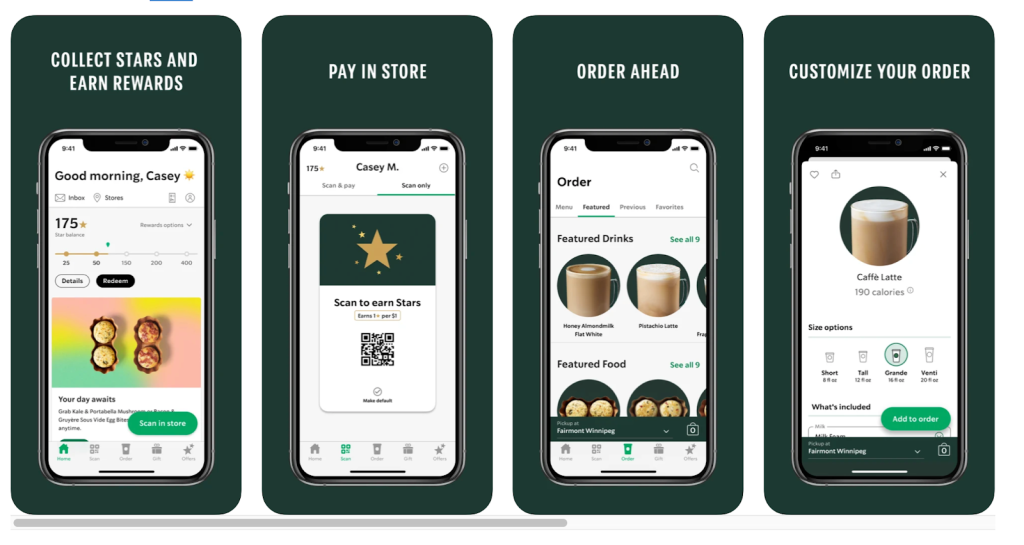
Starbucks revolutionized its customer experience with its Mobile Order & Pay feature in its mobile app, allowing customers to order via mobile devices and skip the lines. This innovation addressed a major pain point—long wait times—and improved customer satisfaction by simplifying the ordering process.
2. Banking & financial services
In the banking sector, CX transformation focuses on building trust and providing seamless digital interactions.
Key banking and financial service CX transformation projects include:
- Mobile Banking Apps: Offering comprehensive services accessible anywhere.
- Personalized Financial Advice: Utilizing data analytics to provide tailored recommendations.
- AI-Powered Chatbots: Assisting customers with inquiries and transactions.
- Enhanced Security Measures: Implementing biometric authentication for secure access.
- Proactive Fraud Alerts: Notifying customers promptly about suspicious activities.
- Seamless Onboarding Processes: Simplifying account setup with digital tools.
- Omnichannel Support: Ensuring consistent service across all platforms.
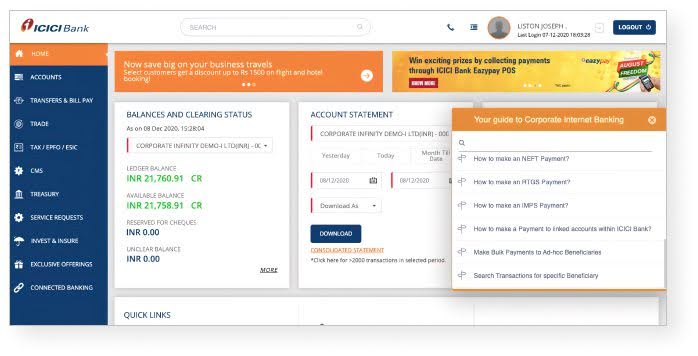
ICICI Bank, one of India’s leading private sector banks, partnered with Whatfix to revolutionize its digital banking experience. Faced with the challenge of engaging and educating a diverse customer base on its ever-expanding suite of digital products, ICICI Bank leveraged Whatfix’s in-app guidance to deliver contextual, personalized walkthroughs directly within its banking platforms.
This approach simplified onboarding, enabled customers to complete complex banking tasks independently, and reduced reliance on customer support. By integrating Whatfix, ICICI Bank enhanced digital adoption, deepened customer engagement, and elevated satisfaction, driving greater loyalty and long-term success.
3. Healthcare
In healthcare, CX transformation enhances patient engagement and care quality. Different than other consumer-centric sectors, healthcare must balance its CX transformation projects with more empathy and must overcome compliance-related challenges for patient data security.
Examples of CX transformation projects in healthcare include:
- Telemedicine Services: Providing virtual consultations for convenience.
- Personalized Treatment Plans: Using patient data to tailor care approaches.
- Patient Portals: Allowing access to medical records and test results online.
- Automated Appointment Reminders: Reducing no-shows and improving scheduling.
- AI Diagnostics: Assisting in early detection and treatment planning.
- Wearable Health Devices: Monitoring patient health in real-time.
- Enhanced Facility Navigation: Implementing digital wayfinding tools within hospitals.
Amgen applied AI and machine learning to high-quality data about providers, products, and payers, enabling them to reach more patients with potentially life-saving therapies. This patient-centric approach to analytics helps notify care providers and present preventive treatment to patients before health incidents occur.
4. Insurance
The insurance industry is transforming CX to build customer trust and streamline services. According to a report by Grand View Research, the global customer experience management market is projected to grow at a compound annual growth rate (CAGR) of 15.8% from 2024 through 2030, indicating a significant focus on CX improvements in sectors like insurance.
Key insurance CX transformation initiatives include:
- Digital Claim Processing: Accelerating settlements through online platforms.
- Mobile Apps & Digital Insurance Cards: Popular insurance companies now offer moble apps for policyholders to view claims, store their insurance cards, view policy changes, get support, and more
- Usage-Based Insurance Models: Offering personalized premiums based on behavior.
- AI Risk Assessment: Enhancing underwriting accuracy with predictive analytics.
- Chatbot Support: Providing instant assistance for policy inquiries.
- Mobile Policy Management: Allowing customers to manage policies via apps.
- Proactive Customer Engagement: Reaching out with relevant information and updates.
- Telematics Integration: Using data from devices to inform policy decisions.
Lemonade Insurance utilizes AI and chatbots to streamline the insurance process, providing quick policy approvals and claim settlements. This approach has led to high customer satisfaction and rapid growth in the market.
5. Government
Government agencies are embracing CX transformation to improve public services and engagement. Often known for its poor customer service, modern digital tools are empowering federal agencies and local governments to provide better services to citizens.
Examples of CX transformation in the public sector include:
- E-Government Portals: Providing citizens with a centralized platform for accessing services online.
- Digital Identity Verification: Simplifying the authentication process for secure access to government services.
- AI-Powered Virtual Assistants: Assisting citizens with inquiries and guiding them through processes.
- Mobile Applications: Offering on-the-go access to public services and information.
- Automated Document Processing: Streamlining workflows like license renewals and permits.
- Proactive Communication: Sending timely updates and reminders for deadlines or policy changes.
- Citizen Feedback Systems: Gathering insights to improve service delivery and satisfaction.
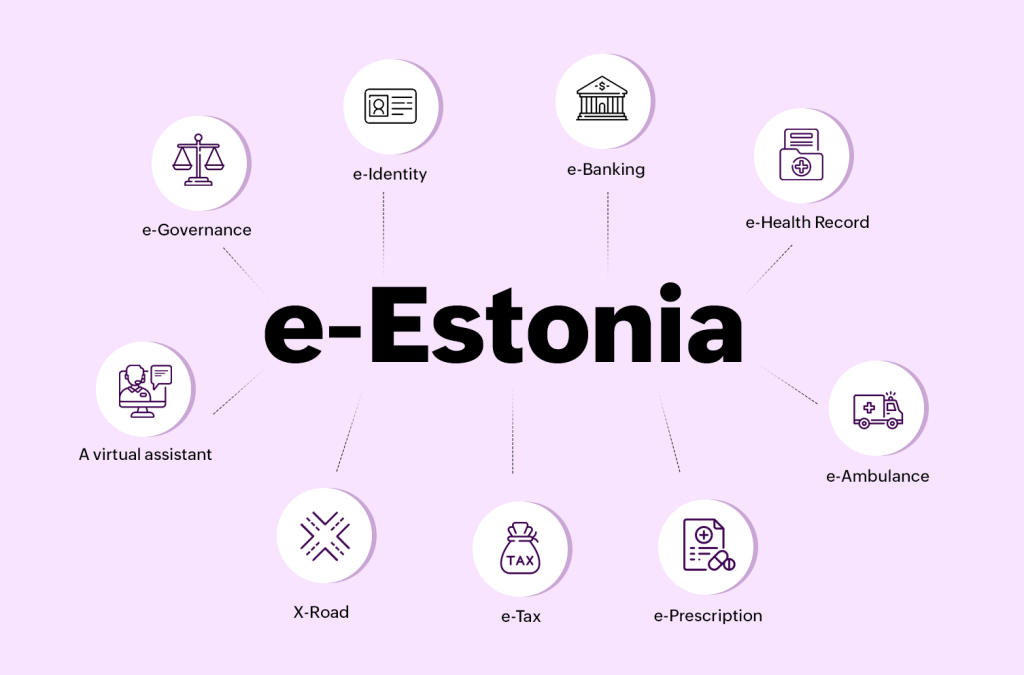
Estonia is often regarded as a global leader in digital government. Through its “e-Estonia” initiative, the country has implemented an advanced e-government system that allows citizens to access nearly all public services online, including voting, healthcare, and tax filing. This transformation has significantly reduced bureaucratic inefficiencies and improved citizen satisfaction.
6. B2B SaaS
In the B2B SaaS industry, CX transformation is key to improving client retention, reducing churn, and driving customer success. According to McKinsey, companies focusing on improving CX can see a 10-15% revenue increase while reducing costs by 15-20%. Often a leader in CX, here are a few examples of how B2B SaaS companies are improving their CX:
Key CX transformation strategies for B2B SaaS companies:
- Personalized Onboarding: Creating tailored, product-led onboarding flows for new customers that help them realize value quickly.
- In-App Guidance: Providing real-time support and tutorials within the software to help accelerate adoption, drive advanced feature usage, and provide self-help support.
- Proactive Customer Success Teams: Monitoring customer usage and reaching out to prevent churn.
- Self-Service Portals: Enabling customers to access knowledge bases and resolve issues independently.
- Usage Analytics Dashboards: Giving customers visibility into their own performance metrics.
- AI-Driven Insights: Offering data-driven recommendations to optimize software utilization.
- Integrations with Other Tools: Enhancing workflows by connecting with third-party platforms.
Global leader in cybersecurity Sophos partnered with Whatfix to enhance customer technical onboarding and admin support for its Sophos Firewall solution. Customers often faced challenges navigating the firewall’s advanced features, leading to slower adoption and underutilization. Sophos used Whatfix DAP to create in-app guidance to address this, providing users with contextual, step-by-step walkthroughs directly within the interface. It also integrated its knowledge and help repriorities into its Firewall app via Self Help to enable admins with in-app support.
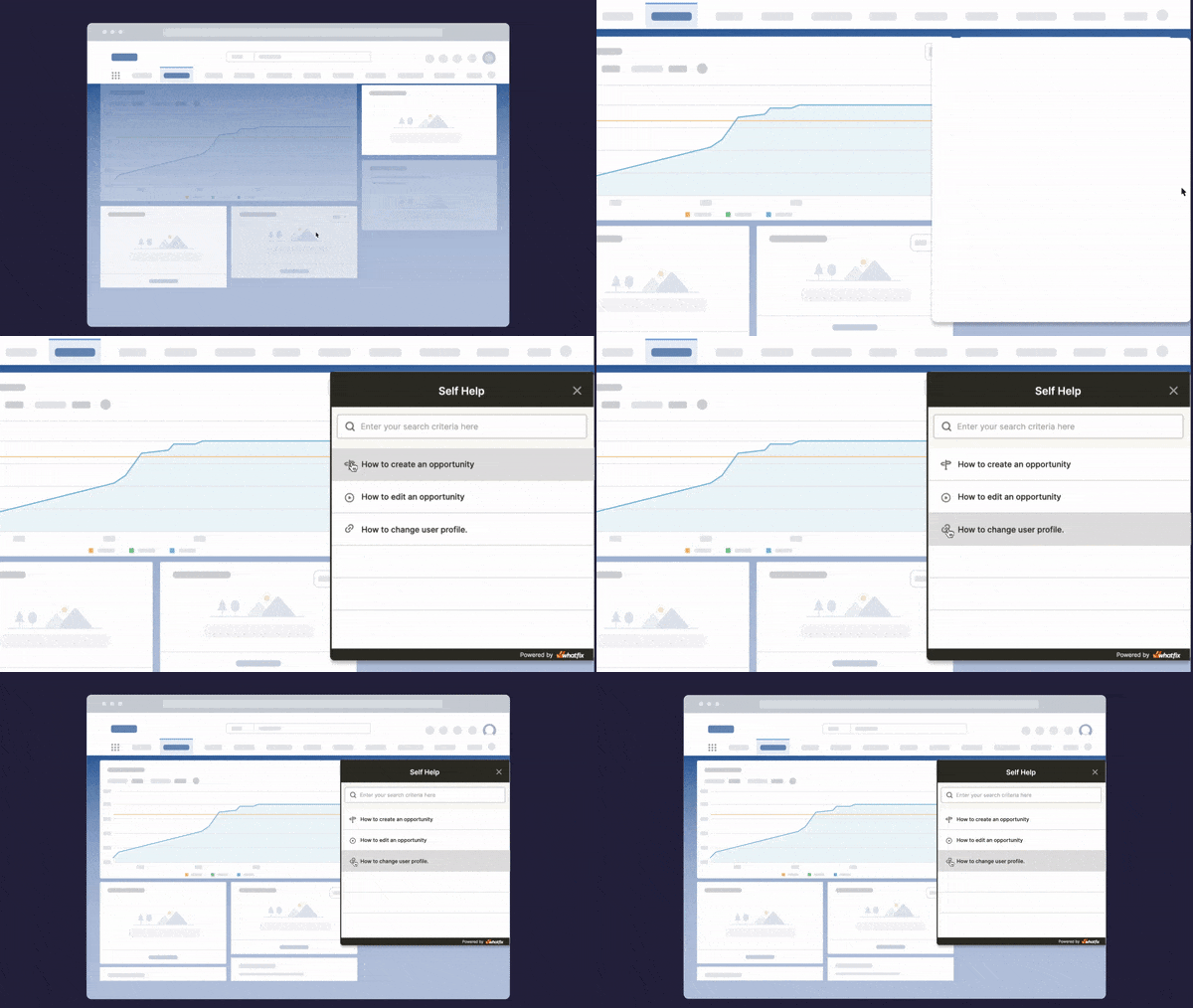
This transformation empowered customers to self-learn, complete tasks efficiently, and unlock the full potential of the Sophos Firewall without relying on extensive external support. By reducing friction and improving product accessibility, Sophos not only elevated customer satisfaction but also strengthened loyalty and long-term engagement.
14 Important CX Metrics to Track
While every company will have contextual CX metrics they monitor, here are fourteen of the most commonly tracked customer experience KPIs to help teams analyze, benchmark, and optimize their customer-facing experiences.
Direct customer experience analytics
Direct CX analytics are user feedback metrics that you track regularly to gain insight into your customers’ perceptions of your platform’s overall experience and/or their experience with specific features and flows. These data points are essential for keeping tabs on how your customers perceive your value and which product iterations are connected to higher satisfaction.
Examples of direct CX analytics include:
- Net Promoter Score (NPS): With NPS, customers are asked how likely they are to recommend your platform to a friend or colleague, generally on a scale from 1-10. The underlying assumption of NPS is that we’re only likely to give our personal recommendation when we’re receiving significant value from something, and so this serves as one great data point for looking at how well you’re serving your target audience.
- Customer Satisfaction (CSAT): Monitoring your CSAT involves directly asking your customers to rate their satisfaction with the platform. This is yet another metric that can help you understand how your customers perceive the value of your product. Another great thing about CSAT is that while you can look at user perception of the platform overall, you can also use it to measure satisfaction with specific features and flows (particularly useful when you’ve released something new!).
- Customer effort score (CES): The CES is generally measured by asking your customers to rate how easy or difficult a task was, usually on a 7-point scale. Like the CSAT, the CES can measure the overall experience and/or the ease of use for a specific feature or flow.
- Voice of the customer (VOC): The VOC metric is a quantitative representation about how your customers view the value of your platform and its ease of use. It generally combines NPS, CSAT, and CES to give an overall picture of how your customers are feeling about what you’re offering.
- Open text feedback and qualitative data: In a sea of numbers, it’s easy to forget that the why behind the above metrics can give you and your team a lot of important insight. Collecting qualitative data, often via open text on your platform, can help you understand why your customers are/aren’t getting value or having an easy time utilizing your features and flows. This type of data can give impactful direction in terms of focus areas for product iterations.
Indirect customer experience analytics
Indirect CX analytics are user behavior metrics that enable you to understand the relationship between customer engagement on your platform and your team’s KPIs. Overall, indirect metrics give insights into the health of the customer experience and the connection between the experience and your business KPIs.
Examples of indirect CX analytics include:
- Average handle time (AHT): AHT tells you, on average, how long it takes your customers to perform a certain action or series of actions on your platform. It’s useful for understanding the impact of your product iterations on ease of use.
- Customer lifetime value: Customer lifetime value measures the expected profit from each customer throughout their stay on your platform. This is one of the key metrics that helps you connect the customer experience and your business KPIs. If your customer lifetime value consistently goes up, your product and monetization strategy is likely in harmony – and that’s a good thing.
- Time-to-resolution for support issues: Customers struggle with something on your platform when they reach out for support. For customer satisfaction and retention, your team should try and solve these issues as quickly as possible. The time-to-resolution metric measures exactly how fast your support team gets it done.
- Time-to-value (TTV): TTV measures the time it takes your customers from onboarding to your platform until they derive some sort of benefit from the product. Depending on your product, you can measure time to value in different ways: for example, how long it takes users to upgrade from a free to paid version, or how long it takes to do a specific action that you regard as a value indicator. The lower the time to value, the more likely you’ll reap the benefits of customer retention and satisfaction.
- Advanced feature adoption: Once your customers have been onboarded and are consistently using the primary features on your platform, you may have more advanced features and flows that give an extra layer of value to your customers and can positively influence customer retention when utilized. Advanced feature adoption measures the time it takes a user to adopt an advanced feature, the length of time they utilize it, the extent to which they utilize it, and the depth with which they utilize it. Quick and quality advanced feature adoption supports customer retention and satisfaction goals.
- Average spend: The average spend tells you the average amount of money a customer spends, and in all likelihood, your goal is to understand which product iterations contribute to an increase in this number so that you can support your business KPIs.
- Customer churn rate: Customer churn metrics measure the frequency you lose customers during a given period. So, your monthly churn rate will tell you what percentage of customers you lose monthly. Lowering this metric over time indicates a product strategy that supports customer satisfaction and perceived value.
- Customer renewal rate: The customer renewal rate is a metric that tells you the percentage of customers who renew their membership to your platform. So if your platform offers a yearly subscription, your renewal rate will tell you what portion of your user base renews for the following year. Increasing this metric is also a great indicator of customer value and satisfaction.
- Communication metadata: Metadata is data that gives context to other metrics. Communication metadata can help you understand the above metrics in the context of user attributes. For example, you can look at what device a user is using while accessing your platform, or the acquisition source of a particular group of users. Often, customer satisfaction and platform engagement aren’t uniform; some subsets of users may be more satisfied than others, and these nuanced metrics give you some direction regarding who needs what.
The Role of Technology in CX Transformation
A comprehensive tech stack makes CX transformation easier and more effective. Though your team may not need everything all at once, we’ll go through the technology that’s often employed during transformation processes so that you and your team can decide what you need.
1. Customer Data Platforms (CDPs) and CRM
CDPs and CRMs are tools that help break down data silos with unified customer profiles. In practice, this means that each customer has a single customer view (SCV) that includes all of their attributes and behaviors. Within the platform, you can segment customers by certain criteria – for example, customers who come from an organization of a specific size.
A robust CRM solution centralizes customer data, giving sales, marketing, and support teams a 360° view of customer interactions. This allows for:
- Personalized outreach based on past behaviors and preferences.
- Automated follow-ups to improve engagement and prevent churn.
- Seamless collaboration across teams, reducing communication silos.
For example, a sales rep using CRM insights can personalize a follow-up email based on a customer’s previous inquiries, increasing the likelihood of conversion. Modern CRMs use AI to personalize communication and messaging. Companies also integrate product usage and website analytics to understand journeys better. Digitally mature companies utilize user intent data and signals to alert sellers of signs that customers may churn, of upsell potential, or that they’re ready to buy.
With this information, you can implement real-time personalization across multiple channels throughout the entire customer journey. For example, if your enterprise clients with teams of 300 or more employees have a specific need for information during their onboarding process, you can serve it to them via multiple channels without serving it to your smaller customers who don’t need the information.
This results in a tailored and more elegant experience for your entire customer base.
2. AI and machine learning
While AI and machine learning may feel like buzzwords at the moment, they’re being talked about for good reason – and they can truly impact your CX transformation for the better.
Using artificial intelligence and machine learning, your team can both offer service to your users and get better at predicting their behavior so that their experience can align better with their needs.
Here are some examples of how your team can use AI and machine learning in your CX transformation strategy:
- AI chatbots for customer support: Chatbots are no longer rudimentary. Many products have implemented chatbots that give on-demand, accurate support to users when they have an issue. Even if your chatbot is only your first line of defense when it comes to customer support, it has the potential to improve your CX by getting users help faster, and decreasing the time and resources spent on support agents.
- Predictive analytics based on AI-driven insights: Based on information like user behavior analytics and chatbot insights, you can actually generate AI driven insights that predict your users’ future behavior. This information can be used to personalize a customer’s experience based on their needs – even before they indicate them intentionally.
- Internal, custom AI assistants to ensure consistency with customer interactions: Your team can create custom ChatGPT scripts that everyone can consult when dealing with customers. For example, if you create documentation around customer touchpoints, best practices, and common customer issues along with their solutions, team members can ‘ask’ the assistant questions in real-time.
Based on the documentation, the assistant can give everyone on your team quick and consistent answers, which overall improves the quality and uniformity of care that you provide to your customers.
Make sure that you and your team explore AI-driven tools and machine learning opportunities when you’re planning the particulars of your CX transformation. Ultimately, customers and organizations stand to benefit from these exciting, relatively new technologies.
3. Digital Adoption Platforms
The vast majority of CX transformation processes involve the usage of a Digital Adoption Platform (DAP) – and for good reason. A DAP allows you to:
- Drive the adoption of new features and technologies with tools like in-app pop-ups and product walkthroughs
- Assist users in the moment of need with an up-to-date knowledge base or other on-platform guidance
- Nudge users to take specific actions and provide real-time guidance with in-app pop-ups and other mechanisms
- Allow users to submit feedback while they’re on platform with tools like surveys that are timed intentionally when they’re most relevant
A DAP is a dynamic platform that gives your team the ability to consistently iterate on the guidance and awareness that you bring to users based on their behavior.
It’s win-win because users experience less friction when doing their necessary tasks, and you’re likely to see the results of DAP usage in metrics like onboarding completion rate, retention, new feature adoption, and conversion.
Be sure to choose a DAP that your non-technical teams can use independently. Tools like the Whatfix DAP are no-code solutions, which means that once they’re implemented, you can do things like launch surveys, create pop-ups, design and deliver product walkthroughs, and update your knowledge base without the help of a developer.
4. Automation and self-service
When your customer-facing teams are bogged down by administrative, routine tasks, they have less time to focus on more strategic endeavors. Your CX transformation process should involve implementing the automation of tasks for your employees and self-service mechanisms for your customers so that this is less likely to happen.
Internal automation and self-service for customers during CX transformation can include all sorts of things that require different tooling, but here are some examples:
- Email automation tools and lifecycle management tools offer automated, ongoing email campaigns that give users the information they need throughout their journey without needing to speak with an account manager
- DAPs offer customer satisfaction surveys that are repeated after users perform specific actions on the platform or have used the platform for a certain period of time
- DAPs and other knowledge base tools offer the ability to host an up-to-date, meticulously maintained knowledge base that users can consult on-demand when they need help with something on your platform
By strategizing around automation and self-service for customers along with the right tooling, you free up your team to continuously iterate on the customer experience in a more strategic, less rote way. This increases what your team can achieve overall and ultimately, leads to a better customer experience as a result.
5. Data Analytics
The vast majority of improvements to the customer experience will require nuanced data points to guide your team.
Using a sophisticated, but easy-to-use product analytics platform throughout your CX transformation and beyond allows you to:
- Identify trends in usage that your team can react to accordingly with various customer touch points
- Personalize the experiences of users based on their behavior, giving users the feeling that your platform suits them precisely
- Identify points of friction so that you can make UX improvements or offer guidance to users
- Understand feature adoption and react to it when it isn’t ideal by offering information and reinforcing value propositions to users exactly when they need it
Just as with DAPs, your team will most likely benefit from a product analytics platform that allows you to extract and visualize data without the help of a developer or even a data analyst. Solutions like Whatfix Product Analytics can be used by anyone on the team, ensuring that everyone who needs to know about your customers can do it quickly and independently.
How to Build a CX Transformation Strategy
Delivering an exceptional customer experience requires a continuous organization-wide commitment. It’s not a one-off initiative. Improving CX involves understanding customer pain points, streamlining interactions, and proactively addressing friction throughout the customer journey.
A robust CX strategy ensures that every department (from marketing to support to product development) is aligned around delivering seamless and personalized experiences. Companies prioritizing CX optimization benefit from higher customer satisfaction, increased retention, and longer-term brand loyalty.
This section explores actionable strategies to improve CX, from defining clear customer experience goals to leveraging data-driven insights and optimizing every customer touchpoint.
1. Define your CX North Star goal(s)
A robust CX strategy starts with a clear, well-defined vision—your North Star goal—defining the main customer experience metric and or end-goal your company strives to deliver. Without a clearly articulated goal, CX initiatives risk becoming fragmented, resulting in inconsistent experiences across touchpoints.
To define your CX North Star, consider:
- What does an exceptional experience look like for your customers?
- How do you want customers to feel after interacting with your brand?
- What business outcomes will great CX drive–higher retention, increased loyalty, reduced churn?
The way to set CX goals effectively includes:
- Align with business objectives: CX goals should directly support broader company objectives, whether increasing customer lifetime value, reducing support costs, or expanding into new markets.
- Use customer feedback & data: Analyze NPS (Net Promoter Score), CSAT (Customer Satisfaction Score), and customer sentiment to identify key areas for improvement.
- Make it measurable: Define clear KPIs to track progress, such as first-response time in support, cart abandonment rates, or product adoption rates.
- Ensure company-wide buy-in: Everyone in the organization, from leadership to frontline employees, should understand and contribute to achieving CX goals.
Why it matters: Establishing a clear CX North Star goal ensures all departments work toward a unified customer experience vision, reducing friction and improving engagement.
2. Get buy-in from all department leaders
Customer experience success requires executive sponsorship and cross-functional alignment. Without leadership buy-in, CX initiatives risk becoming siloed, leading to disjointed customer interactions.
How to get leadership buy-in for CX initiatives is as follows:
- Demonstrate the ROI of CX: Use data to demonstrate how CX improvements drive revenue, retention, and efficiency. For example, customer-centric companies report profits that are 60% higher than those of their competitors who do not prioritize CX.
- Tie CX to department goals: Different teams measure success differently. Show leaders how CX impacts their KPIs. For example, sales can focus on faster deal closures that drive higher conversion rates. Marketing can work on better new user experiences to lower acquisition costs. Product can reduce churn by improving user onboarding and engagement. Support can improve NPS with faster resolution times.
- Create CX Champions: Assign CX advocates within each department to ensure CX initiatives remain a priority in daily operations.
- Provide executive-level visibility: Regularly share CX insights, dashboards, and customer sentiment analysis with leadership teams.
Why it matters: Leadership buy-in is non-negotiable—without it, CX strategies risk becoming disjointed and effective. Engage stakeholders early, show them the business impact, and create shared accountability for CX success.
3. Embed CX-first values into your culture
A strong CX culture isn’t just about making customers happy. It’s also about driving business growth. To be successful, creating a customer-first culture requires more than a mission statement—it demands company-wide alignment, leadership commitment, and everyday actions that prioritize customer needs. When employees at all levels embrace CX as a core value, it leads to consistent, high-quality experiences across every touchpoint.
Ways to build a CX-centric culture include:
- Lead by example: Leadership should set the tone by championing customer-focused initiatives, prioritizing CX in decision-making, and reinforcing its importance in company communications.
- Empower employees: Give employees the tools, authority, and training they need to deliver excellent customer experiences, including aspects like problem-solving autonomy, CX workshops, and empathy training.
- Integrate CX into daily operations: Embed customer experience metrics into performance evaluations, team goals, and company objectives to keep CX at the forefront of all business activities.
- Recognize and reward CX excellence: Celebrate employees who go above and beyond to improve customer experiences.
Why it matters: When CX is engrained in company culture, employees at all levels become proactive in improving customer interactions, driving long-term satisfaction and loyalty.
4. Prepare and map your customer experience design
An effective customer experience strategy begins with deeply understanding your customers, their needs, and how they interact with your brand. Mapping the customer experiences ensures that CX improvements are data-driven and aligned with real customer expectations rather than assumptions.
Here’s how to design a CX strategy that eliminates friction and enhances satisfaction:
Define your ideal customer profiles (ICPs) and personas
To deliver a personalized experience, businesses must understand who their customers are and what they need.
- Ideal customer profiles (ICPs): Identify high-value customers who bring the most long-term value.
- Customer personas: Segment customers into fictional personas (or groups) based on behavior, demographics, pain points, and goals to refine messaging and product offerings.
Why it matters: Well-defined personas help teams personalize interactions, optimize customer journeys, and increase engagement.
Use empathy mapping to understand customer emotions
Empathy mapping is a powerful tool for stepping into your customer’s shoes by identifying their thoughts, emotions, and behaviors at different touchpoints. By answering “What do customers think, feel, say, and do?” teams can identify frustrations and emotional triggers that impact CX.
Why it matters: Empathy mapping helps brands design experiences that evoke positive emotions and reduce frustration, ultimately enhancing user satisfaction.
Stakeholder mapping: Aligning internal teams
Customer experience success requires cross-functional alignment—marketing, sales, support, and product teams must work together to provide a seamless experience.
Use stakeholder mapping to categorize teams into:
- Supporters (high support, low influence);
- Champions (high support, high influence);
- Gatekeepers (low support, high influence); and
- Bystanders (low support, low influence).
Why it matters: Stakeholder mapping breaks down silos, increases organizational buy-in, and aligns departments around CX initiatives.
Define a focusing challenge
Rather than tackling too many issues at once, CX teams should prioritize the biggest friction points using a clear problem statement: (Who) can (do what) so that (why: the outcome)
For example:
- New customers can complete onboarding within 5 minutes, reducing drop-offs.
- Support teams can resolve 80% of issues via self-service, improving resolution time.
Why it matters: This framework keeps CX efforts focused, measurable, and impactful.
Customer journey mapping: Identifying pain points & opportunities
A customer journey map visualizes every interaction a customer has with your business—from first awareness to post-purchase engagement.
Key stages of a customer journey map include:
- Awareness: How do customers discover your brand?
- Consideration: What research do they do before purchasing?
- Purchase: Is the buying process easy and frictionless?
- Experience: How seamless is onboarding and usage?
- Loyalty and advocacy: What keeps customers coming back?
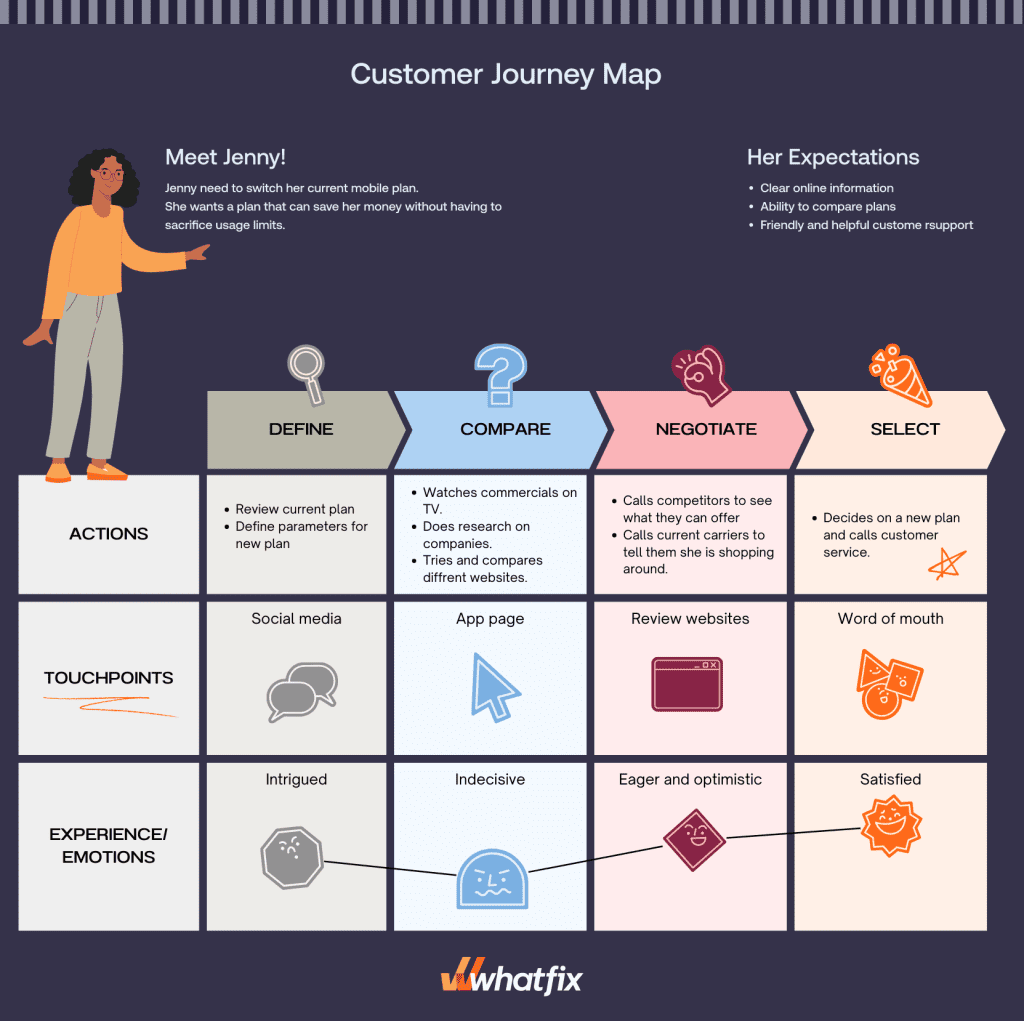
Businesses can identify friction points, optimize interactions, and cover new CX opportunities by analyzing each stage.
Why it matters: A structured journey map improves customer satisfaction by eliminating bottlenecks and increasing engagement.
5. Integrate all your applications and data sources
A seamless customer experience requires integrated systems that unify customer data across departments. When data is siloed, it leads to disjointed interactions, inconsistent messaging across teams, and customers having to repeat themselves at every touchpoint.
To eliminate friction and improve CX, businesses must:
- Integrate all applications—CRM, product analytics, marketing automation, and support platforms.
- Implement a centralized customer data platform (CDP) to unify behavioral insights.
- Leverage AI & product analytics to identify trends and personalize customer interactions.
Why it matters: A connected tech stack ensures consistent, personalized interactions, reduces inefficiencies, and improves overall CX.
6. Enable customers with product-led experiences
Customers expect self-sufficient, intuitive experiences that help them get value from a product without relying on human support. A product-led approach ensures users can navigate and adopt a product through in-app guidance, automation, and personalized recommendations.
Businesses relying too heavily on support teams create unnecessary friction, resulting in higher support costs, slower adoption, and lower retention. Instead, organizations should:
- Embed user onboarding flows directly within the product to accelerate adoption.
- Offer self-service resources (such as tooltips, guided walkthroughs, and pop-ups—all features that are part of digital adoption platforms like Whatfix) for real-time assistance.
- Use automation to suggest the next steps based on customer behavior.
Why it matters: A product-led approach reduces dependency on support teams, increases user retention, and enhances overall CX by making self-service the default experience.
7. Provide omnichannel support channels
Customers expect seamless, consistent support across multiple touchpoints—whether in-app, via chat, email, phone, or self-service portals. A strong omnichannel support strategy makes sure that no matter where a customer reaches out, they receive:
- Personalized, contextual assistance without repeating themselves
- Multiple support options—live chat, email, FAQs, knowledge bases, and chatbots.
- Channel continuity—conversations flow smoothly across support channels.
- AI-powered chatbots for real-time support and quicker issue resolution.
Why it matters: Omnichannel support reduces friction, speeds up problem resolution, and enhances overall customer satisfaction.
8. Collect customer feedback and close the loop
Customer feedback is invaluable for improving CX—but collecting feedback alone isn’t enough. Businesses must act on insights and ensure customers see the impact.
To close the feedback loop, companies should:
- Use multiple feedback channels—CSAT, NPS, in-app surveys, and online reviews.
- Analyze trends to identify recurring pain points and areas for improvement.
- Communicate changes to customers, showing them that their feedback drives real improvements.
Why it matters: A strong feedback loop builds trust, improves retention, and helps brands stay aligned with evolving customer expectations.
9. Take a customer-led approach to product development
Customer experience isn’t just about service—it starts with building the right product. A customer-led product strategy ensures that development efforts align with real user needs rather than assumptions.
To create customer-first products, businesses should:
- Gather insights through user feedback, behavioral data, and beta testing.
- Prioritize new feature development based on customer impact, not internal assumptions.
- Close the feedback loop by communicating updates and improvements.
Why it matters: A customer-driven product roadmap reduces friction, increases adoption, and strengthens brand loyalty.
10. Track, benchmark, and analyze customer’s digital journey
Understanding how customers interact with your brand across digital touchpoints is key to optimizing CX. To gain actionable insights, businesses should:
- Map user journeys to identify drop-off points and engagement trends.
- Use event tracking and analytics tools—heatmaps, session recordings, and conversion tracking.
- Benchmark performance against industry standards and past data.
Why it matters: Tracking and analyzing the customer journey helps brands remove friction, increase engagement, and improve overall satisfaction.
11. Take a data-driven approach to optimization
CX improvement shouldn’t rely on guesswork—it requires data-backed decisions. Organizations must use customer insights to optimize CX continuously. To implement a data-driven approach, businesses should:
- Leverage insights from surveys, feedback, and behavioral analytics.
- A/B test experiences to determine what resonates best with users.
- Use AI and predictive analytics to anticipate customer needs.
Why it matters: A data-driven CX strategy ensures optimization initiatives align with real customer behaviors, resulting in higher satisfaction and user engagement.
12. Proactively solve problems
Exceptional CX isn’t just about reacting to issues—it’s about preventing them before they happen. Proactive problem-solving builds trust and loyalty while reducing support costs. To anticipate and resolve issues early, businesses should;
- Monitor trends in support tickets, product usage, and customer feedback to detect recurring issues.
- Implement proactive support with real-time alerts, guided troubleshooting, and AI-driven recommendations.
- Close the feedback loop by acting on feedback and communicating resolutions to customers.
Why it matters: Anticipating and addressing issues before they escalate builds trust, prevents churn, and strengthens long-term relationships.
How Digital Adoption Platforms Accelerate CX Transformation
You may remember from earlier in this guide that Digital Adoption Platforms (DAPs) are one of primary tools used to facilitate a successful CX transformation.
DAPs are so central to improving the customer experience that in this section, we’re going to take a deeper look at how you can utilize a DAP, such as the Whatfix DAP, to positively influence the customer experience.
1. Bridging the user skills gap
Somewhat ironically, great customer care involves decreasing your customers’ dependence on your team. A great customer experience means that most, if not all, of what your customers need to do on your platform is easy and intuitive. However, particularly for SaaS platforms, this requires helping users build some skills.
Using your DAP, you can guide users through new tools and workflows in real time by using mechanisms like product walkthroughs and in-app pop-ups for more detail about features that require some knowledge. Rather than waiting for users to get confused, you can provide this guidance at just the right time with a DAP.
Your DAP also helps you provide quick and thorough onboarding for employees and customers. DAPs allow you to create onboarding experiences that are fast and nuanced, which reduces both employee and customer frustration and support costs that come with users feeling lost or confused.
2. Data-driven insights for continuous improvement
As you roll out changes related to your CX transformation strategy, you know that you’ll likely need to keep iterating in order to fully optimize various elements of the customer experience. Your DAP allows you to look for signs that you have iteration opportunities based on user behavior.
The in-app analytics in your DAP allow you to segment your users intelligently based on properties that you choose, and you can look at how those customers fare in every key flow. When you notice things like user drop-off in a particular flow, for example, you know that you have an opportunity to improve the customer experience.
Some of these points of friction may lead you to UX improvements, but they can also alert you to other needs related to the customer experience. For example, you may want to use your DAP to give more guidance, or to alert the support team to issues that need more customer care. Regardless of what your plan of action is, your DAP allows you to adjust processes and implement product iterations that are based on actual usage data rather than assumptions.
3. Fostering omnichannel consistency
As we’ve mentioned previously, consistency across channels is a key ingredient in a successful customer experience transformation.
Your DAP is helpful for standardizing training and best practices, both internally and with your customers. Here are a few examples:
- Give your team a single customer view and source of truth: Your DAP shows how different groups of customers fare in different product flows, giving everyone at your organization the same insights about areas of friction to work on.
- Create product walkthroughs and other in-app guidance that can be utilized internally and externally: These DAP features can teach your employees and customers alike how to use features and accomplish tasks on your platform. This standardization of training means that your team, regardless of role, is equipped to understand and react to the customer experience.
- Create a knowledge base that is an internal and external source of truth: Using a tool like Self Help in the Whatfix DAP, you can create and maintain documentation about all of your features and flows. Both your team and your customers can get consistent insights about everything on your platform.
4. Accelerating change management
Getting your entire team up to speed on changes as they’re implemented is a common challenge when it comes to CX transformation. Your DAP allows you to create and share guided walkthroughs and contextual guidance on all aspects of your platform, which overall reduces resistance to the adoption of new platforms.
No less important, your DAP offers real-time support during digital roll-outs, making sure that your team is equipped to deal with any issues in the moment.
CX Transformation Clicks Better With Whatfix
Deep, nuanced product analytics and a quality DAP are probably on your mind as you gear up for CX transformation, and many organizations like yours rely on Whatfix Product Analytics and the Whatfix DAP to fuel a successful transformation process.
Here are a few ways in which Whatfix can help you succeed with CX transformation:
- Use Whatfix to provide contextual, in-app guidance that supports customers at their exact moment of need, chosen based on data. This contributes to a better customer experience because it helps minimize user confusion and frustration.
- Further accelerate your transformation process with a robust set of features that don’t require code in order to implement: interactive workflows, self-help widgets, real-time analytics, and more.
- Ensure that you reap the benefits of faster onboarding and reduced support costs by leveraging Whatfix’s on-demand, scalable training capabilities for both your internal team and your customer base.
- Allow your whole team to get motivated by using Whatfix to showcase the measurable impact on customer satisfaction and user proficiency, including decreased churn, increased product adoption, and higher customer satisfaction.
Whatfix, as a platform, is a strategic partner that can help you and your team realize all of your CX transformation goals through tailored digital adoption solutions.