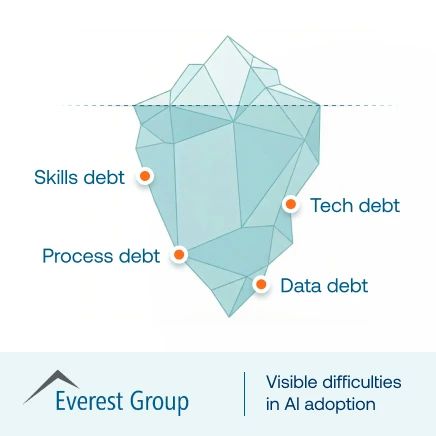
According to a 2026 Forrester report, ineffective software adoption costs a mid-sized organization (1,000+ employees) an average of $10.9M per year.
For large organizations managing complex digital transformation projects and application rollouts, a digital adoption platform (DAP) helps overcome these adoption-related challenges by accelerating time-to-proficiency, reducing errors and support volume, standardizing workflows, and improving overall software ROI.
Our 2026 State of Digital Transformation ROI report found that organizations with a DAP achieved 64% faster time-to-value and a 67% higher return on digital transformation investments than peers without one.
For those in the enterprise DAP research and buying phase, a simple feature comparison isn’t enough. DAPs differ widely in their ability to support complex app types and environments, as well as their service offerings. A well-polished demo may generate excitement, but that isn’t a strong signal you’ve found the right enterprise partner.
This guide is designed for CIOs, enterprise application leaders, and digital transformation owners evaluating shortlisted DAP vendors. It outlines how to structure a stronger RFP and vendor scorecard, which criteria matter most, and how to choose a platform that supports both immediate rollout goals and long-term value realization.
Download our DAP RFP and vendor scorecard template to have an editable playbook to help kickstart your buying process →
How to Weight Your DAP RFP and Vendor Scorecard
Enterprise teams should score DAP vendors based on weighted operating fit, rather than simple checklist comparisons or overindexing on features seen in a polished demo. Strong RFPs prioritize criteria according to business risk, technical complexity, and regulatory exposure, with input from stakeholders across IT, L&D, procurement, application ownership, and transformation leadership.
| Criteria |
What to evaluate |
Weight |
| Application environment fit and ecosystem coverage |
Fit across web, desktop, mobile, VDI, legacy, custom, and mixed application environments, plus breadth across major enterprise software platforms and cross-app workflows. |
20% |
| Security, privacy, and compliance |
Certifications, privacy controls, data handling practices, permissions, regional requirements, and documentation readiness for internal review. |
20% |
| Functional depth and feature fit |
Support for your target use cases across guidance, self-help, onboarding, feedback, analytics, training, and AI-assisted administration. |
15% |
| Scale, governance, and multi-app maturity |
Ability to support multi-app programs, distributed admin teams, localization, content lifecycle management, and reporting across business units and regions. |
10% |
| Analytics and value realization |
Visibility into adoption, workflow performance, friction, guidance effectiveness, segmentation, and reporting tied to business outcomes. |
10% |
| Integration and technical architecture |
Integration breadth, deployment requirements, maintenance model, resilience to app changes, IT burden, and enterprise architecture fit. |
10% |
| Services, migration, enablement, and support |
Implementation support, migration help, customer success model, admin enablement, global support, and post-launch strategic guidance. |
10% |
| Commercial fit and budget model |
Pricing structure, service inclusion, scale-related cost changes, multi-app pricing implications, and long-term cost to operate. |
5% |
This weighting model helps buyers prioritize what matters most in enterprise DAP selection. The next section breaks down each category into the specific considerations and RFP questions that help teams evaluate real-world fit, operating maturity, and long-term value.
Breaking Down the 9 Core DAP Evaluation Criteria
Below are the scorecard criteria categories to include in your DAP RFP evaluation: (click to jump to each section’s breakdown)
1. Application environment and ISV ecosystem coverage
Application fit is the first real test of enterprise viability. If a DAP cannot support the deployment types and vendor environments your business depends on, the rest of the evaluation becomes secondary.
Large enterprises rarely standardize on a single software vendor. They operate across a layered stack of core enterprise platforms, point solutions, internal tools, and acquired systems. That makes software coverage a critical part of DAP selection.
While most DAP vendors perform well in web-based browser environments, its a different story when a DAP is needed for complex enterprise stacks that include a mix of desktop apps, virtualized environments, legacy builds, etc.
Buyers should evaluate whether the DAP vendor can support a broad application landscape of enterprise solutions and custom-built apps, enable workflows that span multiple systems, and work across web, desktop, mobile, and VDI apps.
Key application type and ecosystem coverage considerations to evaluate in your DAP RFP include:
| Considerations |
RFP question(s) to ask |
| Coverage across app environments |
- Which application environments do you fully support today (ie. web, desktop, mobile, and VDI or virtualized environments?)
- Are there differences in functionality, analytics, or content authoring across supported environments?
- Which environments are natively supported, and which are supported through workarounds or additional services?
- What product roadmap gaps currently exist across application environments?
|
| Desktop and VDI app limitations |
- What limitations exist in browser-based, desktop, or virtualized environments?
- How does platform performance differ across deployment types and operating environments?
- What technical dependencies or constraints should we plan for in VDI, Citrix, or other virtualized setups?
- Which customer scenarios tend to expose the biggest deployment limitations?
|
| Coverage across major software platforms |
- Which enterprise applications and software platforms do you most commonly support across your customer base?
- What experience do you have with major enterprise systems such as CRM, ERP, HCM, ITSM, finance, and industry-specific platforms?
- Are there application types or environments where your platform is less effective or requires added services?
- How do you evaluate fit for complex or highly customized enterprise applications?
|
| Support for legacy apps and internally built tools |
- How does the platform support legacy systems, internally built tools, or heavily customized enterprise applications?
- What application characteristics make deployment more complex or less effective?
- Can you share examples of successful deployments on older or custom-built systems?
- What added services, technical effort, or limitations should we expect for non-standard applications?
|
| ISV partnerships |
- Which software vendors or ISVs do you have official partnerships, integrations, or strategic relationships with?
- How do those partnerships improve implementation, support, or product compatibility for shared customers?
- Are there ecosystem programs or certifications that strengthen your ability to support major enterprise platforms?
- How do you stay aligned with changes introduced by key software partners over time?
|
| Mixed-app stack support |
- How does the platform perform in environments that include a mix of commercial ISV software, internal applications, legacy tools, and different deployment types?
- Can guidance, analytics, and governance be managed consistently across a mixed stack?
- What operational challenges typically emerge when customers deploy across varied application types?
- How do you help customers prioritize rollout in a complex multi-environment landscape?
|
| Content maintenance as UI changes |
- How much effort is required to maintain guidance content when application UIs, workflows, or elements change?
- What tools exist to detect broken content, impacted flows, or outdated experiences after UI updates?
- How are admins alerted to application changes that may affect content performance?
- What level of manual intervention is typically required to keep content accurate over time?
|
| Evidence of support on your application(s) |
- What evidence can you provide of successful deployments across a broad enterprise software environment?
- Can you share customer references, case studies, or examples tied to similar application estates or industries?
- How do you define success when supporting a multi-vendor software ecosystem?
- What distinguishes customers who scale successfully across many systems from those who stall after the first deployment?
|
2. Scale, governance, and multi-application maturity
Many organizations new to DAP begin their journey with a single application rollout tied to one user group, workflow, or pain point. But mature buyers should evaluate for the next two years, not just the next deployment.
As programs expand, the real test becomes whether the platform can support multi-application administration, distributed governance, content consistency, and scalable reporting without creating operational sprawl. Buyers should assess how well the vendor supports enterprise-wide scale, governance, and long-term digital adoption operating maturity.
Key scale, governance, and multi-application maturity considerations to evaluate in your DAP RFP include:
| Considerations |
RFP question(s) to ask |
| Multi-app administration |
- How does the platform support administration across multiple applications, use cases, and business teams?
- Can admins manage content, environments, and reporting for multiple applications from a unified console?
- What operational challenges typically emerge as customers expand from one application to several?
- How does the platform help maintain consistency while supporting different application owners and teams?
|
| Role-based permissions |
- What role-based permissions are available for admins, authors, reviewers, publishers, and regional stakeholders?
- Can access and publishing rights be segmented by application, business unit, geography, or team?
- How does the platform prevent unauthorized changes while enabling distributed ownership?
- What audit or approval controls exist for content changes and administrative actions?
|
| Content localization and regional support |
- How does the platform support localization for language, region, and market-specific process requirements?
- Can teams manage localized content variations without duplicating entire content libraries?
- How are regional differences governed while maintaining global standards?
- What support exists for multinational deployments with different compliance, workflow, or user experience needs?
|
| Content lifecycle management |
- How does the platform manage content maintenance as processes, workflows, and application UIs change over time?
- What tools exist to identify outdated, broken, duplicate, or underperforming content?
- How are version control, review cycles, and retirement workflows handled?
- How much manual effort is typically required to keep content accurate at scale?
|
| Reporting |
- Can reporting be segmented by application, region, business unit, role, or other enterprise dimensions?
- How easily can leaders compare adoption, engagement, and workflow outcomes across different parts of the organization?
- Can the platform provide both centralized executive visibility and local operational reporting?
- What limitations exist in reporting when programs scale across multiple applications or regions?
|
| Governance for admin teams |
- What governance controls help large, distributed admin teams manage content consistently across the enterprise?
- How does the platform support shared standards for naming, publishing, approvals, and content ownership?
- Can governance models be tailored for centralized, federated, or hybrid operating structures?
- What best practices do you recommend for customers managing DAP programs across multiple teams and business units?
|
| Operational impact of scale |
- What changes commercially as customers expand from one application to multiple programs, regions, or business units?
- What operational burdens tend to increase as the platform scales, like administration, maintenance, localization, or governance?
- How should customers plan for added resourcing or support needs as adoption grows?
- What distinguishes customers that scale efficiently from those that struggle operationally after initial deployment?\
|
3. Security, privacy, compliance, and certifications
In regulated environments, security reviews are often the real gatekeepers for implementing an enterprise DAP. If a vendor cannot clear that hurdle, the evaluation stalls.
This is especially important in sectors such as banking, insurance, and healthcare, but the same scrutiny increasingly applies to all large, operationally complex enterprises.
Buyers should evaluate whether a DAP vendor can meet core security, privacy, compliance, and governance requirements while also providing the documentation and controls needed to move through internal review efficiently. A vendor that lacks mature documentation, governance controls, or clear answers in this area creates procurement friction.
Data privacy, security, and compliance-related questions to consider in your RFP include:
| Considerations |
RFP question(s) to ask |
| Security certifications and controls |
- Which security certifications, attestations, and compliance standards do you currently maintain? (ie. SOC 2, ISO 27001, GDPR, HIPAA, or others relevant to our industry)
- What technical and organizational controls are in place to protect customer data and platform access?
- How frequently are your security controls audited, tested, and updated?
- Can you provide current certification reports or supporting documentation for internal review?
|
| Privacy and data handling |
- How is customer data collected, processed, stored, encrypted, and deleted across the platform?
- What data does the platform access by default, and what data is optional or configurable?
- How do you support customer requirements around data minimization, retention, and lawful processing?
- What privacy controls are available to align with internal data governance policies and regional regulations?
|
| Regional privacy requirements |
- Can the platform support regional privacy and data residency requirements across the US and EMEA?
- Where is customer data stored, processed, and backed up by region?
- How do you handle cross-border data transfers and regional regulatory requirements?
- What configuration options exist for customers with stricter residency or localization obligations?
|
| Admin permissions and access control |
- What role-based access controls are available for admins, authors, reviewers, and other stakeholders?
- Can permissions be segmented by business unit, application, geography, or environment?
- How are authentication, SSO, user provisioning, and access revocation managed?
- What auditability exists for admin actions, content changes, and user access events?
|
| RFP and document readiness for internal review |
- What documentation can you provide to support IT, procurement, legal, security, and compliance review?
- Do you provide security questionnaires, architecture diagrams, data flow documentation, subprocessors lists, and privacy terms?
- How quickly can your team respond to enterprise security and legal review requests during procurement?
- Which parts of your review package are standardized, and which require custom follow-up from your team?
|
4. Functional requirements and feature fit
Feature lists without use-case logic lead to weak buying decisions. A DAP should not be evaluated based on how many capabilities appear on a product sheet, but on how well those capabilities support your priority workflows, adoption goals, and business outcomes.
Functional requirements should be tied directly to the problems you are trying to solve (ie. onboarding new users faster, reducing support dependency, accelerating change, improving compliance, or increasing workflow completion).
Key functional considerations to evaluate in your DAP RFP include:
| Consideration |
RFP question(s) to ask |
| In-app guidance for key workflows |
- What types of in-app guidance can I create?
- How does the platform help teams guide users through complex, multi-step tasks in real time?
- Can guidance be tailored to different applications, processes, or user contexts?
- How does this capability improve workflow completion, reduce errors, or accelerate proficiency?
|
| Self help to reduce support dependency |
- Does the platform provide contextual self-help inside the application at the moment of need?
- How easily can users access help content without leaving their workflow or opening a support ticket?
- Can self-help experiences surface different resources based on page, task, role, or user behavior?
- What knowledge repositories can I integrate into Self Help offerings?
|
| Guided onboarding and role-based enablement |
- How does the platform support onboarding for new users, new roles, or users adopting a new process?
- Can onboarding experiences be personalized by role, business unit, geography, or proficiency level?
- How does the platform reinforce learning after initial training is complete?
- What capabilities help accelerate time-to-productivity for different user groups?
|
| Surveys and feedback collection |
- Can the platform collect in-app feedback at relevant points in the user journey?
- What survey formats and targeting options are available for capturing user sentiment, friction, or improvement ideas?
- Can feedback be tied to specific workflows, guidance content, or user segments?
|
| Workflow analytics |
- How does the platform measure user adoption, workflow completion, and behavioral friction?
- How can workflow analytics identify drop-off points, low-performing processes, and opportunities for intervention?
- Can reporting be segmented by role, team, business unit, or region?
- How do analytics support ROI tracking and value realization reviews?
|
| Simulation training |
- Does the platform support simulation-based training or hands-on practice in a safe environment?
- How are users trained on workflows before entering production systems?
- Can simulations be used for onboarding, compliance training, or process certification?
- How does simulation capability improve readiness, accuracy, or confidence before live task execution?
|
| Agentic AI |
- How does AI support the creation, maintenance, and optimization of in-app guidance content?
- Can AI help identify content gaps, broken experiences, or areas of user friction?
- What governance controls exist for AI-generated recommendations or content?
- How does AI improve admin efficiency, content quality, or speed to value without increasing risk?
|
5. Analytics and value realization capabilities
If the platform cannot help you measure behavior and friction, it becomes difficult to prove impact, prioritize improvements, or defend budget. A unified DAP with analytics capabilities enables a closed-loop system that analyzes user behavior, identifies friction, and provides new guidance and workflow optimizations.
| Consideration |
RFP question(s) to ask |
| Usage visibility |
- How does the platform measure user adoption, feature engagement, and workflow completion across applications?
- What level of visibility do admins have into user behavior at the page, task, and process level?
- Can reporting distinguish between logins, passive usage, and meaningful workflow completion?
- What standard usage dashboards are available out of the box?
|
| Workflow funnel analysis |
- Can the platform analyze multi-step workflows to identify where users drop off or abandon a process?
- How are funnels configured, tracked, and visualized across different business processes?
- Can funnel reporting compare completion rates before and after in-app guidance is deployed?
- How easily can teams build and modify workflow analyses without technical support?
|
| Friction identification |
- How does the platform identify friction points, repetitive errors, hesitation, or task abandonment within workflows?
- What signals or behavioral data does the platform use to surface high-friction tasks?
- Can teams prioritize issues based on user impact, volume, or business criticality?
- How does the platform help translate friction insights into recommended improvements or interventions?
|
| In-app guidance performance |
- How does the platform measure the performance of Flows, Smart Tips, Pop-Ups, Self Help, or other in-app content?
- Can we track views, completions, engagement, drop-off points, and downstream workflow outcomes for guidance content?
- How does the platform help teams identify underperforming content and optimize it over time?
- Can content performance be tied to changes in adoption, support tickets, or task completion?
|
| Segmentation and attribution |
- Can reporting be segmented by role, region, business unit, tenure, language, or application?
- How flexible is the segmentation model for enterprise organizations with complex user populations?
- Can teams compare behavior and outcomes across user groups to identify adoption gaps?
- Are there limits on the number or type of attributes that can be used for reporting segmentation?
|
| Executive reporting |
- How does the platform connect product usage and guidance engagement to business outcomes like productivity, compliance, error reduction, or software ROI?
- What executive-level dashboards or reporting views are available for value realization reviews?
- Can the platform support quarterly business reviews with data tied to agreed success metrics?
- What examples can you share of customers using your analytics to defend budget, prove ROI, or guide expansion decisions?
|
6. Integration and technical architecture
Technical debt compounds after deployment, not during the demo. This is where seemingly simple products often become expensive to operate. While more lightweight vendors may have more interactive demos during the sales cycle and offer a lower-cost solution, they become operationally expensive when customized for enterprise needs.
| Consideration |
RFP question(s) to ask |
| Integration ecosystem |
- What systems, applications, and enterprise tools does the platform integrate with out of the box?
- Which integrations are native, and which require custom configuration or development?
- How does the platform integrate with identity providers, analytics tools, knowledge bases, LMS platforms, and support systems?
- Are there any limitations in your integration framework for complex enterprise environments?
|
| Deployment and maintenance requirements |
- What technical resources will our team need for the initial deployment?
- What ongoing technical support or maintenance is typically required after implementation?
- Which responsibilities fall to business admins versus IT, developers, or application owners?
- What level of technical expertise is needed to manage the platform long term?
|
| Resilience to underlying application change |
- How does the platform handle application UI changes, releases, and version updates?
- What tools do you provide to identify, flag, or repair broken content after an application change?
- How much manual rework is typically required when enterprise applications are updated?
- Can you share examples of how customers manage content stability in fast-changing application environments?
|
| Internal IT burden |
- What DAP implementation, governance, security, or maintenance work is expected from internal IT and enterprise application teams?
- How often do customers need IT support for ongoing updates, integrations, or troubleshooting?
- What tasks can be owned directly by business teams without technical intervention?
- How do you reduce dependency on internal technical teams over time?
|
| Enterprise architecture fit |
- How does the platform fit within a broader enterprise architecture that includes multiple business systems, security controls, and governance requirements?
- What architectural constraints or dependencies should we plan for before deployment?
- How does the platform support enterprise requirements like scalability, localization, environment separation, and role-based access?
- What types of enterprise environments are the worst fit for your platform?
|
7. Services, migration, enablement, and support
Enterprise DAP success depends heavily on execution during the first 90 days of implementation. While platform capabilities and quality matter, the customer success and support model behind it is often the secret sauce that helps companies build a DAP operating model, find early success, and scale it across their organization.
You should evaluate the following service offerings from DAP vendors:
| Service offering |
RFP question(s) to ask |
| Implementation support |
- What does your standard implementation process include in the first 30, 60, and 90 days?
- Which resources are included during implementation (i.e. technical consultants, program managers, solution architects, or change advisors)
- What implementation activities are handled by your team vs. expected from our team?
- What is the average time to go live for customers with a similar size, complexity, and use case?
|
| Migration support from incumbent tool(s) |
- Do you provide structured migration support for customers moving from another DAP or in-app guidance platform?
- Do you help new customers transitioning from a legacy DAP avoid dual billing?
- Do you recreate existing content from the incumbent tool?
- How do you ensure business continuity during the transition?
|
| Customer success model |
- What customer success model do you provide after go-live? (named CSM, pooled support, or tiered success programs?
- How often do customers receive business reviews, adoption reviews, or strategic check-ins?
- Which KPIs do your customer success teams help customers track and improve?
- How do you support customers in scaling from one use case or application to an enterprise-wide DAP program?
|
| Admin training and enablement |
- What onboarding and certification programs do you provide for DAP admins, content builders, and program owners?
- Do you offer role-based training for different stakeholders, (ie. admins, application owners, IT, and L&D teams)
- What self-service learning resources are included? (ie. documentation, academies, pre-built templates, office hours, or community access)
- How do you measure whether customer admins are fully enabled to independently build and govern the platform?
|
| Global support coverage |
- What support hours and channels do you provide across regions, languages, and time zones?
- Do you offer 24/7 support for enterprise customers, and what issue severity levels are covered?
- Where are your support and services teams located globally?
- How do you support multinational deployments with regional governance, localization, and local stakeholder needs?
|
| Strategic guidance post-90 days |
- What strategic services do you provide after initial implementation to help customers mature their DAP program?
- Do you help customers build a governance model, expansion roadmap, and an internal center of excellence?
- How do you identify new use cases, applications, or business units for expansion after launch?
- Can you share examples of how you helped customers move from initial deployment to scaled enterprise adoption?
|
8. Commercial fit and budget model
Price matters. While every buying decision has a budget, price alone is a poor decision criterion.
Decisions made on affordability at entry often become more costly over time as governance and scale requirements grow, including content development and management costs, custom development needs, and multi-app deployment needs, etc.
You should evaluate the following service offerings from DAP vendors:
| Service offering |
RFP question(s) to ask |
| Subscription model |
- How is your platform priced? (ie. by application, number of users, feature tiers, etc.)
- What specific usage limits, entitlements, or thresholds are tied to each pricing tier? (ie. sessions, content, API calls, etc.)
- Which pricing model do you recommend for an organization planning to expand across multiple applications over time?
- How often are pricing and contract terms typically re-evaluated during renewal?
|
| Service inclusion |
- What services are included in the subscription fee? (ie. migration, implementation, onboarding, admin training, customer success, support, and strategic reviews.)
- Which services require an additional fee or separate statement of work?
- Are there limits on included services? (ie. number of training sessions, support cases, or business reviews.)
- What are the most common add-on services customers end up purchasing after go-live?
|
| Multi-app pricing implications |
- How does pricing change when the platform is deployed across multiple applications, business units, or geographies?
- Are additional apps priced incrementally, bundled, or subject to a new contract structure?
- What commercial model best supports enterprise-wide standardization across many software applications?
- Can you share examples of how pricing evolved for customers that expanded from one app to several?
|
| Scale-related cost change |
- What factors typically increase cost over time? (ie. user growth, content volume, advanced features, analytics, AI usage, localization, or additional integrations.)
- At what stage do customers most often move into a higher pricing tier?
- How should we forecast budget changes over a two- to three-year period as adoption matures?
- What contractual protections or pricing caps are available to control cost increases as usage scales?
|
| Long-term operation costs |
- Beyond subscription fees, what ongoing costs should customers expect to operate the platform successfully?
- How much internal resourcing is typically required for content creation, governance, maintenance, and program management?
- What types of custom development or external services do customers commonly need after implementation?
- What is the typical total cost of ownership for customers running a mature DAP program across the enterprise?
|
How to Run a Stronger DAP RFP Process
A strong RFP forces buying teams to define success, pressure-test enterprise fit, and evaluate whether a DAP vendor can perform in production at needs scale and evolve. Remember these best practices when conducting your DAP RFP:
- Define success metrics before vendor evaluation. Set the business outcomes that matter most before serious vendor conversations begin, like faster time-to-proficiency, fewer errors, lower support volume, or faster task completion. This keeps the process disciplined and reduces demo-driven decisions.
- Require vendors to prove fit in your environment. Ask demos tied to your application types, workflow complexity, governance model, and user base. Demonstrating relevance in your specific environment matters more than polished general-use demos.
- Bring IT, security, and architecture in early. Late-stage technical review leads to delays, rework, and poor decisions. Strong buying teams involve these stakeholders before the shortlist is locked.
- Evaluate for the DAP operating model you need in two years. Select for future scale, governance, and multi-application growth, not just the first rollout. Short-term buying creates avoidable platform churn.
- Weigh post-sale service as hard as product fit. Implementation quality, migration support, admin enablement, customer success, and time-to-value deserve real scoring weight. Enterprise programs often struggle in execution, not procurement.
- Treat DAP as the foundational component of your software adoption architecture. The platform should fit how your organization governs change, support, training, and value realization. A DAP chosen outside that operating model becomes expensive to sustain and fails to drive intended outcomes.
Why Whatfix Scores Higher in Enterprise DAP Evaluations
Enterprise buyers need a DAP that supports multi-app workflows across application types and various end-user roles. It also requires a vendor who can help tie investment back to measurable outcomes and provide the foundation for a long-term program partner to achieve digital maturity.
This is where Whatfix shines. Here is why Whatfix is the best fit DAP for enterprise use cases:
It’s compatible with any application environment
Large enterprises do not operate in a clean, browser-only world. They run modern SaaS platforms, legacy systems, desktop applications, virtualized environments, and custom internal tools.
Whatfix is built for that complexity. For enterprise buyers, this matters because environment fit is often where lighter platforms lose credibility. Whatfix is the only DAP provider with compatibility across web, desktop, mobile, and VDI environments.
For example:
- UPS uses Whatfix on its mobile scanning devices to help field workers and delivery drivers on the job.
- Travelport uses Whatfix to migrate travel partners from its legacy desktop application to its new web-based app.
Its open ecosystem and scales for multi-app adoption programs.
Most enterprises operate across multiple ISVs, internally built systems, and region-specific applications. A DAP that fits only one narrow slice of that environment becomes a local fix, not a strategic platform.
Whatfix is better aligned to organizations that need adoption support across multiple major applications, business units, and transformation programs. That makes it a stronger fit for enterprises that want to grow from one use case into a broader adoption strategy.
For example:
- REG uses Whatfix across its mission-critical applications, including its Salesforce CRM and Oracle ERP, accelerating time-to-proficiency 50%.
- Old Mutual uses Whatfix to enable its advisors in the flow of work on its custom-built wealth management application. With Self Help, it reduced IT-related support tickets by 33%.
Its enterprise-grade content lifecycle management and governance maturity
A large-scale DAP program requires content governance, admin controls, change discipline, and operational structure. Enterprises require the ability to export their in-app content to train and enable users in different locations, both in-app and via LMS and training modules.
Whatfix is built with the governance maturity that larger organizations require, especially those operating across distributed teams, regulated industries, and complex rollout structures.
With Whatfix, you receive a DAP partner that governs the entire CLM process, including
- No-code content editor
- AI content authoring and guidance management.
- Auto-translation.
- Multi-level content QAs, with dedicated staging environments, auto-testing, rollbacks, and approvals.
- Mult-format exporting to repurpose content into videos, slide decks, PDFs, and how-to articles that can be embedded within your LMS, knowledge base, release notes, etc.
Its end-to-end digital adoption platform
Most vendors force buyers to stitch together guidance, analytics, and training across separate tools. That creates fragmentation and makes value realization harder to prove.
Whatfix offers a more complete operating model across:
- DAP for in-app guidance and self-help
- Product Analytics for visibility into behavior, friction, and value realization
- Mirror for simulation training and hands-on practice
That unified product story matters because enterprise adoption depends on execution across guidance, support, training, and measurement.
Its AI-forward research and development to scale DAP programs
AI scales digital adoption programs by accelerating content creation, optimization, and insight generation. For enterprise buyers, the value comes from execution leverage with governance, not novelty.
Whatfix’s AI direction is strongest when treated as a way to help teams scale digital adoption efforts faster while maintaining enterprise control over content, workflows, and user experience.
Its customer services across enablement and support
Vendors win or lose at the services layer as much as the product layer. Enterprise buyers should care deeply about what happens after selection.
Whatfix has a stronger enterprise support posture through customer success engagement, migration support, implementation guidance, and faster paths to production value. For large organizations replacing incumbent tools or launching complex programs, execution support matters.
For large enterprises, the best DAP is the one that supports your environment, governance model, scale, and value realization goals over time. That is where Whatfix has the strongest enterprise case.
Ready to start your digital adoption journey? Request a Whatfix demo to speak to sales, build a custom demo tailored to your application environment, and show how Whatfix can meet your business needs.