











REG is spearheading a cleaner, greener future. Founded in 1995, the organization is a leading global producer and supplier of renewable fuels, like biodiesel and renewable diesel, renewable chemicals, and other products.
REG has over 1,200 employees and reported $3.2 billion in revenue in 2021.
The business is growing fast, fuelled by the global demand for low-carbon fuels and the need for immediate decarbonization. The challenge for REG has been to ensure its employees – especially new hires – are aligned with this growth. REG needs people joining the company to be productive in the shortest possible time on critical operational applications like JD Edwards and Salesforce. Existing staff must also understand and adopt new application features quickly and conveniently.
Its existing Oracle UPK learning platform was fragmented, outmoded, and challenging to use. With no standard, enterprise-wide training process, tribal knowledge emerged, with people trained in various ways to use the same application. REG’s growth compounded the problem: the moment new training content was launched, new undocumented application features often superseded it. The result was reduced productivity and potential accounting errors
Abby Essing, Senior Manager in Operations Services at REG, saw the problem first hand.
“Our knowledge repositories were all over the place – in Word documents or screenshots hidden in shared drives. We also had no way of tracking whether people were using the content. To deliver the appropriate learning, we typically defaulted to in-person training.”
In the case of the JD Edwards accounting platform, it could take up to six months to train a new hire. Accounting errors were commonplace as people inadvertently misused the systems – an issue which could potentially compromise compliance. Essing and her team were bombarded with requests for help. “I could fill my entire day just answering questions or take hours scrolling through old emails to find the correct knowledge,” she says.
Five years ago, REG found Whatfix. Essing explains:
“Whatfix reimagines our training. Its DAP is easy to use – even for non-technical users. It supports in-application guidance across almost any interface and platform. And it’s so easy to update materials, we can at last keep pace with the system changes. Looking back, Whatfix was one of the best decisions we have made.”
REG has standardized Whatfix’s DAP to provide continuous learning at the moment of need. The comprehensive and connected Whatfix digital guidance platform provides contextual, interactive, automated user guidance – driving additional adoption and productivity gains across REG applications.
Simple step-by-step instructions within the application (called ‘Flows’), for example, are used extensively to help users learn an objective or complete a task through a series of actions. This way, REG can break down complex JD Edwards, Salesforce, and other application journeys into intuitive steps.
Cassady Dean, a business analyst at REG, explains:
“These step-by-step instructions are ideal for that moment when a user thinks, ‘Just remind me how I complete that task?’ Instead of wandering the office looking for help, the answer is there in an intuitive walkthrough.”

On-demand help combined with in-application guidance and internal knowledge bases are also helping to create a self-learning culture, empowering REG to take charge of its application knowledge.

“The self-help information is organized by folders embedded directly into the applications, so users find the information they need quickly and efficiently.”
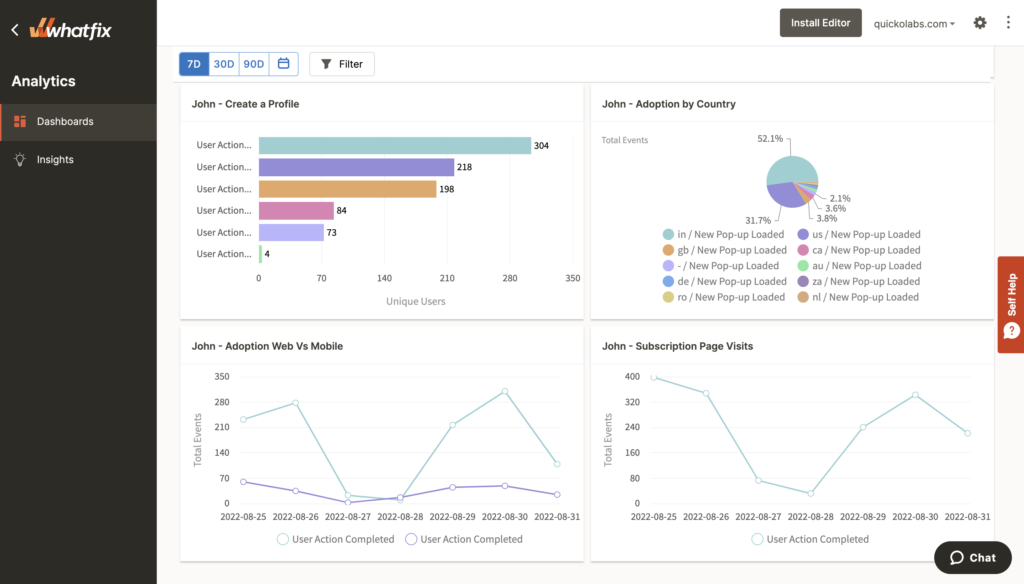
The team also uses Whatfix analytics to understand user adoption and training effectiveness – using the insights to identify opportunities to optimize the user experience. For example, measuring how frequently people use the knowledge repository or step-by-step instructions.
Another interesting use of analytics is to track what people shouldn’t be doing. Dean explains:
“We recently introduced a new order management process, but the click button associated with the old process remained. With Whatfix, we could see who was using that outdated process, flag it to their leader, and provide additional guidance to ensure they used the new process.”
REG has standardized on one common, enterprise-wide approach to application training, learning, and support content. The benefits include:
“Whatfix is an ideal platform for renewables and energy companies looking to improve the adoption of JD Edwards, CRM, or other applications. It dramatically reduces the time spent training and onboarding our employees and supports our environmental stewardship.”