









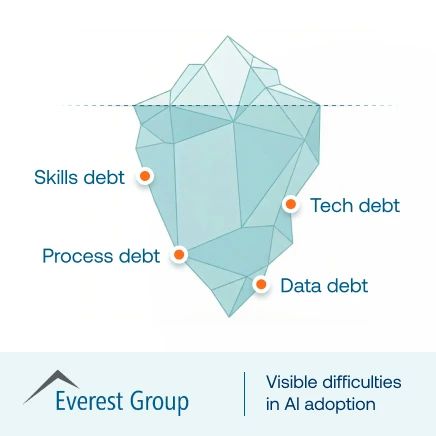



AI is transforming enterprise sales organizations. Generative tools, predictive models, and conversational analytics promise precision and speed across every stage of the revenue cycle, from prospecting to forecasting, to training and enablement. Yet fundamental transformation isn’t happening in applications; it’s happening in how organizations operationalize them and how they prepare their sellers.
Despite the surge in AI investment, sales productivity continues to decline. Quota attainment hovers below 50%, deal cycles continue to lengthen, and CRM adoption remains inconsistent. AI tools often compound these challenges when sellers aren’t equipped to use them confidently or when workflows aren’t built to align new insights with established processes.
Modern sales transformation depends on enablement, not automation. Sales organizations must connect people, process, and AI-powered systems through structured sales enablement programs, in-the-flow learning, and continuous adoption support. Platforms like Whatfix make this possible, helping enterprises to use AI to build roleplay and simulation training experiences, embed contextual guidance and in-app performance support into the flow of work, and measure adoption across CRM, sales enablement, and productivity ecosystems.
This guide breaks down how sales and IT leaders can translate AI potential into measurable performance: assessing readiness, aligning technology with enablement strategy, and building scalable adoption frameworks that turn innovation into revenue impact.
The Importance of Enterprise Sales Transformation
Enterprise sales transformation is often misunderstood as a one-time CRM transformation. In reality, it’s a multidimensional change initiative that rearchitects how organizations generate revenue. It touches people, processes, technology, and insight, moving beyond tools to focus on workflows, behaviors, and governance.
For CIOs, transformation initiatives are strategic levers for reducing technical debt, unifying disparate platforms, and enabling scalable integrations across the sales ecosystem. For sales operations leaders, the focus shifts to seller productivity, workflow optimization, and end-to-end visibility. Both functions share a stake in outcomes like reduced ramp time, cleaner data, and increased forecast reliability.
But aligning around these outcomes isn’t straightforward. Common challenges include:
- Resistance to change from frontline sellers and managers.
- Data fragmentation across siloed systems undermines the accuracy of data pipelines.
- Sales enablement gaps, where training is disconnected from tools and the flow of work.
To address these challenges, sales transformation requires both leadership alignment and frontline adoption. By embedding interactive walkthroughs, in-app guidance, and in-app support into enterprise workflows, Whatfix accelerates change while reducing operational risk.
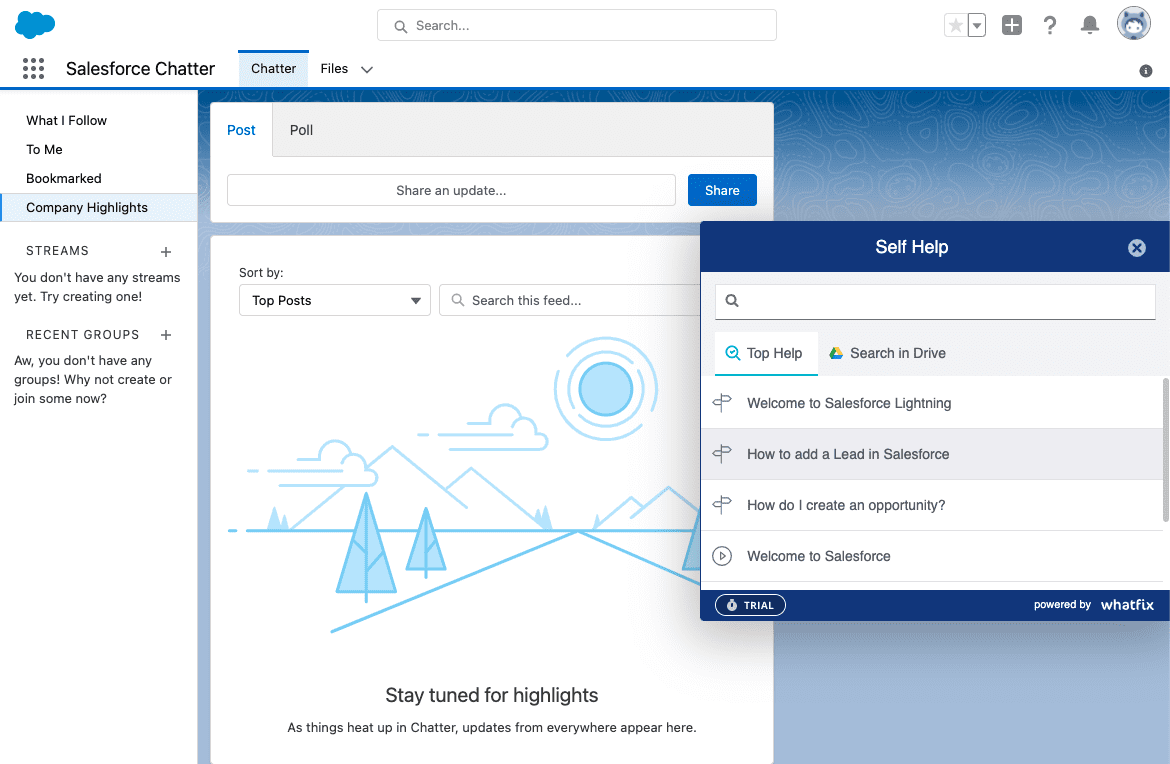
Features such as Smart Tips and Beacons help ensure better data hygiene, guiding users to enter complete and accurate information, particularly in CRM systems where poor data quality undermines pipeline integrity.
Pillars of Successful Enterprise Sales Transformation
True enterprise sales transformation depends on more than vision—it requires sustained operational execution across four core pillars.
1. Process optimization & workflow governance
Transformation begins by auditing existing CRM workflows, applying lean process mapping, and assigning clear responsibilities via RACI models. High-performing teams embed continuous improvement loops for iterative refinements, enabling sellers to adjust without derailing momentum.
Whatfix supports this by embedding workflows directly into sellers’ tools, driving process compliance in the flow of work, and enabling sellers with frictionless tasks and processes that help them achieve their sales quotes and goals.
For example, Experian uses Whatfix to enable sellers with in-app guidance and embedded support on Salesforce, helping to communicate change, remove friction points, highlight new sales best practices, and drive seller productivity. With Whatfix, Experian has improved its CRM user productivity by 72% and eliminated 45% of its CRM-related user support tickets.
2. Technology modernization
Legacy stacks often strain under scale. Effective transformation involves upgrading to cloud-native CRMs, CPQ tools, and revenue operations (RevOps) platforms that integrate across the customer lifecycle.
But new platforms alone don’t drive performance. To ensure adoption, usability must be prioritized alongside functionality. CRM product owners must enable their end-users with contextual training, communication, and support that empowers them to unlock their full potential powered by technologies.
| 🚀 How DAP Powers Scalable User Adoption
Whatfix bridges the gap between new technology and how employees actually work. Our no-code DAP empowers teams to embed step-by-step guidance, interactive walkthroughs, and dynamic task lists directly into enterprise applications—right when and where users need them. With features like Smart Tips, Self Help, and Pop-ups, Whatfix reduces the reliance on traditional training and IT tickets. This helps employees get productive faster, minimizes digital friction, and enables organizations to continuously optimize workflows based on real-time user behavior. |
3. Data & revenue intelligence
Enterprise sales performance is only as strong as the data behind it. Yet many organizations struggle with pipeline records that lack essential information, such as close dates, deal values, assigned owners, or next steps. These incomplete entries, outdated contact records, and inconsistent opportunity stages severely undermine forecast accuracy and prevent deal prioritization.
Modern transformation efforts rely on AI-driven forecasting models, real-time pipeline diagnostics, and automated data hygiene protocols to generate actionable insights. Whatfix strengthens this foundation by embedding in-app guidance at the point of data entry. Through real-time nudges, field-level cues, and in-app reminders, Whatfix helps ensure sellers capture complete, structured, and up-to-date information, enabling more reliable analytics and better-informed decision-making.
4. Change management & adoption
Even the most well-designed sales systems fail if teams don’t adopt them. Change management barriers, whether due to learning fatigue, tool overload, or unclear processes, slow transformation value realization and damage user confidence. CIOs and Sales Ops leaders must prioritize enablement that is timely, contextual, and embedded into daily workflows.
Whatfix addresses this by applying learning in the flow of work principles via embedded, in-app guidance. Rather than relying on one-time training, Whatfix delivered continuous microlearning through step-by-step walkthroughs, segmenting training into role-specific instructions, and timely nudges—available precisely when users need them. This approach reinforces new behaviors in real time, reduces the support burden, and accelerates change readiness across large, distributed teams.
Enterprise Sales Transformation Roadmap
A successful enterprise sales transformation depends on precise sequencing and stakeholder alignment.
Below is a six-stage roadmap designed to move organizations from strategy to execution.
1. Current-state assessment
Every transformation journey starts with an honest evaluation of where things stand. Organizations often conduct a structured maturity audit, which utilizes an established digital maturity model—such as the Capability Maturity Model Integration (CMMI)—to assess the level of advancement and effectiveness of their current practices across key areas, like CRM usage, sales processes, enablement, and CRM data governance. These models define progressive stages of capability, allowing teams to benchmark themselves against standardized criteria.
In practice, the audit evaluates both hard metrics (think CRM field completeness, time-to-quota, tool adoption rates) and qualitative feedback from stakeholder interviews across Sales, IT, Enablement, and RevOps. This dual approach surfaces critical insights (such as workflow redundancies or unclear ownership) that metrics alone may overlook.
The resulting maturity profile serves as a diagnostic baseline for future assessments. It enables transformation leaders to prioritize high-impact initiatives and track progress against a defined starting point, turning subjective pain points into actionable improvement areas.
2. Vision & KPI alignment
A sales transformation initiative cannot succeed without a shared operational vision, and that vision must be translated into measurable outcomes. CIOs and Sales Operations leaders bring distinct, yet complementary priorities: CIOs focus on systems integration, scalability, and data governance, while Sales Ops prioritize workflow efficiency, seller enablement, and revenue attribution.
Establishing a joint KPI framework helps unify these agendas into one transformation mandate. This typically takes the form of a CIO-Sales Ops scorecard that aligns on both system-level and seller-level metrics. Examples include:
- Time-to-quota for new sellers.
- CRM data hygiene (e.g., field completion rates).
- Forecast accuracy by pipeline stage
- Workflow adoption rates via Whatfix Product Analytics
Aligning on these metrics early prevents fragmentation later. It also ensures that change management, tooling decisions, and training investments are evaluated against a standard set of goals, enabling all stakeholders to assess progress from the same vantage point.
3. Task-force formation
Enterprise transformation is a cross-functional effort. It requires more than executive intent; it needs coordinated execution. That’s why forming a dedicated task force is critical to success. This group becomes the engine of the initiative and is responsible for translating strategy into repeatable action.
At a minimum, the task force should include stakeholders from Sales Ops, IT, Enablement, and frontline Sales. Each member should have a defined role (from project coordination and technology integration to change management and field feedback collection). A named executive sponsor—ideally a CRO, CIO, or COO—should chair or oversee the group to ensure alignment with business priorities and resource availability.
Establish a clear cadence for meetings, decision checkpoints, and communication updates. Subgroups (platform leads, DAP admins, regional sales leads) may also be helpful for large-scale rollouts.
A cross-functional task force ensures decisions are grounded in operational realities—not just strategic aspiration—and accelerates issue resolution as roadblocks arise.
4. Tech stack selection & integration
Transformation initiatives often stall when legacy tools can’t keep pace—or when new systems are deployed without a coherent integration strategy. This stage involves assessing the current sales technology stack using methods such as Application Portfolio Analysis (APA) and identifying the necessary platforms and integrations to support future-state workflows. APA helps evaluate each application’s business value, technical health, and integration readiness, surfacing redundancies, gaps, and opportunities for modernization.
The objective is not just to modernize, but to build a cohesive, future-ready tech stack that supports automation, provides insights, and enables scalability. Key components typically include cloud-based CRMs, CPQ tools, forecasting engines, revenue intelligence platforms, and digital adoption platforms (DAPs). Selection criteria should focus on the following tech stack evaluation checklist:
- Open APIs and integration flexibility
- Cloud-native architecture
- Support for automation and workflows
- Governance and admin controls
- User experience and UI consistency
- Vendor roadmap and ecosystem alignment
5. Deployment & enablement
Once tools are selected, the focus shifts to rolling them out in a way that supports end-user adoption and reduces operational disruption. Successful transformations follow a phased deployment strategy, starting with pilot groups to gather feedback, validate assumptions, and refine workflows and training content.
Effective enablement is crucial at this stage to facilitate a smooth transition into sustained use over time. Traditional training methods (like static slide decks, one-time workshops) are no longer sufficient in fast-moving sales environments. Instead, organizations should adopt in-the-flow guidance that delivers support precisely when and where users need it.
Whatfix simplifies this stage by embedding personalized, real-time guidance directly into the tools your sales team uses every day. With its no-code editor, sales ops teams can build interactive walkthroughs, task lists, and self-help widgets without waiting on developer resources. These in-app experiences guide reps through complex workflows, surface just-in-time training, and proactively reduce errors, without disrupting daily work.
This approach accelerates onboarding, drives higher adoption of new processes and tools, and significantly cuts down on support requests, especially during CRM migrations, tool rollouts, or process changes.
6. Measure, iterate, scale
Transformation doesn’t end at rollout—it’s just the beginning. Sustained performance gains require continuous measurement, active feedback loops, and a willingness to iterate. The final phase of the roadmap focuses on embedding systems that track adoption, expose friction, and inform strategic refinements over time.
Begin with a structured OKR review cycle, anchored to the joint CIO-Sales Ops scorecard established earlier. Rather than treating these metrics as static goals, teams should revisit them regularly to identify patterns, surface new friction points, and recalibrate tactics as needed.
Whatfix supports this phase through its Product Analytics, which offers granular insights into user engagement, task completion, and feature adoption. This data helps Sales Ops and IT leaders understand where users are dropping off, which workflows need reinforcement, and how enablement content can be fine-tuned in real time.
Scaling transformation isn’t about replicating a fixed model; it’s about creating a responsive system that evolves with the business.
Case Studies: Enterprise Sales Transformation in Action
Theory becomes strategy when supported by execution. The following case studies show how leading organizations have translated complex sales challenges into measurable outcomes. Each example illustrates a different facet of enterprise sales transformation: from data hygiene and forecasting accuracy to enablement at scale and commercial model reinvention.
1. From Forecast Guesswork to Pipeline Precision: How One Enterprise Reinvented Sales Hygiene in Salesforce
A large enterprise struggled with inconsistent sales forecasts for its most valuable deals. The issue stemmed from frontline teams routinely bypassing the opportunity “health checklist”—a critical internal tool used to assess win probability, stakeholder alignment, and scenario planning. Without this input, forecast reliability suffered, and sales execution lacked precision.
To address this gap, the organization deployed Whatfix Smart Tips and Launchers within its Salesforce CRM. These in-app elements triggered automatically when users edited high-value opportunities, directing them through a checklist completion flow before they could progress. This intervention created a structured, repeatable forecasting behavior, right inside the tools sellers already used.
| 💡What are Launchers in Whatfix? Launchers are clickable in-app buttons or hotspots designed to initiate specific actions, such as triggering a Flow, displaying a ToolTip, or linking to a help article. They’re typically anchored to key interface elements to prompt users at the right moment. |
The organization achieved three key outcomes:
- Greater consistency in high-value assessments
- Cleaner, more complete CRM data for pipeline planning
- Improved efficiency by embedding coaching directly into workflows
2. Turning Stalled Deals into Wins: A Scalable Fix for Overdue Opportunities & CRM Clutter
A sales organization was facing a silent threat to its revenue pipeline: a growing backlog of overdue opportunities. Sales representatives frequently missed or ignored deals that had slipped past their close dates, resulting in stalled conversations, missed targets, and inaccurate forecast data. The deeper issue was poor CRM hygiene—without timely updates, leadership lacked a clear picture of actual pipeline health.
To address this, the team implemented Whatfix Smart Tips and contextual Flows within Salesforce. Reps received real-time reminders when close dates were overdue or approaching. Clicking the alert led reps to a personalized report listing their at-risk opportunities, with prompts to review, update, or re-engage those deals. Users were also nudged to bookmark this report for easier recurring access.
| 💡Proactive cleanup via Smart Tips
Whatfix’s contextual Smart Tips served as real-time prompts, helping reps to address overdue deals directly within their workflow. This minimized manual oversight and ensured stale opportunities were flagged and resolved without relying on external reporting. |
The initiative delivered measurable gains:
- 76% of overdue deals were resolved within three months
- Dormant opportunities were reactivated, expanding the active pipeline
- CRM data quality improved, strengthening forecast reliability
3. How Schneider Electric Turned Service Teams into Strategic Sellers—and Unlocked $1.5B in Growth
Schneider Electric faced a familiar enterprise challenge: too many frontline teams were stuck in reactive mode. Inside sales, tech support, and customer service were focused on solving problems rather than surfacing new opportunities. Meanwhile, strategic account managers struggled to transition from commodity sales to complex enterprise deals. The result: flat growth, missed revenue, and increasing competitive pressure.
To change course, Schneider partnered with a sales training company to launch a company-wide transformation across its commercial teams. The initiative included role-specific training programs designed to turn every customer interaction into a growth opportunity.
- Office-based sales and support reps were trained in Other-Centered® Selling to lead value-based conversations and uncover unmet needs.
- Tech support learned to identify incremental revenue potential, even during troubleshooting.
- Strategic account reps were trained to move beyond transactional deals and win larger, more complex opportunities within Fortune 100 companies.
- Managers were equipped with coaching certifications to reinforce behavior change over time.
| 💡Transformation beyond sales
By aligning training to every team’s day-to-day reality (and reinforcing it through coaching), Schneider turned service and support roles into revenue generators, not just problem solvers. |
The results were striking:
- $1.5 billion in new revenue in a flat market
- 30% increase in average order size
- 5% growth in total sales
- 83% surge in non-traditional revenue channels
- A stock price increase of 80%
Even in a challenging market, Schneider Electric unlocked new growth by unifying its commercial organization around a shared, value-driven sales approach.
4. Telstra’s Enterprise Sales Academy: How a Telecom Giant Scaled Sales Enablement Without Slowing Down
Faced with sweeping industry shifts and mounting competitive pressure, Telstra, Australia’s largest telecom provider, recognized the need to modernize its enterprise sales enablement strategy. Traditional classroom-based training had become too slow, expensive, and disconnected from real-time selling. Sales teams needed a faster, more scalable approach to upskilling that wouldn’t pull them out of the field.
To meet that challenge, Telstra launched the Enterprise Sales Academy, a centralized, digital learning environment built on the Intrepid platform. The goal: to certify 1,400 enterprise sales reps in Strategic and Conceptual Selling using a new, unified methodology known internally as the Telstra Way.
| 💡What changed with the Telstra Way
By replacing ad hoc, fragmented training content with a structured, on-demand platform, Telatra made sales development accessible, scalable, and role-specific. Programs were personalized to 12 enterprise sales personas and reinforced with videos from senior leaders, gamification elements, and peer collaboration tools. |
A six-person Capability & Growth team launched the first program in just eight weeks. Within six months, the in-house team had doubled the amount of original content hosted on the platform, entirely without external production resources.
Results at a glance:
- 1,400 sales reps certified without disrupting day-to-day selling
- $.2.8 million saved in payroll and travel costs
- Programs were launched in under two months
- A consistent, scalable enablement model built into Telstra’s global sales function
Key Metrics to Track Post-Launch
Enterprise sales transformation is maintained through continuous measurement and evaluation. Tracking the following metrics is essential for gauging the impact of your transformation efforts and identifying where to iterate.
1. User adoption rate
User adoption isn’t just about tool usage—it reflects how well sellers internalize new workflows, adjust to process changes, and engage with enablement content. Low adoption typically points to friction in the user experience or confusion around expectations.
2. Time-to-quota
Time-to-quota measures how quickly new reps become productive contributors. It reflects the effectiveness of onboarding programs, the clarity of sales workflows, and the accessibility of sales tools during ramp-up.
3. Forecast accuracy
The quality of your forecasts hinges on frontline execution—specifically, how consistently reps complete required CRM steps, update key fields, and follow defined processes. Poor data inputs ripple upward, leading to planning errors and missed revenue targets.
4. Pipeline velocity
Velocity reflects how efficiently deals move from stage to stage—and where breakdowns occur. Bottlenecks in the sales process often signal unclear value communication, tool fatigue, or missing enablement at critical moments.
Quick-Win Playbook for the First 90 Days
A phased, focused approach in the first 90 days can help teams demonstrate momentum early, while laying the foundation for scalable transformation. This playbook highlights what to prioritize in each phase and how Whatfix accelerates results.
Weeks 1-2: High-Impact Workflow Identification
Start by identifying a handful of high-impact sales workflows where friction is visibly slowing execution (such as opportunity updates, forecast submissions, or quoting steps). Leverage CRM usage logs and rep interviews to pinpoint where delays, drop-offs, or compliance gaps occur most often. These will become your initial use cases for in-app guidance and real-time usage monitoring with Whatfix Analytics.
Weeks 3-4: Build & Launch In-App Guidance
Using Whatfix’s no-code editor, create contextual guidance (such as Walkthroughs, Smart Tips, or Launchers, anchored to the workflows identified in Week 1-2. Focus on quick wins: where a single Tooltip or Flow can eliminate guesswork, reduce errors, or prevent skipped steps. Launch with a small group first to validate clarity and completion rates.
Weeks 5-8: Enable Data Dashboards
Once in-app guidance is deployed, activate Whatfix Analytics to track usage, task completion, and engagement by role, region, or cohort. Set up dashboards to monitor workflow adherence, guidance engagement, and friction points, so you can report early wins and build internal confidence in the initiative.
Weeks 9-12: Iterate Based on Feedback
Review analytics alongside rep feedback to identify where flows require refinement or additional nudges. Use this cycle to expand from the handful of high-priority workflows to all the sales processes, refine existing content, and strengthen the enablement layer across your systems.
Choosing the Right Enterprise Sales Transformation Partner
Technology alone won’t drive transformation—execution, adoption, and insight do. That’s why selecting the right digital partner is a strategic decision. Here’s how Whatfix differentiates itself:
Selection Criteria for Sales Transformation Platforms:
| Criteria | Why it Matters | Whatfix Advantage |
|---|---|---|
| DAP Capabilities | Ensure the platform provides in-app guidance, automation, and content delivery across the whole sales stack | Whatafix offers features like Beacons, Smart Tips, Task Lists, Walkthroughs, Flows, and Self-Help—all created in a no-code editor |
| Integration Depth | Look for support across both cloud and legacy systems with minimal IT overhead | Whatfix enables seamless overlays via browser extensions or JS snippets, with no backend disruption |
| Analytics Visibility | Real-time insights into user behavior, content performance, and process adherence are key for iteration. | Whatfix Analytics tracks feature usage, workflow engagement, and drop-offs in completion, among other metrics |
| Enablement & Support | Dedicated onboarding, role-based templates, and technical support determine rollout success | Whatfix provides implementation specialists, on-demand resources, and responsive support plans |
Third-Party Analyst Recognition
Major analyst firms consistently recognize Whatfix for its leadership in digital adoption:
- Named a Representative Vendor in the 2022 Gartner Market Guide for Digital Adoption Platforms.
- Designated a Leader in The Forrester Wave™: Digital Adoption Platforms, Q4 2024.
- Recognized as a Leader and Star Performer in the Everest Group DAP PEAK Matrix® 2024.
- Earned Customers’ Choice in Gartner Voice of the Customer for both 2024 and 2025, reflecting top-tier customer satisfaction and user sentiment.
Enterprise Sales Transformation Clicks Better With Whatfix
Enterprise sales transformation is a strategic evolution in how people, processes, and platforms align to drive revenue. From accelerating new seller readiness to enhancing forecast accuracy, the payoff is real, but only when execution meets adoption.
Whatfix bridges that last mile. With in-app guidance, no-code content deployment, and deep analytics, organizations can ensure their sales tools not only exist but also perform. When fixing fractured workflows, surfacing clean data, or rolling out a new methodology at scale, Whatfix enables every sales representative to act quickly, clearly, and consistently.
Schedule a Whatfix demo and accelerate your enterprise sales transformation.