









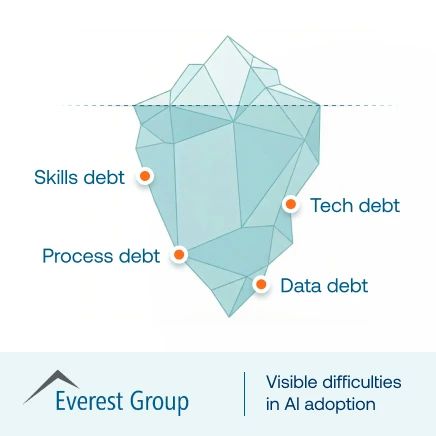


HR digital transformation is the redesign of HR operations, services, and workforce experiences through HCM platforms, AI, automation, data, and digital learning. The last mile of that digital transformation is workforce enablement to drive adoption: helping employees, managers, and HR teams confidently use new technologies to complete tasks, find information, build skills, and adapt as systems and processes change.
This guide breaks down the core pillars of HR transformation, real-world examples, common implementation and HCM adoption challenges, and practical strategies for accelerating transformation and maximizing technology ROI.
What Is HR Transformation?
HR transformation is the strategic redesign of HR operations, workforce experiences, and service delivery through modern HCM platforms, AI, automation, data, and digital learning. It connects technology modernization with process improvement and workforce enablement so employees, managers, and HR teams can complete tasks efficiently, access support, develop new skills, and adapt to frequent change.
Why HR Modernization Is a Key Priority for CHROs
- CHROs now own the workforce side of enterprise technology value: Every major technology investment depends on employees adopting new applications, workflows, and ways of working. Gartner identifies shaping work for the human-machine era as a defining CHRO priority for 2026.
- HR technology investment is outpacing realized value: 69% of core HR systems operate on SaaS or hybrid-cloud infrastructure, but only 52% of organizations report measurable value from their HR technology investments. CHROs must improve adoption, integration, and workforce enablement after implementation.
- AI is changing roles across the organization: AI and workplace digitization have become dominant CHRO priorities as organizations redesign work, introduce AI-enabled services, and build new workforce capabilities. HR must prepare employees to use these tools responsibly and productively.
- Skills gaps are limiting transformation: The World Economic Forum identifies skills mismatches as a defining workforce challenge in 2026. CHROs need better skills data, targeted development, hands-on practice, and continuous performance support to prepare employees for evolving roles.
- Employees expect simpler digital experiences: Fragmented systems and complex workflows create friction across onboarding, payroll, benefits, learning, and performance management. Employee experience ranked among CHROs’ leading 2025 priorities, alongside organizational design and change management.
- Continuous change requires scalable workforce support: Frequent application updates, policy changes, reorganizations, and new compliance requirements make one-time training insufficient. CHROs need targeted communication, contextual guidance, simulations, and searchable support that evolve with the organization.
- HR must operate with greater efficiency and intelligence: Automation, employee self-service, enterprise search, and connected HR workflows can reduce administrative work while giving HR teams more capacity for workforce planning, talent development, and strategic decision-making.
- Executive teams expect measurable business outcomes: HR transformation is increasingly evaluated through productivity, time to proficiency, service quality, skills readiness, feature adoption, and return on HCM and AI investments. Technology deployment alone no longer demonstrates transformation success.
Core Pillars of HR Digital Transformation
HR digital transformation spans four connected areas that shape how HR operates, how employees access services, and how the workforce adopts new systems, skills, and ways of working.
- Employee experience and self-service: Create intuitive, personalized experiences that help employees and managers complete HR tasks, find policies, access benefits, and resolve common questions across HCM systems and digital channels.
- Workforce enablement and performance support: Provide employees with contextual guidance, hands-on training, AI simulations, role-play experiences, and in-the-flow support so they can use HR technologies confidently and reach proficiency faster.
- Change management and skills adoption: Prepare the workforce for frequent changes in systems, processes, policies, and AI-enabled workflows through targeted communication, role-based learning, guided experiences, and continuous reinforcement.
- HR operations and service delivery: Streamline HR processes, automate repetitive work, improve case management, and connect fragmented tools so HR teams can deliver faster, more consistent services while reducing administrative effort.
Examples of HR Digital Transformation
Here are six examples of core HR modernization efforts that drive organizational ROI:
1. Modernizing Core HCM Systems
Organizations are replacing disconnected legacy systems with cloud HCM platforms that unite payroll, benefits, talent, performance, learning, and workforce planning. Although 69% of core HR systems now operate on SaaS or hybrid-cloud infrastructure, only 52% of organizations report measurable value from their HR technology investments. HR leaders can close this gap with role-based training, contextual guidance, self-service support, and feature-usage analytics.
Key outcomes: HCM adoption, feature utilization, workflow completion, reduced errors, and technology ROI.
2. Creating Frictionless HR Service Delivery
HR service delivery transformation simplifies how employees find information, submit requests, manage benefits, and resolve payroll or leave questions. Connected workflows, employee self-service, automation, case management, and in-app support reduce manual work and improve service consistency. This is increasingly important as 77% of large employers using or implementing a major HCM platform still rely on manual checks, parallel systems, or legacy backups.
Key outcomes: Higher self-service resolution, fewer HR tickets, faster response times, and lower administrative effort.
3. Accelerating Employee Onboarding
Digital onboarding connects compliance, system setup, role training, and early performance support into a structured employee journey. New hires can practice workflows through application simulations, AI roleplay, guided task lists, and contextual support before and during live work, helping them build confidence and reach proficiency faster.
Key outcomes: Faster time to proficiency, stronger knowledge retention, fewer onboarding errors, and higher new-hire productivity.
4. Scaling AI and Enterprise Search Adoption
HR leaders are responsible for preparing employees to use generative AI, enterprise search, copilots, and AI features embedded across business applications. With average enterprise HR AI budgets projected to reach $1.6 million in 2026, organizations need governance, role-specific use cases, hands-on training, and contextual support that translate investment into responsible, productive AI adoption.
Key outcomes: Higher AI adoption, improved search success, reduced information-finding time, and responsible AI usage.
5. Closing Workforce Skill Gaps
Skills transformation uses workforce data to identify capability gaps and deliver development aligned with current and emerging roles. Simulation training, AI roleplay, guided practice, and assessments allow employees to build and demonstrate proficiency in realistic environments before applying new skills to live work.
Key outcomes: Improved workforce readiness, verified proficiency, stronger internal mobility, and reduced operational risk.
6. Enabling Continuous Change
HR teams must support frequent changes to applications, features, policies, workflows, and compliance requirements. Targeted announcements, role-based guidance, updated simulations, searchable support, and adoption analytics help employees adjust quickly while giving HR insight into abandoned workflows, recurring errors, and underused features.
Key outcomes: Faster change adoption, fewer workflow disruptions, lower support demand, and sustained process compliance.
Challenges of HR Transformation Adoption
HR transformation adoption often stalls when employees lack the training, support, and confidence needed to use new systems and workflows effectively. Here are core challenges HR leaders must overcome to drive adoption and realize ROI:
Employee Resistance to New Systems and Workflows
Employees may avoid unfamiliar HCM features, AI tools, and redesigned processes when the value, expectations, or impact on their roles is unclear. This resistance to change creates workarounds, causes employees to fall back on legacy processes, and undercuts the entire modernization project.
Complex and Fragmented HR Technology Stacks
Disconnected HCM, payroll, learning, recruiting, and service-management tools force employees to navigate inconsistent interfaces and duplicate workflows.
Insufficient Role-Based Training
Generic demonstrations rarely prepare employees to complete real tasks. Different roles require guided practice, application simulations, AI roleplay, and support aligned with their responsibilities.
Limited Support at the Moment of Need
Employees often receive training before launch but lack contextual help when completing unfamiliar or infrequent tasks inside live applications.
Low Awareness and Adoption of HCM Features
Employees and managers may continue using spreadsheets, email, manual workarounds, or legacy processes because they do not understand newer platform capabilities.
Change Fatigue From Frequent Updates
Application releases, AI features, process changes, policy updates, and reorganizations can overwhelm employees when communication and reinforcement are poorly coordinated.
Inconsistent Employee Self-Service Experiences
Complicated workflows, unclear terminology, and hard-to-find information increase HR tickets and discourage employees from using self-service channels.
Skills Gaps and Uneven Digital Proficiency
Employees enter transformation initiatives with different levels of technical confidence, process knowledge, and readiness to use AI-enabled tools.
Limited Visibility Into User Friction
HR leaders may know that adoption is low without knowing where employees abandon workflows, make errors, search for help, or underuse valuable features.
Weak Measurement of Post-Launch Value
Implementation milestones can overshadow adoption, proficiency, task success, service quality, and the measurable return generated from HR technology investments.
Best Practices to Accelerate HR Transformation ROI
CHROs can accelerate returns by shifting attention from system implementation to the employee behaviors, workflow improvements, and service outcomes that create measurable business value. Here are six steps HR leaders must take to accelerate time-to-value for new HR modernization projects and technology implementation:
1. Define Business Outcomes Before Technology Requirements
Set measurable transformation goals before selecting HR software vendors, shortlisting features, or building rollout plans. Connect each HR tech investment to outcomes such as faster new hire time-to-proficiency, higher self-service knowledge discovery, reduced HR case volume, improved people data accuracy, greater workforce productivity, or reduction in skill gaps. Establish baseline HR transformation metrics for each priority workflow and assign an accountable owner.
2. Prioritize High-Value HCM Workflows and Features
Focus digital adoption efforts on the HR workflows that have the greatest effect on employees, managers, and HR operations, such as employee onboarding, benefits enrollment, time reporting, performance reviews, learning, and workforce planning. Identify which HCM features are underused, where users abandon tasks, and which processes still depend on email, spreadsheets, or manual intervention.
This workflow-level approach prevents transformation programs from treating every feature as equally valuable. It also helps CHROs direct enablement resources toward capabilities that reduce costs, improve decisions, or materially strengthen the employee experience.
3. Build Workforce Enablement Into Every Rollout
Employee enablement should be foundational in all HR transformation budgets, implementation plans, and workflow governance from the beginning. Provide role-based onboarding, contextual guidance in the flow of work, searchable internal wikis or self-service help portals, and in-app communication that guide employees through unfamiliar HR tasks (think annual tasks like completing a performance review or updating benefits) without removing them from their work.
Workforce enablement should continue after new system or transformation go-live as HCM features, HR policies, and HR service workflows evolve. Embedded guidance and real-time adoption metrics can reduce errors, accelerate competency, and help transformation teams identify user friction before it becomes a widespread issue that burdens IT support, frustrates teams, and causes rework.
4. Accelerate Proficiency With Hands-On Practice
Give HR operations teams opportunities to practice complex HCM workflows, AI use cases, and high-stakes interactions before performing them in live environments. Application simulation tools, guided sandbox training experiences, and AI roleplay help HR admins and team leaders build applied skills, practice difficult people scenarios, and allow HR teams to validate readiness for system launch or real work.
Use proficiency data to personalize reinforcement and identify employees or teams that need additional support or have skill gaps. This connects learning investment to demonstrated performance rather than course completion alone.
5. Simplify HR Services and Remove Manual Workarounds
Redesign HR service delivery around connected workflows, employee self-service, enterprise search, automation, and contextual support. Employees should be able to find trusted answers and complete routine HR tasks without navigating multiple portals or opening avoidable support tickets.
The opportunity is substantial. 77% of large employers operating or implementing a major HCM platform still rely on manual checks, parallel systems, or legacy backups, while a quarter of HCM and payroll technology spending is consumed by managing complexity.
6. Manage Adoption as a Continuous Operating Discipline
Create a cross-functional HR transformation adoption committee that includes stakeholders from HR, IT, and business leaders. Large organizations often have assigned owners for change enablement, HCM product owners, and L&D teams that will need to be included. Review HR technology feature usage, workflow completion, user errors, support searches, qualitative employee feedback, and performance data regularly, then use those insights to improve HR workflows, rollout processes, new hire software training, and targeted end-user support.
Apply the same discipline to enterprise AI adoption. With average HR AI budgets reaching approximately $1.6 million in 2026, CHROs need ongoing usage governance, practical use cases, hands-on training, and clear AI adoption measures that connect AI usage to workforce and business outcomes.
Maximize HR Transformation With Whatfix
Whatfix provides an AI-powered platform for preparing employees, guiding them through HR workflows, analyzing adoption, and improving digital experiences across HCM and other enterprise applications. It helps CHROs connect workforce enablement with faster proficiency, more consistent execution, higher feature adoption, and measurable technology ROI.
How Does Whatfix Drive HR Transformation Adoption?
- Prepare teams before launch and assess user readiness: Create realistic HCM simulations, guided practice, and AI role-play scenarios that allow employees to rehearse workflows safely. Assess proficiency, identify knowledge gaps, and provide targeted coaching to accelerate time to proficiency before users enter live systems.
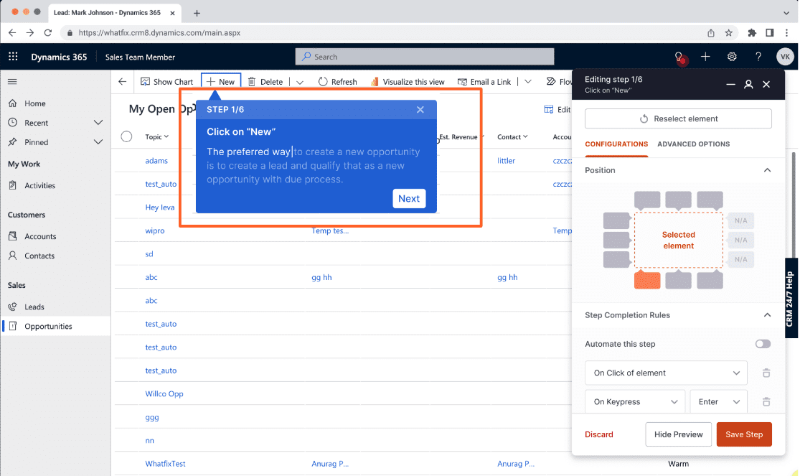
- Reinforce approved HR workflows and execution: With a digital adoption platform like Whatfix, create and launch Flows, Smart Tips, Task Lists, and other contextual instructions directly within HCM applications and other core HR systems to guide employees through approved processes, eliminate user errors, and support consistent execution during critical operational tasks.
- Personalize guidance for each workforce segment: Deliver in-app support and guided task walkthroughs based on an employee’s role, team, cohort, region, application context, or stage in an HR process. This allows HR leaders to provide relevant experiences for employees, managers, HR administrators, and other user groups.
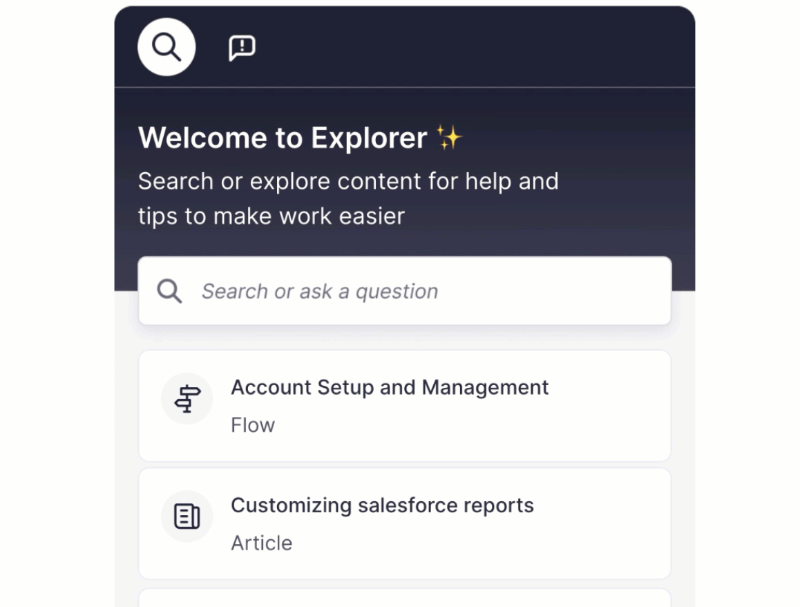
- Provide AI-powered support and enterprise search within HR workflows: Give employees access to intelligent search, summarized information, content recommendations, and self-service support while they work with Self Help, helping them find trusted answers and complete HR tasks with less dependence on service teams.
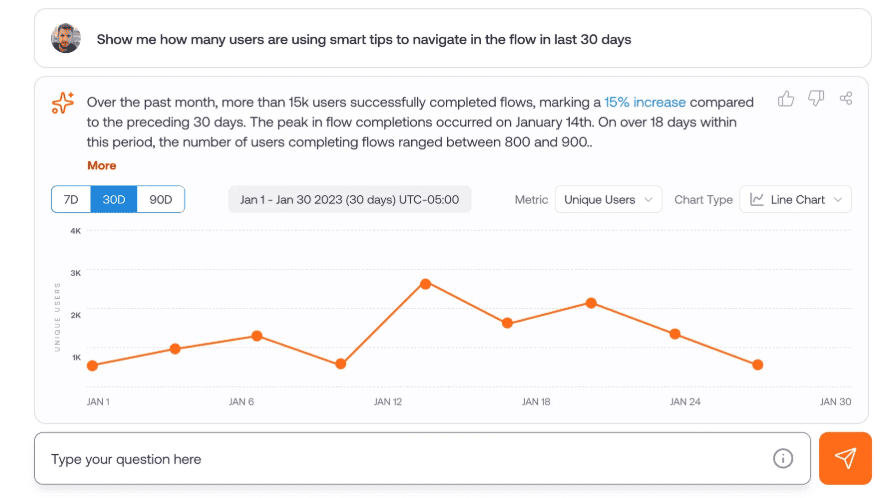
- Identify friction and measure transformation impact: Analyze workflow completion, drop-off points, feature usage, time spent, task drift, and engagement with behavioral analytics and product insights. Compare experiences across roles and cohorts to uncover workflow variation, locate adoption barriers, and connect enablement initiatives to measurable outcomes.
- Launch targeted improvements and sustain adoption: Use behavioral insights to deploy guidance, address confusing workflow steps, promote advanced HCM features, and support employees through application releases, policy updates, process changes, and new AI capabilities.
Key Whatfix capabilities and features
- Application simulations with Whatfix Mirror: Replicate HCM and HR application workflows in a risk-free environment where employees can practice tasks, build confidence, and demonstrate readiness before working in production systems. AI assesses if users are ready for real work and suggestion additional readiness action before live tasks.
- AI roleplay: Create adaptive voice and chat scenarios that let employees practice workplace conversations, receive personalized feedback, and develop the behavioral skills required for employee, manager, and HR service interactions.
- Contextual in-app guidance with Whatfix DAP: Use Flows, Smart Tips, Task Lists, Pop-Ups, and other embedded guidance to onboard users, reinforce approved workflows, reduce errors, promote advanced HCM features, and support employees through process changes.
- AI Self Help: Give employees searchable, in-app access to approved HR resources, process guidance, and summarized answers while they complete tasks, reducing information-finding time and avoidable HR support requests. AI provides summarizations and helps surface relevant answers to end-user searches. Use trends data to identify friction areas and documentation gaps.
- Product Analytics: Track application and feature usage, measure workflow and guidance adoption, identify user friction, compare behavior across roles or cohorts, and evaluate whether targeted interventions create sustained behavioral change.
- Whatfix AI Agents: Use AI agents to create Flows, Pop-Ups, and targeting rules from natural-language prompts; extract and summarize approved knowledge for employees through Self Help; and analyze behavioral data to identify friction, adoption gaps, and opportunities for new targeted guidance.
Case studies of companies partnering with Whatfix to drive HR transformation adoption
| Company | Challenge | How They Used Whatfix | Outcomes and ROI |
|---|---|---|---|
| Extra Space Storage | Support 7,500+ frontline associates across 4,000+ locations while standardizing infrequent rental workflows, simplifying fragmented knowledge access, and communicating frequent system changes. | Embedded AI-powered Self Help, 87 guided Flows, Smart Tips, and real-time Pop-Ups within its Breeze rental management system. Whatfix also helped subject-matter experts create and update guidance faster. | Generated $288,000 in ROI, achieved a 95% self-service resolution rate, deflected 2,500+ support tickets, and reduced complex rental transactions for new associates by 50%. |
| ManpowerGroup | Transition recruiters to Bullhorn ATS while replacing difficult-to-maintain training resources and scaling post-onboarding support without increasing help-desk demand. | Created 119 Flows for essential recruiting processes and supplemented them with Smart Tips, Pop-Ups, contextual prompts, and personalized Self Help embedded in Bullhorn. | Achieved a 92% self-service resolution rate for recruiters using Self Help and closed its temporary Hypercare help desk earlier than expected due to low support volume. |
| PageGroup | Improve new-recruiter readiness, govern ATS workflows across regions, support compliance, and deliver frequent changes through a platform capable of handling dynamic application experiences. | Combined Whatfix DAP and Product Analytics to deliver localized Flows, Smart Tips, Task Lists, Self Help, targeted campaigns, and cohort-based guidance inside its Salesforce-based ATS. | Accelerated recruiter time to proficiency by 44%, reducing onboarding from six to four weeks and training from 17 to 9.5 hours. It also achieved 97% successful resolution across 12,500 Self Help searches and increased adoption of a new recruiting feature from 67% to 92% in the UK. |
Ready to get started on your HR digital adoption journey? Request a Whatfix demo today!