




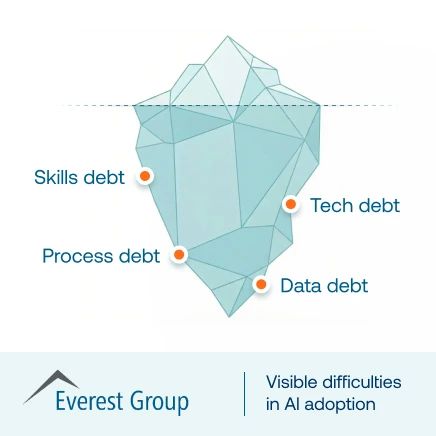


HR transformation is driven by pressures that incremental modernization cannot address. AI is reshaping work, skill requirements are shifting, and businesses need their people functions to respond with greater speed and foresight.
Yet the structures supporting HR service delivery have not kept pace. Many functions remain constrained by silos, fragmented systems, and processes designed for stability rather than continuous change. Deloitte found that 66% of C-suite leaders believe traditional functions must change, but only 7% say their organizations are making progress.
Moving from recognition to results requires more than new technology. Organizations must redesign how HR creates value, delivers services, informs workforce decisions, builds capabilities, and enables people to adopt new ways of working. This guide explores the pillars, use cases, and strategies behind that transformation.
What Is HR Transformation?
HR transformation is the strategic redesign of an organization’s HR operating model, processes, services, capabilities, data, and technology to improve workforce and business outcomes. It changes how HR delivers value, supports employees and managers, and contributes to decisions about talent, skills, and organizational performance.
Technology can enable this transformation, but lasting value depends on redesigned workflows, clear ownership, and sustained adoption across the workforce.
Why HR Transformation Matters
HR transformation strengthens both the performance of the HR function and the organization’s ability to manage an evolving workforce.
- Increase HR efficiency and scalability: Standardize processes, automate routine work, and expand self-service so HR can support growth without proportional increases in cost and headcount.
- Improve employee and manager experiences: Make HR services, information, and workflows easier to access and complete across the employee lifecycle.
- Strengthen workforce planning and decision-making: Use connected workforce data to anticipate capacity, cost, and skill requirements and make better talent decisions.
- Build skills and organizational adaptability: Identify skill gaps and prepare employees for changing roles, technologies, and ways of working.
- Reduce operational, data, and compliance risk: Establish consistent workflows, clear ownership, reliable data, access controls, and auditable processes.
- Increase returns from HCM and AI investments: Technology adoption is outpacing value realization. Although 69% of organizations use SaaS or hybrid-cloud core HR systems, only 52% report quantifiable value from HR technology. HR transformation connects technology investment with workflow adoption, service outcomes, and measurable business value.
Six Pillars of HR Transformation
HR transformation requires coordinated change across six connected pillars.
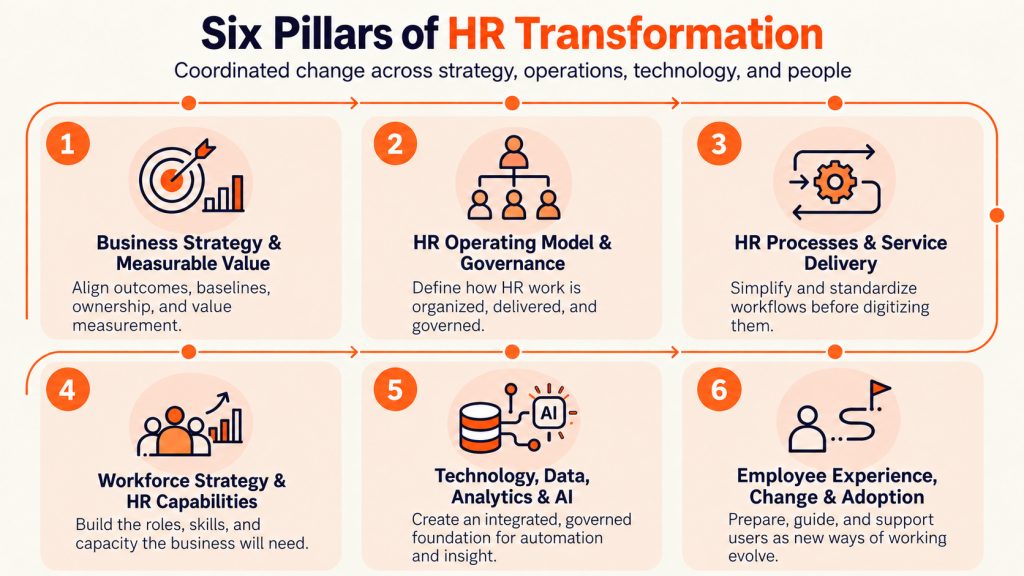
- Business strategy and measurable value: Connects transformation priorities with defined business outcomes, performance targets, executive sponsorship, and accountability.
- HR operating model and governance: Defines how HR work is organized and delivered, including service ownership, decision rights, standards, and cross-functional governance.
- HR processes and service delivery: Redesigns and standardizes workflows, removes unnecessary friction, and determines where global standards or local variations are required.
- Workforce strategy and HR capabilities: Aligns future roles, skills, and workforce capacity with business priorities while building the capabilities HR needs to lead transformation.
- Technology, data, analytics, and AI: Establishes an integrated and governed foundation across HCM applications, workforce data, analytics, automation, and AI.
- Employee experience, change, and adoption: Prepares and supports users through communication, hands-on practice, in-app guidance, self-service support, feedback, and adoption analytics.
HR Transformation Use Cases
HR transformation takes shape through initiatives that improve how HR services are delivered, how workforce decisions are made, and how employees interact with HR.
1. Modernizing Core HCM Systems
Organizations replace disconnected legacy systems with cloud HCM platforms that unify core HR processes and data. Role-based training, contextual guidance, and adoption analytics help translate implementation into effective system use.
Key outcomes: HCM adoption, feature utilization, workflow completion, fewer errors, and technology ROI.
2. Scaling HR Shared Services and Employee Self-Service
Shared services centralize repeatable HR activities, while self-service tools enable employees and managers to complete routine tasks independently. This reduces administrative work and improves service consistency.
Key outcomes: Higher self-service completion, faster case resolution, fewer support requests, consistent service delivery, and lower service costs.
3. Transforming Recruiting and Onboarding
Connected recruiting and onboarding workflows reduce delays across hiring and help recruiters, managers, and new employees complete critical tasks correctly.
Key outcomes: Shorter time to hire, higher onboarding completion, fewer process delays, faster time to productivity, and stronger new-hire retention.
4. Building Skills-Based Talent Management
Skills data helps organizations identify capability gaps and make better decisions about development, internal mobility, succession, and talent deployment.
Key outcomes: Better skills visibility, faster skills-gap closure, increased internal mobility, stronger succession coverage, and improved workforce readiness.
5. Advancing Workforce Planning and People Analytics
Workforce planning and analytics connect people data with business priorities, helping leaders anticipate talent needs, control labor costs, and address workforce risks earlier.
Key outcomes: Improved forecast accuracy, better talent allocation, earlier risk identification, controlled workforce costs, and faster workforce decisions.
6. Enabling HR Operations With AI
AI can automate routine HR work, answer common questions, generate content, and surface workforce insights. Reliable data, clear controls, and human oversight are essential for responsible use.
Key outcomes: Faster service delivery, reduced manual effort, higher HR productivity, consistent responses, and responsible AI adoption.
Common HR Transformation Challenges
HR transformation affects systems, processes, responsibilities, and employee experiences across the organization. Common challenges include:
- Leadership misalignment and unclear ownership: Executives may agree that HR needs to change without agreeing on the priorities or expected outcomes. Decisions then stall because accountability for processes, technology, data, adoption, and results is unclear.
- Digitizing inefficient processes: Organizations often configure new technology around existing HR processes without questioning how those processes work. This carries unnecessary approvals, duplicate work, inconsistent handoffs, and manual workarounds into the new system.
- Legacy systems and unreliable data: Modern HCM platforms must often connect with aging payroll, learning, recruiting, finance, and workforce-management systems. Fragile integrations and inconsistent employee data make migration harder and reduce trust in automation, analytics, and AI.
- Organizational resistance to change: Employees may resist new HR systems and processes when the purpose is unclear, the change creates additional work, or previous implementations have been unsuccessful.
- Inadequate workforce enablement: Generic communication and one-time training rarely prepare every user for role-specific HR workflows. Without hands-on practice and support at the moment of need, employees may understand that a process has changed but still be unable to complete it correctly.
- Weak post-launch governance and measurement: Without ongoing measurement, organizations cannot see which features are underused, where employees struggle, or whether the transformation is producing business value.
Strategies to Maximize Value From HR Transformation Initiatives
These six practices help accelerate time to value across HR modernization and technology initiatives.
1. Define Business Outcomes Before Technology Requirements
Set measurable transformation goals before evaluating HR software, shortlisting features, or building rollout plans. Connect each investment to outcomes such as faster new-hire proficiency, greater self-service adoption, reduced HR case volume, improved people-data accuracy, higher workforce productivity, or smaller skills gaps. Establish a baseline for each priority workflow and assign an accountable owner.
2. Prioritize High-Value HCM Workflows and Features
Focus digital adoption efforts on workflows with the greatest impact on employees, managers, and HR operations, including onboarding, benefits enrollment, time reporting, performance reviews, learning, and workforce planning. Identify underused features, task abandonment points, and processes that still rely on email, spreadsheets, or manual intervention.
This workflow-level view prevents transformation teams from treating every feature as equally valuable. It directs enablement resources toward capabilities that reduce costs, improve decisions, or strengthen the employee experience.
3. Build Workforce Enablement Into Every Rollout
Make employee enablement a defined workstream within transformation budgets, implementation plans, and workflow governance. Provide role-based onboarding, contextual guidance, searchable self-service support, and in-app communication for unfamiliar or infrequent tasks such as performance reviews and benefits enrollment.
Enablement must continue after go-live as HCM features, policies, and service workflows evolve. Embedded guidance and adoption metrics can reduce errors, accelerate proficiency, and expose user friction before it creates widespread rework, support demand, or employee frustration.
4. Accelerate Proficiency With Hands-On Practice
AIHR reports that only 35% of HR professionals feel equipped to use AI technologies. As AI becomes embedded in recruiting, service delivery, analytics, and workforce decisions, providing access to these tools does not automatically create proficiency.
Give HR operations teams opportunities to practice complex HCM workflows, AI use cases, and high-stakes interactions before performing them in live environments. Application simulations, guided sandbox training, and AI roleplay help HR administrators and managers build applied skills while giving transformation teams evidence of launch readiness.
Use proficiency data to personalize reinforcement and identify users who need additional support. This connects learning investments to demonstrated performance rather than course completion alone.
5. Embed Contextual Support Into HR Workflows
Employees and managers often use HCM systems for infrequent but important tasks, such as enrolling in benefits, completing performance reviews, approving time, or updating personal information. Expecting users to remember training or search a separate knowledge base creates unnecessary friction.
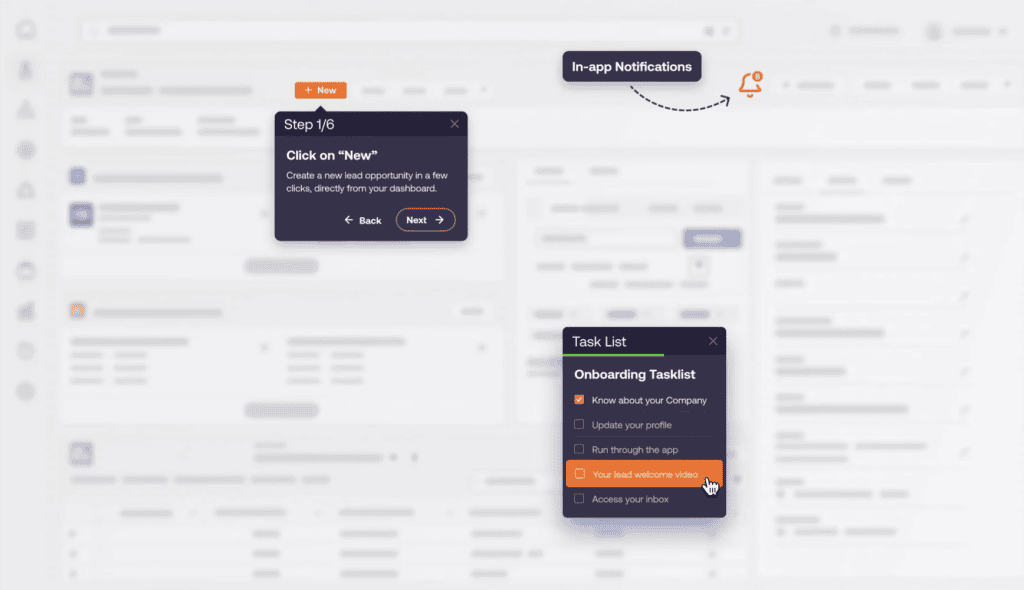
Embed walkthroughs, field-level explanations, policy guidance, task checklists, and searchable help within the application. This in-app support helps users complete workflows correctly at the moment of need, reduces avoidable HR tickets, and reinforces new processes as systems and policies change.
6. Manage Adoption as a Continuous Operating Discipline
Create a cross-functional HR transformation adoption committee with representatives from HR, IT, business functions, change enablement, L&D, and HCM application ownership. Regularly review feature usage, workflow completion, user errors, support searches, employee feedback, and performance data.
Use these insights to improve workflows, rollout processes, software training, and targeted end-user support. Apply the same discipline to enterprise AI through governed use cases, hands-on training, usage monitoring, and measures that connect AI adoption with workforce and business outcomes.
HR Transformation Roles and Responsibilities
HR transformation cannot sit with HR alone, but accountability must remain clear across six core groups:
- Executive sponsor and steering committee: Set business outcomes, secure funding, resolve cross-functional issues, and remove barriers to progress.
- CHRO and HR transformation leader: Own the transformation vision, roadmap, operating model, delivery priorities, and value realization.
- HR process and service owners: Redesign workflows, define standards and controls, manage justified local variations, and monitor service performance.
- IT, HR technology, and data owners: Select, configure, integrate, secure, and maintain HCM platforms while governing data quality, access, and releases.
- Change enablement, L&D, and communications teams: Assess role impacts, prepare users, provide training and in-workflow support, and measure readiness and adoption.
- Business leaders, managers, and employees: Reinforce new behaviors, adopt redesigned workflows, participate in testing and training, and provide feedback on emerging friction.
How Whatfix Supports HR Transformation and Value Realization
HR transformation creates value only when employees, managers, and HR teams can perform redesigned workflows successfully. Whatfix adds a digital adoption and analytics layer across HCM, ATS, payroll, and HR service applications, supporting transformation before, during, and after go-live.
1. Validate Workforce Readiness Before Launch
Whatfix Mirror creates realistic replicas of HR application workflows where users can practice tasks without accessing production systems. Simulations, AI roleplay, and proficiency assessments help transformation teams identify skill gaps and verify readiness before launch.

2. Guide Employees Within HR Workflows
Whatfix DAP embeds Flows, Smart Tips, Task Lists, Pop-Ups, and other contextual guidance within HR applications. Experiences can be targeted by role, region, cohort, or process stage, while AI-powered Self Help gives users access to approved HR information without leaving the application.
3. Identify Adoption Gaps and Workflow Friction
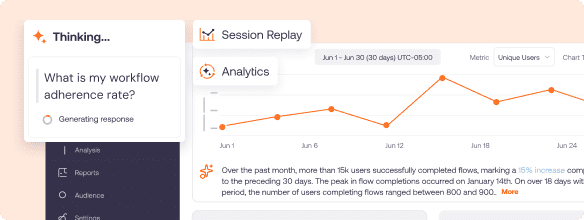
Whatfix Product Analytics shows how employees interact with HR systems, including feature usage, workflow completion, drop-off points, and differences between user groups. Transformation teams can use these insights to distinguish adoption issues from process, usability, or support gaps.
4. Target Remediation and Continuously Optimize Adoption
Use adoption and friction insights to identify employees or user groups that need additional support, then deliver targeted guidance, communications, or training based on their role, region, behavior, or proficiency. Transformation teams can measure whether each intervention improves workflow completion, reduces errors, or increases feature adoption, creating a continuous improvement loop as HR systems and processes evolve.
Examples of Successful HR Transformations
These examples show how organizations improved recruiter readiness, workflow execution, self-service, and feature adoption by supporting users inside their HR applications.
Partners Personnel Resolved 1,155 ATS Queries and Saved 192 Support Hours
Partners Personnel needed to improve recruiter onboarding and maintain consistent Bullhorn ATS workflows across its nationwide staffing network. Training content was spread across SharePoint, its LMS, and separate job aids, making it difficult for recruiters to find reliable guidance. The company embedded Whatfix Flows, Smart Tips, Pop-Ups, Launchers, and AI-powered Self Help within Bullhorn, resolving 1,155 workflow queries and saving an estimated 192 support hours.
The takeaway from Partners Personnel’s HR transformation:
A strong training program can still create friction when employees must search across multiple sources for help. Embedding trusted guidance and self-service within the HR application makes support easier to access, reinforces process changes, and reduces dependence on training and support teams.
PageGroup Accelerated Recruiter Time to Proficiency by 44%
PageGroup needed to prepare and support 5,500 recruiters using its Salesforce-based ATS while maintaining workflow consistency, data quality, and regional compliance. It combined Whatfix DAP and Product Analytics to provide localized guidance, guided Task Lists, Self Help, and targeted feature-adoption campaigns. PageGroup accelerated recruiter time to proficiency by 44%, achieved a 97% resolution rate across 12,500 Self Help searches, and increased adoption of a recruiting feature from 67% to 92% in the UK.
The takeaway from PageGroup’s HR transformation:
Enterprise HR transformation requires enablement that adapts to different roles, regions, and levels of adoption. Contextual guidance and behavioral analytics help transformation teams improve readiness, reinforce governed workflows, and target users who need additional support.
Request a Whatfix demo to see how hands-on training and in-app support help employees adopt new HR systems and processes.