AI is reshaping how companies coach and develop their people by making training more adaptive, more consistent, and easier to scale across large, diverse teams. AI training platforms like Second Nature have helped spark this movement by offering AI roleplay and virtual sales coaching that provide RevOp teams with a safe space to practice real conversations and build confidence with simulation experiences.
Leaders now have far more choices in this category than they did even a year ago. McKinsey found that organizations adopting AI in sales and marketing are seeing up to a 10–20% increase in sales ROI when AI is embedded into core revenue workflows. That upside has created a crowded landscape.
Each vendor approaches AI roleplay and coaching differently, supports different use cases, and delivers different levels of depth and flexibility. It can be tough to understand where each platform excels, which ones are built for complex enterprise environments, and which features truly create an edge.
To close these gaps, our R&D worked with our customers to launch Whatfix Mirror, pairs brings AI roleplay and AI sales coaching together with immersive, simulation-based training and guided, in-the-flow performance support. This gives sales and support teams one unified environment to practice scenarios, strengthen soft skills, and apply new behaviors on the job.
Because of that work, we’ve studied the AI roleplay and coaching ecosystem, including Second Nature and the growing set of alternatives shaping the market.
In this article, we’ll explore who can benefit from Second Nature AI, where it shines, where it falls short, how it’s priced, and how it compares to top competitors, including Whatfix Mirror, the category leader in AI sales coaching, immersive AI roleplay, and simulation-based training.
What are the best Second Nature AI alternatives?
What Is Second Nature AI?
Second Nature AI is a sales training platform that uses AI-driven coaching to help revenue teams sharpen their skills. Its AI sales coach guides reps through practice conversations that feel close to the real thing, giving them a safe space to build confidence and improve faster.
Teams can tailor each roleplay to match the scenarios their reps face every day. Managers can upload materials they already rely on, and the platform uses that content to shape realistic conversations for reps to work through.
During a roleplay, reps interact with AI personas that respond in real time. They get instant voice-based guidance on how to adjust their pitch, handle objections, or strengthen their negotiation approach. After each session, they receive a full performance review that includes an overall score plus clear insights on what they did well and what to improve next
Second Nature AI’s core feature set includes:
- Custom AI role plays based on the content you upload
- Pre-built and custom AI sales training personas with realistic speech and movement
- Interaction recordings for manager review and personalized feedback
- Leaderboards that motivate reps to stay engaged in training
- Knowledge base and customized playbook features
What Is Second Nature AI’s Pricing?
While there is no publicly listed pricing on Second Nature AI’s website, we can find clues on websites like G2, Capterra, and Vendr about its pricing. According to customer reports, the median cost of Second Nature AI is between $19,000 and $26,700 annually.
What are the limitations of Second Nature AI?
For many organizations, there is a lot to love about Second Nature’s approach to AI roleplay and sales training. However, it has limitations that may not make it the best choice for large RevOps teams looking for a unified training platform that enables sellers to become their best, including:
1. Lacks hands-on training via realistic simulation environments
Second Nature’s core value sits squarely in AI-driven roleplay, yet that narrow design creates a training ceiling. Sales organizations dealing with complex workflows, multi-step processes, or systems navigation challenges need more than conversational practice. They require a simulation environment that accurately mirrors real-world applications and tasks. Without workflow simulation, teams struggle to prepare reps for the real-time problem-solving required when completing tasks within CRM systems, CPQ tools, or other sales platforms.
Modern revenue organizations are tightening budgets and consolidating tools. A training product confined to one mode of practice restricts cross-functional usability. Leaders responsible for onboarding, process change, or ongoing upskilling need a platform capable of replicating end-to-end scenarios, not just conversational roleplay. This limitation becomes more visible as companies try to standardize training across sales, service, operations, and customer success teams.
2. No guidance and support in the flow of work
Second Nature does not extend into live systems, leaving sellers without real-time guidance once they return to their daily tools. Teams often need support at the exact moment of action, such as entering pipeline updates, configuring quotes, following qualification steps, or adhering to internal processes within Salesforce, HubSpot, or other enterprise applications. Without in-app assistance, rep performance becomes inconsistent and heavily dependent on memory, tribal knowledge, and ad-hoc coaching.
Sales enablement leaders are increasingly seeking solutions that bridge the gap between training and execution. When knowledge lives outside the workflow, adoption slows, and errors multiply. Organizations require contextual nudges, task guidance, and embedded support that help sellers translate learned behaviors directly into their software environment. The absence of this capability limits Second Nature’s effectiveness as a proper performance enablement tool.
3. Insufficient compliance and certifications for enterprise sales teams
Security and compliance expectations continue to rise across regulated industries, and many revenue organizations operate under strict data protection mandates. Second Nature’s lack of certifications such as SCORM, HIPAA, TISAX, and FEDRAMP places it outside the consideration set for enterprises that must validate vendor compliance. Without these standards, implementation risk increases, slowing procurement and reducing confidence among IT, security, and legal reviewers.
Large organizations also depend on robust governance, data residency options, and deeply vetted privacy protocols to safeguard sensitive training data and customer information. A platform without enterprise-grade controls exposes it to audit risks and limits its usability across different geographies or business units. As compliance requirements tighten, enablement teams gravitate toward platforms that align with corporate governance frameworks and meet the expectations of global IT and security teams.
5 Best Second Nature AI Alternatives & Competitors
As new platforms emerge and leading L&D solutions incorporate more AI features, the AI roleplay and coaching space is constantly evolving.
While this software space is still being defined, several players stand out as key competitors to Second Nature AI. Here are the best Second Nature AI alternatives to add to your shortlist while selecting the best AI roleplay solution for your teams:
1. Whatfix Mirror
- Review Rating: 4.6 out of 5 across 480 reviews
- Best For: Enterprise sales and customer-facing teams that require AI roleplay paired with immersive simulation workflow training before using live systems.
- Get a Demo
Enterprise sales enablement teams need scalable, context-aware training across multiple tools and workflows. Unlike Second Nature AI’s AI roleplay-only model, Whatfix pairs AI roleplay with simulation training environments and embeds training where work happens, driving higher adoption and real-time reinforcement.
Whatfix Mirror enables you to clone CRM and sales applications to create hands-on, simulation-based training environments without requiring engineering support. Within these training environments, managers can build and deploy contextual AI roleplay scenarios and personalized coaches for every rep, adapting to input and personalizing conversations based on agent performance. After every interaction, this platform analyzes employee performance, assesses readiness, and recommends personalized next steps for continued training.
Post-training, enable sellers with in-app guidance and walkthroughs within live enterprise software using no-code authoring tools, so employees can receive just-in-time guidance and self-service help as they navigate sales applications. It also includes self-help bases that let managers incorporate sales playbooks, SOPs, and product documentation directly into sales rep workflows. Sellers can utilize its AI conversational search to find relevant help documentation, summarize content, and prompt guided experiences.
On the more technical end, Whatfix is compliant across SCORM, HIPAA, FedRAMP, GDPR, CCPA, SOC 2, and has enterprise-grade data privacy protocols. On top of that, all customers receive a dedicated team of customer success specialists, content authors, and AI engineers who build custom enterprise solutions, map their success journey, and support customers every step of the way.
| Capability | Whatfix Mirror | Second Nature |
| Hands-on workflow simulation | Full-system, task-level simulation that mirrors real applications | Limited to conversational roleplay; no workflow or process simulation |
| In-app, real-time guidance | Contextual support directly inside CRM, CPQ, and enterprise apps | No embedded guidance or performance layer in live tools |
| Cross-functional enablement | Supports sales, operations, service, onboarding, and change management | Primarily designed for sales reps practicing conversations |
| Enterprise compliance | Strong enterprise posture with support for industry frameworks and governance | Lacks certifications such as SCORM, HIPAA, FEDRAMP, TISAX |
| Training accuracy | Simulation grounded in actual system workflows | AI-driven responses with reported inconsistency and accuracy gaps |
| Scalability for global teams | Built for distributed enterprises with diverse roles and workflows | Limited flexibility for complex or multi-department programs |
| Analytics depth | Tracks completion, workflow execution, friction points, and behavioral performance | Focuses on conversational scoring and speech analytics |
2. Mindtickle
- Review Rating: 4.7 out of 5 across 2221 reviews
- Best For: Sales orgs prioritizing readiness measurement and data-backed coaching.
MindTickle is an AI copilot for revenue enablement across customer-facing teams. This solution takes a comprehensive approach to improving sales performance by combining more traditional training experiences with AI roleplay coaching, sales content management, digital sales rooms, and detailed call intelligence.
MindTickle takes a hybrid approach to coaching, enabling in-person, virtual, peer-to-peer, and self support. Its AI roleplays and other coaching activities trigger automatic AI insights according to its trademarked Readiness Index to validate progress, elevate morale, and ensure continuous improvement across sales teams. The Mindtickle website boasts a proven track record, suggesting that customers can expect a 40% increase in revenue per rep and 50% faster onboarding.
Key Features:
- AI-driven readiness assessments and learning paths
- Sales coaching modules tied to performance metrics
- Extensive analytics for rep readiness and pipeline impact
- Digital sales rooms to keep customers engaged through focused sales experiences
- AI Copilot for smart assistance from every angle.
3. Allego
- Review Rating: 4.6 out of 5 across 664 reviews
- Best For: Remote or distributed sales teams seeking collaborative learning experiences.
Allego is a sales enablement platform with innovative AI that helps sales managers create engaging coaching, content, and digital sales rooms with ease. This unified platform uses AI to help sales reps practice sales activities and learn in the moment with smart content, timely selling tips, and practical AI agents with conversational intelligence for smart performance insights.
This solution includes strategic support services and saves sales teams time, money, and resources by consolidating sales enablement tools into a single platform. Allego makes it easy to tailor training for specific and complex sales areas like life sciences, tech, and medical devices.
Key Features:
- Video-based coaching and peer learning to meet diverse learning needs
- On-demand content libraries for round-the-clock learning
- Real-time feedback from managers for human-centered training
- Digital sales rooms to facilitate real sales conversion once reps are proficient
4. Zenarate
- Review Rating: 4.9 out of 5 across 33 reviews
- Best For: Sales teams looking to boost sales team confidence and performance with realistic and engaging training experiences.
Zenarate is a sales training platform designed to help teams improve performance for sales reps and AI sales agents. This platform includes solutions for representative training, performance analysis, and AI agent testing. Zenarate Learn focuses on simulation training and AI coaching, enabling managers to create human-centered AI sales coaching experiences that facilitate lifelike role-play and continuous upskilling. This solution uses natural language processing and Gen AI to create realistic AI coaches, provide intelligent reinforcement, and give feedback via simulation scorecards.
Zenarate also includes software simulation for more immersive experiences, enabling data accuracy monitoring and helping sales managers identify friction areas to provide relevant and precise support wherever needed.
Key Features:
- Immersive AI roleplay and simulation training for sales scenarios
- Lifelike AI coaches for more realistic training experiences
- Accurate software simulations for immersive training activities
- Smart libraries and templates for simple content creation
- Simulation scorecards for detailed performance analysis and certification
5. Assima Train
- Review Rating: Assima Train has not yet been reviewed on G2
- Best For: Sales teams needing to hone soft skills or navigate complex selling environments.
Assima is an application training software provider with solutions for training, in-app search, and digital adoption. Assima’s Thin Clone Technology lets sales leaders create hyperrealistic, customizable simulation training environments that react like live systems for immersive learning.
Assima Train has advanced editing capabilities for detailed customization, data anonymization for added data protection, and real-time analytics that enable data-driven improvement. With this solution, simulation training can be deployed on any operating system as sandboxes, self-paced learning activities, formal tests and certifications, or immersive on-the-job learning.
Key Features:
- Mass data replacement for easy creation of application simulations
- Automated process capturing for realistic simulations
- Assessments and certifications for tangible performance tracking
- Easy lesson translation for training global teams
Why Whatfix Is the Best Second Nature AI Alternative
Choosing the right platform goes beyond comparing roleplay features. The real question is whether a solution helps people perform in the systems your business relies on every day. That’s where Whatfix stands out.
Core AI Roleplay Capabilities
Whatfix Mirror’s AI roleplay capability gives sales teams a controlled way to sharpen messaging, objection handling, and conversational technique inside an environment connected to real workflows. Instead of isolating pitch practice from the systems where deals are managed, Mirror ties simulations to the broader enablement ecosystem. Reps gain conversational fluency while staying anchored to the processes, terminology, and context specific to their organization. This removes the gap between theory and execution that often appears when roleplay lives in a silo.

Mirror’s conversational engine adapts to industry language, product complexity, and scenario variations, allowing teams to build exercises that reflect real customer interactions across regions and segments. Leaders can design structured practice paths, assess performance consistency, and surface coaching needs with precision. Paired with workflow simulation and in-app guidance, Mirror’s AI roleplay becomes part of a closed-loop enablement model where sellers practice, apply, and refine skills within a unified system built for enterprise scale.
Purpose-Built for Hands-On Simulation Training
Whatfix Mirror gives teams a way to practice inside an environment that behaves like the real application, not a stripped-down conversational proxy. Revenue organizations depend on flawless execution across CRM workflows, quoting processes, and internal systems, so simulation must extend beyond dialogue. Whatfix captures true end-to-end tasks, allowing reps to rehearse actions exactly as they will perform them in production. This shifts training from theoretical practice to applied proficiency.

Enterprises adopting Whatfix often replace scattered training tools because a single simulation platform can support every stage of the employee lifecycle. New hires onboard faster by practicing real tasks, tenured sellers sharpen their system fluency during product or process changes, and operations teams gain a repeatable way to reinforce new workflows. A simulation engine tied to real systems introduces a level of precision that conversational tools cannot replicate.
Directly Supports Sellers in the Flow of Work
Mirror extends training value into the moment of execution with support that meets sellers inside the applications where revenue workflows actually occur. Instead of expecting teams to internalize complex processes and recall them later, Mirror provides contextual instruction that reduces errors and lifts adherence. This improves forecast quality, accelerates deal progression, and strengthens operational discipline across the entire revenue organization.
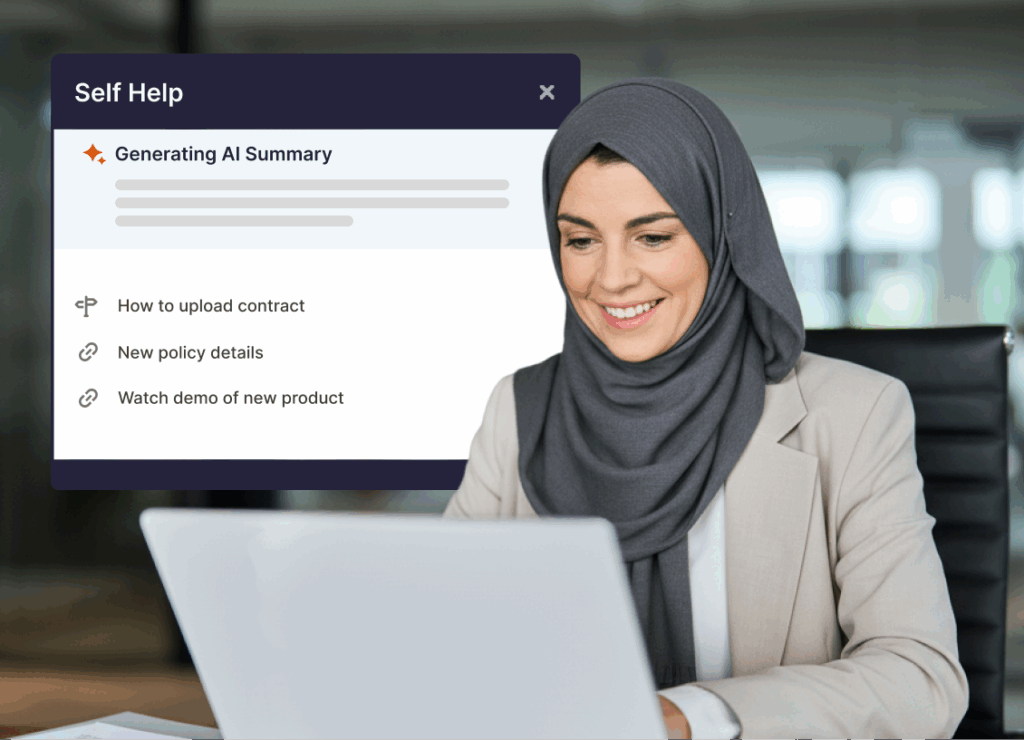
Beyond guidance, Mirror also eliminates knowledge decay. When workflows shift — and they always do — enablement teams can update steps once and distribute changes instantly across every user in every region. This avoids the chaos of static documentation, outdated playbooks, and inconsistent manager coaching. Mirror creates a performance layer that reinforces the right actions at the right time, turning training into measurable execution.
Aligned With Enterprise Compliance, Security, and Governance Requirements
Mirror is built for organizations that cannot compromise on data protection or regulatory expectations. Its compliance posture and enterprise certifications give security teams the confidence to support deployment across global business units and regulated teams. This unlocks adoption in industries such as life sciences, financial services, government, and healthcare — sectors where unverified tools rarely make it past procurement.
Governance features extend that value by supporting auditable workflows, controlled access, and consistent training standards across tools and roles. Large organizations avoid the operational and legal exposure that comes from tools lacking certifications or privacy safeguards. Mirror’s design reflects the realities of enterprise environments, where scaling training depends on trust, accountability, and validated compliance.
Ready to get started with Whatfix Mirror? Request your demo now!