








Introduction
Nabras Mohammed: Hello, everyone. Welcome to the latest episode of season four on the Digital Adoption Show. It is your go-to podcast for cutting-edge insights and innovative strategies in today’s dynamic work environment. I’m your host, Nabras Mohammed, Business Development Leader for Asia Pacific at Whatfix. Today, we will explore the top five digital transformation insights that help you scale innovation and customer experience across organizations.
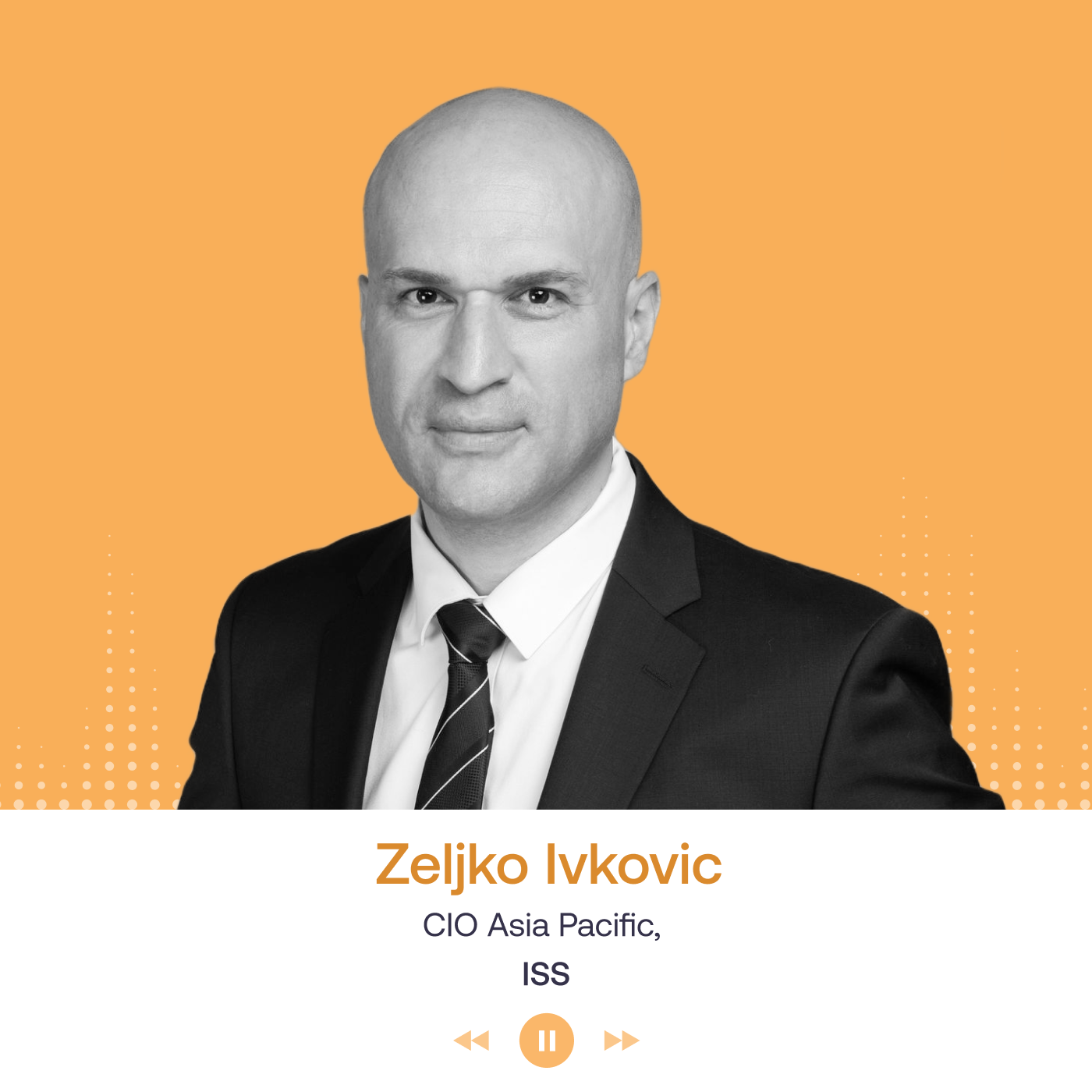
To discuss this theme, we have a great guest on our podcast, Zeljko, currently serving as a CIO at ISS, a leading company in workplace experience and facility management. He’s a seasoned professional whose career has crisscrossed the globe, with over 20 years under his belt in IT, automotive, and logistics. Zeljko’s journey from his birthplace in Croatia to Germany, Japan, China, and now Singapore, is a testament to his adaptability and drive.
He’s not just a tech expert; he’s a leader who knows how to bridge the gap between different cultures and industries, steering projects and teams to success. Now with ISS in Singapore, Zeljko is pioneering efforts to digitize and automate the facility management sector. This new chapter not only highlights his ongoing quest for innovation but also his commitment to fostering a culture that thrives on diversity and ingenuity.
As we chat with Zeljko today, we will uncover the insights that he has gained from his extensive career and explore the exciting potential he sees in transforming traditional industries through technologies. Welcome to the podcast, Zeljko.
Zeljko: Yeah, thanks a lot for having me. Pleasure to be here.
Digital Pulse: Connecting Passion and Profession
Nabras: So, Zeljko, before we dive into the main discussion, let’s kick off this episode with our segment, The Digital Pulse. This is where we try to connect the dots between the passion and the profession, uncovering how individual journeys shape visionary leadership. So Zeljko, is there a passion or activity outside of work that’s particularly close to your heart?
Zeljko: So, activity outside of work for me, specifically here in Singapore, a new country, a new environment. I think my family is one of the major anchors that I have and something that really helps me stay grounded. You can imagine that the new position with a new role keeps me pretty busy, trying to stay on top of things. It requires the best of you. So, I try to spend as much time as possible, which is obviously limited, with my family in my free time. In Singapore, with the local attractions and close-by countries for travel and other activities, family time is precious to me.
Nabras: Fantastic. I can only imagine. I’ve never lived outside of India. Like I said, your next destination should be India.
Zeljko: Who knows? Yeah.
Career Journey and Experience at ISS
Nabras: Fantastic. So, moving on to the real reason why we are doing this podcast, Zeljko. Now that you’re warmed up, we should actually begin the questions that are on the theme for this episode. To start with, why don’t you tell us a little bit about yourself and your experience at ISS?
Zeljko: All right. Yeah, first of all, again, thanks a lot for having me, Nabras. So about myself, I’m 48 years old, I’m Croatian. I’ve never lived in Croatia, but I was born in Germany. I have now an extensive experience, I think, of over 20 years living in Asia. I started the whole thing right after my studies with an internship in Japan, where I eventually spent six and a half years. Initially, I planned to stay there for six months, but I got so excited and interested in the country and Asia in general that I decided to stay.
At that time, I was still with the Bosch group, specifically ETAS, which is in the automotive area. I really loved the country, learned the Japanese language, and this somehow got me stuck with Asia for a longer period. After six and a half years in Japan, I moved to China, Shanghai, with the same company, ETAS, as we were growing, and I was responsible for Asia Pacific IT. China was the only country that was significantly growing at that time. I moved there to continue the journey, running Asia Pacific for ETAS within the Bosch building.
Around the same time that I arrived in Shanghai, I started an MBA and stayed there for another four years. I moved within the Bosch group to the IT M&A section, did some consulting and project management, focusing on intercontinental mergers, divestitures, joint ventures, and interim management. This cross-functional experience gave me insights into different functions and departments, which helped me combine it with the knowledge from my MBA studies in China.
At some point, I decided to make a move. With an MBA background, I stepped out of my comfort zone and took another role with Deutsche Bahn Schenker, a general management role for the Technology Solution Center. Reporting to global, I managed a team of 600 people, handling not only IT but also marketing and sales, learning a lot along the way. After five years in that role, I was offered the CIO role for Greater China within Deutsche Bahn Schenker, covering mainland China, Hong Kong, and Taiwan. I stayed there for two and a half years, even through the COVID wave.
Eventually, for family reasons, I moved out of China and found a role with ISS in Singapore about 10 months ago. Ever since, I’ve been with ISS, running high, running wild, and tackling new opportunities. Transitioning from the automotive sector to transport, and now to facility management, has been challenging but exciting. Facility management is a traditional business with low margins, and there are many opportunities to enhance our digital landscape within ISS. That’s why I found it so interesting to join ISS on this journey to become a tech leader in the industry.
Integrating Digital Transformation Across Cultures
Nabras: Fantastic. I mean, the kind of travel that you’ve had, different regions, different countries, different roles, it’s just amazing. Zeljko, the next question that I have, I think I won’t find a better person to ask this question, right? With the kind of background that you have and the scaling, the innovation across different industries that you have worked in, can you share your top insight on integrating digital transformation initiatives across different corporate cultures and geographical regions? You’ve had experiences in multiple regions. How is it different? Can you tell us more about it?
Zeljko: I think the word digital always comes together with tech and machines and tech solutions, but what’s much, much more important is the whole people piece to it, right? If you’re running a digital transformation, it’s much more about influencing an entire organization. And you can imagine that the whole thing changes depending on the industry, the size of the organization, whether it’s a tech company with many departments, and who the decision-makers are. That piece was something I really had to learn the hard way in the past, expecting you have a template, you have a workshop, and the whole thing runs by itself, right? It was a very different perspective that I had to learn.
As I mentioned, it’s not only an IT job, but it’s much more about facilitation, communicating, being an influencer in the whole story because, in the end, you have to manage people, manage relationships, influence, and market something, right? The marketing piece is crucial to bring it forward. You will always experience resistance. It’s not just about defining a goal and having followers around you. It’s about getting everyone on board to support and be part of the transformation journey.
Digital transformation comes with tangible goals, such as customer needs. For us, being customer-centric and having a win-win approach between ISS and the customer is vital. We aim for long-term relationships rather than quick fixes. It’s about collaboration and creating solutions that work in the long term.
Nabras: Yeah, I mean, that’s something we preach at Whatfix too. Transformation is not just about technology; it’s about people and how you influence them. You also mentioned customer satisfaction and long-term relationships. On that topic, with customer experience at the heart of digital transformation, what innovative approach or strategy have you found most effective in aligning IT infrastructure or operations to enhance customer interactions and satisfaction?
Zeljko: There is no single answer, especially looking at Asia Pacific. We have high-cost countries, low-cost countries, different leverage systems. One approach is omni-channel support, providing various communication methods for our customers and partners. It’s essential to go out, understand, and listen to the problems rather than assuming we know the solution. Defining the problem clearly is 95 percent of the solution.
Being aware of customer pain points makes it easier to find satisfying answers. It’s not about jumping on the latest trend but finding proper use cases that benefit. We offer cloud-based solutions for scalability and flexibility to adapt to changing customer demands and business requirements. Cybersecurity is also a significant focus, providing a safe and stable environment. ISS invests heavily in cybersecurity, having one of the largest teams in the industry to ensure our solutions are secure.
Prioritizing Digital Innovations
Nabras: Makes sense. So, once you have identified the problem to solve, there are many technology solutions available. With massive advancements in recent years, how do you prioritize which digital innovations to implement for operational excellence and customer service improvement in your organization?
Zeljko: It’s usually the one-word strategy, and strategy is a stretchable word. It’s all about business goals, both for ISS and our customers. Finding the right innovations is crucial. There are plenty of startups, but only a small proportion will be successful in the long run. With limited budgets, you have to be careful and particular in your approach. Problem-solving focus is essential, not just adding fancy, nice-to-have solutions.
Aligning strategy from top to bottom is vital. There’s a strong alignment from the ISS board on a global scale, defining priorities and strategy. There’s also a feedback loop from countries, aligning with the senior leadership team to understand pain points. Being close to the customers, talking to different customers, and understanding their needs are crucial. Different customers have different investment capabilities, and you have to be flexible in your approach to provide affordable solutions.
Nabras: You’re spot on. It’s important to have top-to-bottom buy-in for such strategies to be successful. When you’re in a transformation journey, it requires a shift in mindset and company culture. There is always resistance to change. Can you share a specific challenge you faced while driving such a change in an organization and how you overcame it?
Zeljko: You will always have challenges, no matter your history or successes. Being successful in the past is no guarantee for future success. Having a clear goal, faith, and resilience is crucial. The mindset shift is essential. Depending on the organization’s maturity, approach varies. Cultural and religious aspects play a role in changing mindsets. People who have been with a company for decades find it harder to adapt to new approaches.
In China, implementing change was easier due to the cultural perspective and more following mindset. In the Western Hemisphere, it takes more preparation, buy-in, and influencing to get everyone on board. It’s a more democratic process, requiring more time and effort. Being open-minded, understanding stakeholders, and effective communication help in changing mindsets and company culture.
Future Trends and Technologies
Nabras: True. The regional aspect and culture play a key role. Looking ahead, what emerging technology or trend do you believe will have the most significant impact on customer experience and operational excellence in the next few years? Obviously, there is AI. What are your thoughts?
Zeljko: Yes, AI is everywhere now, finally mainstream. In the facility management industry, ISS heavily invests in IoT with sensors to collect data. Understanding environments, buildings, and facilities through sensor data is crucial. Moving from dashboards to AI-driven conclusions and event-triggering will be key. Predictive and prescriptive analytics will help in proactive maintenance and operations.
In the private sector, platforms like Amazon use recommendation engines. This approach is now moving into B2B, where AI can be trusted and leveraged. IoT, AI, and augmented reality solutions will play a significant role in transforming operations. Natural language processing, voice recognition, and GPT technologies will create new opportunities and roles we can’t anticipate yet. These technologies will help create new positions and transform the way we work.
Nabras: Fantastic. It’s going to be an exciting few years with new transformative systems and changing work environments. Zeljko, the final question in this segment: With your experience, what is the most important lesson you have learned about leading transformation efforts that you would pass on to other CIOs and tech leaders?
Zeljko: Number one, being successful in the past is no guarantee for future success. Have a clear goal, faith, and resilience. Transformation is always challenging, with conflicts and hurdles. Every transformation is different, with different people, culture, and roles. It’s about having resilience and believing in your path. Stick with it, go to the end, and things will work out fine.
Triple Strike: Rapid-Fire Round
Nabras: Fantastic. Before we finish our episode, we want to have a short rapid-fire round, the Triple Strike, where we ask our guests three quirky questions and expect a fun answer to get a deeper glimpse into your mind. Are you ready?
Zeljko: Sure.
Nabras: First question: If you could have an unlimited supply of one thing for the rest of your life, what would it be?
Zeljko: That’s a good one. I’m thinking of creativity. Not sure if that counts. Creativity would help so much to always have a plan B, C, D, E, F. I think it’s always important to have this kind of possibility to switch around and find different solutions.
Nabras: Fantastic. Second question: If you could live the life of any animal for a day, which one would you choose?
Zeljko: That’s an easy one. I’ve answered this question several times in my life. It was always an eagle. I would like to fly, be above everything. I think it would also reduce the need for meditation for me. But yeah, I think it’s an eagle.
Nabras: I was thinking lion. Fantastic. Last question: Would you rather be able to breathe underwater or fly? I think I know the answer.
Zeljko: It’s flight. You’re right. Pretty much spot on. I explained why. So yes, pretty much fly.
Nabras: This is fantastic. Those are some great answers, Zeljko. Thank you so much once again for joining us today. It’s truly been a pleasure hosting you and delving into these insightful discussions. To our listeners, please tune in to the Digital Adoption Show to listen to more interesting, intriguing, and fun conversations with some of the top minds across the digital space. We are available on Apple, Spotify, Google, and YouTube, so don’t miss out on the latest episodes. Thank you once again.
Zeljko: Thank you.
 Spotify
 Apple
Apple
 Youtube
 Google
 RSS
RSS