










Digital Adoption: Transforming the Manufacturing Floor into a Digital Powerhouse
In the latest episode of The Digital Adoption Show, we had the pleasure of hosting Mario Lenz, Chief Product Officer at Hygraph and a true expert in the intersection of technology and manufacturing. With his sharp insights and candid humor, Mario unpacked the complexities of digital transformation in manufacturing and highlighted the unsung hero of this evolution: Digital Adoption Platforms (DAPs).
Here’s the story of how an industry that once thrived on assembly lines and grease-stained blueprints is now embracing data, automation, and digital innovation—albeit with a few bumps along the road.
The Challenges: When the Wrench Meets Wi-Fi
Digital transformation in manufacturing isn’t all shiny robots and automated assembly lines. Sure, the promise of Industry 4.0 is exciting, but Mario reminded us of the hurdles that keep manufacturers tossing and turning at night:
- Resistance to Change
Change in manufacturing isn’t exactly greeted with cheers—especially when it involves transitioning from trusted, decades-old methods to unfamiliar systems. “Convincing a seasoned machine operator to trade their clipboard for a tablet can feel like trying to sell snow to a polar bear,” Mario quipped. - Technical Complexity
Transforming analog-heavy processes into digitized workflows can feel like rebuilding a car engine while it’s running. The learning curve is steep, the investment significant, and the process often fraught with complications. - Data Silos
Manufacturing often relies on legacy systems that don’t exactly play well with others. The result? A tangled mess of data silos where valuable insights sit unused, waiting to drive meaningful change.
Enter DAPs: The New Foreman on the Factory Floor
Digital Adoption Platforms might not wear hard hats, but they sure do the heavy lifting in this transformation. These platforms simplify the adoption of new technologies, turning even the most tech-averse employees into confident users. Here’s how DAPs are revolutionizing manufacturing:
- Streamlined Workflows and Improved Efficiency
DAPs cut through the chaos, reducing errors and speeding up processes. They’re like having a GPS for complex systems—complete with recalculations if you miss a step. - Happier Employees
Mario emphasized the importance of employee experience. DAPs deliver by providing real-time guidance and personalized training, turning confusion into confidence. “It’s like having a patient co-pilot who doesn’t yell when you make a wrong turn,” he joked. - Data-Driven Superpowers
By breaking down data silos, DAPs unlock actionable insights that drive smarter decisions. Manufacturers can finally make decisions based on real-time data instead of outdated spreadsheets or gut instincts. - Compliance Made Simple
Let’s face it: no one loves regulatory audits. DAPs simplify compliance processes, reducing stress and ensuring that manufacturers are always audit-ready.
Mario’s Playbook for Digital Success
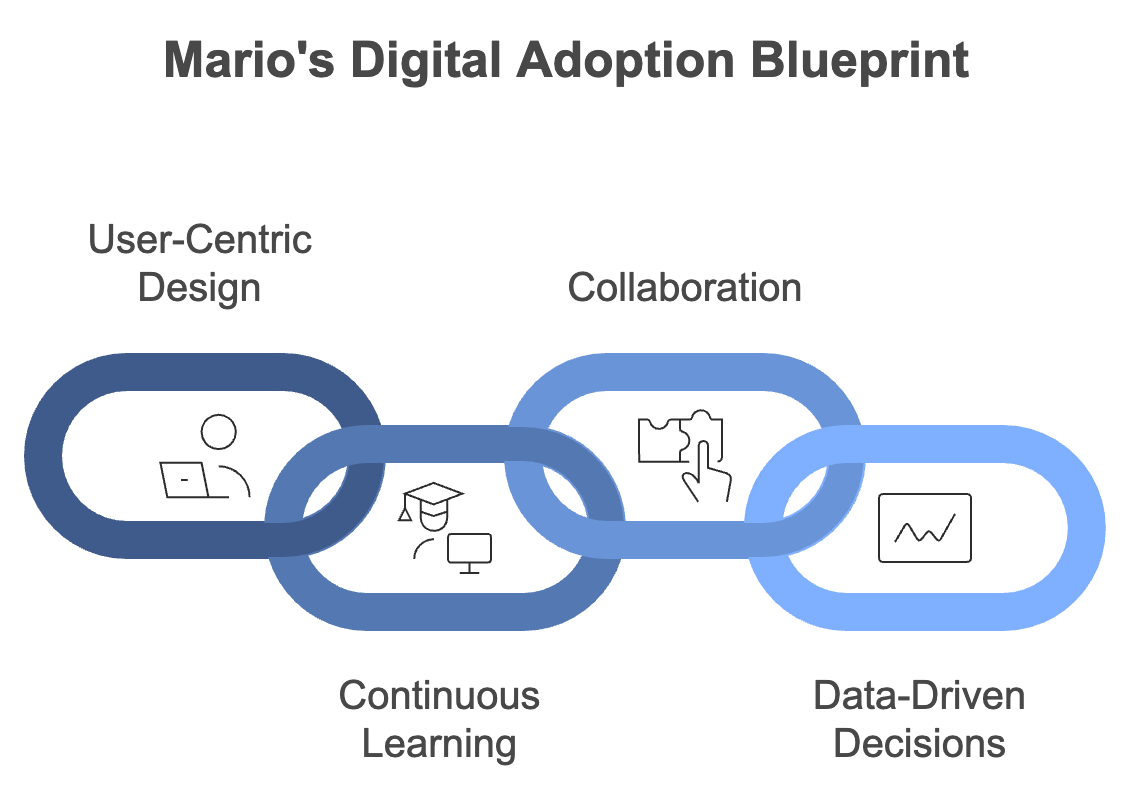
Mario’s advice wasn’t just insightful—it was a blueprint for manufacturers ready to embrace digital adoption. Here are his four golden rules:
- User-Centric Design
“If your digital tools feel like a test of endurance, you’re doing it wrong,” Mario emphasized. Designing systems that align with employee skill levels and workflows ensures smoother adoption. - Continuous Learning
Manufacturing doesn’t stand still, and neither should your skills. Staying competitive requires a commitment to learning and adapting to new technologies. - Collaboration is Key
Partnering with technology providers and industry experts can accelerate digital transformation. “It’s about working smarter, not harder,” Mario said. - Let Data Drive You
Leveraging data analytics isn’t just for PowerPoint presentations—it’s a tool for identifying inefficiencies, predicting problems, and driving innovation.
The Bigger Picture: Manufacturing’s Digital Renaissance
Mario painted a vivid picture of manufacturing’s digital future. It’s a world where predictive maintenance prevents breakdowns, where workflows run smoothly, and where employees are empowered—not overwhelmed—by technology.
But he also acknowledged the hard work it takes to get there. “Digital transformation isn’t just about plugging in some software and calling it a day. It’s about creating a culture that embraces change and celebrates progress—no matter how small,” he noted.
Final Thoughts: Progress Over Perfection
Manufacturers may be stepping into unfamiliar territory, but as Mario Lenz emphasized, digital adoption isn’t about perfection. It’s about progress. “Start small, focus on the wins, and remember that technology should work for you—not the other way around,” he advised.
Whether you’re managing a factory floor or a global supply chain, the message is clear: digital adoption isn’t just a trend. It’s the roadmap to staying competitive in an industry reinventing itself byte by byte.
Or, as Mario put it: “The future of manufacturing is digital, and it’s here to stay. Let’s make sure we don’t miss the train—or the conveyor belt.”
 Spotify
 Apple
Apple
 Youtube
 Google
 RSS
RSS