



















Accounting software is at the heart of finance operations, powering everything from payroll and procurement to financial reporting and audit readiness. Enterprise platforms like SAP, Netsuite, and Workday dominate this space, trusted by enterprises globally for their depth, scalability, and compliance capabilities. SAP alone supports over 440,000 customers worldwide, including 98 of the world’s 100 largest companies, while Workday is used by over 10,500 organizations, including more than 60% of the Fortune 500.
However, studies show that ERP implementation failure rates range between 67% and 90%, with the most common causes being poor user adoption, inadequate training, and operational misalignment.
Adoption isn’t just a checkbox at go-live; it’s an ongoing process of ensuring users not only understand the tool but also use it consistently in their flow of work.
This article outlines a clear roadmap to drive effective accounting software adoption: from overcoming resistance to change to embedding governance in workflows. It will also demonstrate how Whatfix enables CIOs and finance leaders to unlock ROI by ensuring software is used as intended, at scale, and with audit-ready precision.
The Need for Accounting Software Modernization
Enterprises can’t afford to rely on outdated accounting platforms that limit efficiency, compliance, and scalability. Modernizing accounting operations with next-generation software is no longer optional—it’s a business imperative.
Key reasons to modernize accounting systems include:
- Operational efficiency: Automate manual processes such as reconciliations, approvals, and reporting to reduce errors and accelerate monthly close cycles.
- Regulatory compliance: Keep pace with evolving standards (i.e., ASC 606, IFRS 16, SOX) with built-in compliance workflows and audit-ready records.
- Scalability for growth: Support multi-entity, multi-currency, and global operations without overburdening finance teams.
- Data accuracy and visibility: Eliminate data silos by integrating accounting with ERP, CRM, and procurement systems for real-time financial insights.
- Future readiness: Adapt quickly to new business models, M&A integrations, and digital transformation initiatives with flexible and cloud-based platforms.
- Cost optimization: Reduce dependency on legacy IT support and minimize hidden costs associated with maintaining outdated software.
Why Accounting Software Adoption is Critical for CIOs and Transformation Leaders
For CIOs and finance transformation leaders, adoption is not a utilization metric. It is a leading indicator of system value. Without widespread, consistent use, even advanced platforms fall short of promised outcomes. Here are four critical reasons why adoption must be treated as a strategic priority and not just a post-implementation afterthought.
1. Compliance and Audit Readiness
In finance, compliance failures don’t just cost money; they cost trust. Accounting platforms are designed to support regulatory standards like SOX, GAAP, and IFRS. But without adoption, these controls are theoretical. If users bypass workflows or enter incomplete data, audit trails break down, and internal controls lose integrity.
Adoption enables “compliance by design”, embedding policy adherence directly into daily tasks. When teams consistently use the system, it captures accurate time stamps, approval hierarchies, and transaction histories that stand up to audits. CIOs can reduce the compliance burden by ensuring the platform itself enforces rules through built-in checks and guardrails.
2. Operational Efficiency and Reduced Manual Errors
Poor adoption creates operational drag. Manual rework, missed entries, and shadow processes (informal workflows that bypass core systems) all stem from inconsistent usage. The result is longer close cycles, reconciliation headaches, and frustrated teams, especially in high-volume areas like accounts payable and revenue recognition.
When users fully adopt the accounting system, processes flow as intended. Tasks are completed faster, with fewer errors and less dependency on IT or finance team leads for clarification. Adoption minimizes exception handling by standardizing inputs and ensuring everyone works from the same digital playbook.
3. Better Decision-Making with Real-Time Financial Data
Technology leaders do more than deliver software. They enable agility. When accounting systems are fully adopted, they become a reliable source of data that powers faster, smarter decision-making across the enterprise.
Real-time data isn’t just about dashboards; it’s about decision velocity. When adoption is high, financial data flows reliably across business units, enabling faster closes, quicker variance analysis, and timely budget realignments. For CIOs, this means the systems they support are not just operational; they’re empowering the business to respond quickly to market shifts, cost pressures, and executive demands.
Just as importantly, adoption analytics can help pinpoint where user behavior is delaying data capture, fragmenting visibility, or undermining system ROI. Fixing these friction points turns finance platforms into decision infrastructure, not just recordkeeping tools.
4. Aligning Finance with Broader Transformation Goals
Digital transformation doesn’t stop at the CRM or HRIS (Human Resources Information System). If finance lags, the organization suffers. Yet, finance functions are often slower to digitize than other areas of the business. For instance, according to research published by Gartner in November 2023, 61% of finance teams were either not planning to implement AI or only in early stages, lagging behind departments like HR, legal, and IT.
CIOs play a key role in closing this gap. Adoption ensures that accounting systems (often integrated with procurement, payroll, and expense platforms) are actually used as designed. This enables enterprise-wide visibility, integrated planning, and cross-functional agility. It also reduces the burden on IT by standardizing workflows across departments. When adoption scales, finance becomes a transformation partner, not a bottleneck. And executive leaders gain the visibility and control they need to optimize systems, reduce support overhead, and demonstrate the ROI of software investments.
Common Challenges In Accounting Software Adoption
Even the most user-friendly accounting platforms face adoption hurdles. IT leaders must anticipate and address the following barriers early in the rollout process:
- Resistance to change among finance teams: Long-standing habits, fear of disruption, and skepticism toward new systems often lead employees to default to familiar tools (like spreadsheets) even after go-live.
- Complexity of workflows and user interfaces: When the system feels unintuitive or cumbersome, users are more likely to bypass it. Poorly designed workflows and cluttered user interfaces increase the risk of errors and reduce day-to-day engagement.
- Data migration issues and fear of errors: Inaccurate or incomplete data during rollout erodes trust in the system. Users hesitate to engage fully when they fear that numbers may be wrong or that historical data is missing.
- Compliance and governance concerns: Financial teams may avoid using the system if they worry it won’t meet audit or regulatory standards, especially if controls are unclear or difficult to follow. This results in informal workarounds that increase risk.
- Over-reliance on training sessions or manuals: One-time training sessions often fail to drive lasting change. Without ongoing support in the flow of work, users forget steps or avoid complex tasks, leading to underutilization.
Best Practices for Driving Successful Software Adoption
Successfully rolling out accounting software requires more than implementation; it demands a deliberate focus on user behavior. Adoption is driven by clear workflows, stakeholder alignment, and continuous enablement. The following five best practices are designed to guide finance teams toward lasting, measurable system usage.
1. Engage Finance, IT, and Audit Stakeholders Early
Adoption succeeds when the right people are involved from day one. Engage finance leaders, internal audit teams, and frontline staff during requirements gathering and testing. Their input helps shape workflows that reflect real business needs, not just technical specs.
Early buy-in also builds advocacy. When influential users feel heard, they’re more likely to promote the system internally and reinforce correct usage during rollout.
2. Map Critical Finance Workflows Before Rollout
One of the most overlooked steps in adoption planning is process mapping. Before configuring the system, transformation teams should work with finance ops to document core workflows (such as invoice approvals, month-end close, or revenue recognition) and identify where automation, validation, or handoffs are required.
A clear understanding of both “As-Is” and “To-Be” processes is essential for alignment between system design and business goals. Structured process mapping of these workflows has long been linked to the successful adoption of finance and accounting systems.
3. Prioritize Contextual, In-Flow Training
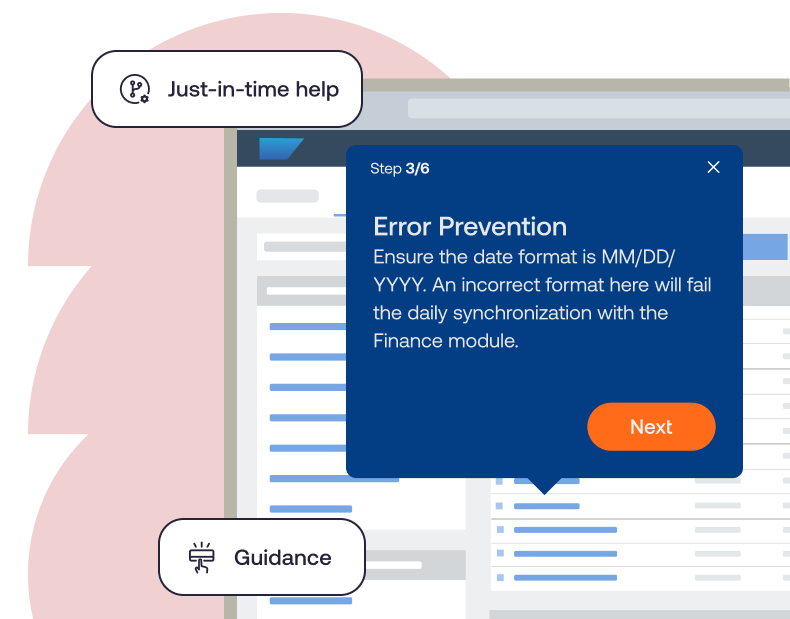
Classroom sessions and static manuals often fail to translate into real-world usage. Instead, users need just-in-time guidance embedded directly within the system. Tooltips, walkthroughs, and nudges delivered in the flow of work help reinforce correct behaviors without interrupting productivity.
Solutions like the Whatfix Digital Adoption Platform (DAP) enable this kind of contextual, in-application support, guiding users step-by-step through finance workflows as they complete tasks. This approach supports different learning styles, reduces dependency on IT, and accelerates onboarding across teams.
4. Build Governance and Compliance into the Workflow Design
Governance and compliance shouldn’t be an afterthought, they should be embedded directly into workflows during system design. This includes automated approval chains, required field validations, role-based permissions and access control (RBAC), and digital audit trails.
When governance is integrated into the user experience, it becomes effortless for employees to comply, reducing risk while improving adoption.
5. Continuously Monitor Adoption Metrics and Iterate
Driving adoption means staying engaged long after rollout, tracking what’s working and where users struggle. CIOs should establish KPIs to monitor usage patterns, workflow completion rates, error frequency, and helpdesk tickets. This data reveals where users disengage, bypass steps, or revert to legacy tools.
Regular reviews allow IT to address friction points proactively (through UI tweaks, new help content, or retraining), ensuring long-term platform engagement.
How Whatfix Enables Effective Accounting Software Adoption
To address adoption challenges in accounting systems, the Whatfix Digital Adoption Platform (DAP) offers a scalable, system-agnostic solution. The five capabilities below are designed to remove friction across the user journey from onboarding and compliance to self-sufficiency and continuous optimization.
1. In-App Onboarding & Training
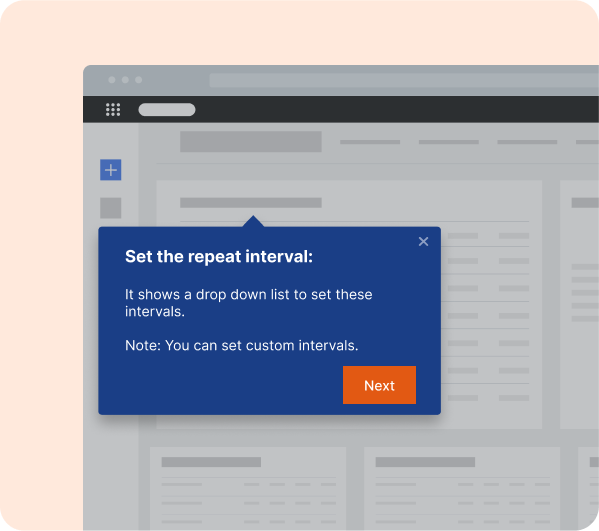
Whatfix provides step-by-step guidance inside accounting platforms, tailored by role and workflow. Employees learn tasks like processing vendor payments in Oracle or submitting expense reports in SAP while working in the system. No PDFs or classroom sessions required.
A hedge fund deployed Whatfix to onboard global accounting staff to Workday. Through guided flows, the company increased daily active users from 250 to 780 and cut SME (Subject Matter Expert) support time from up to an hour a day to just 5 to 10 minutes.
2. Compliance Reinforcement
Regulatory compliance in finance systems depends not only on backend controls but on how consistently users follow policy-critical steps, every time. Whatfix helps reinforce this with features like Smart Tips for regulated field entries, Task Lists that guide users through compliance-sensitive workflows, and contextual Pop-Ups that alert users before they deviate from approved processes.
In one finance-adjacent deployment, a financial services firm used Whatfix within a Contract Lifecycle Management (CLM) platform to guide users through regulated steps in vendor contracting. While outside the core accounting stack, the outcome was a 94% reduction in contract errors and improved audit readiness. This demonstrates how embedded guidance can mitigate compliance risk across financial operations.
3. Self-Help
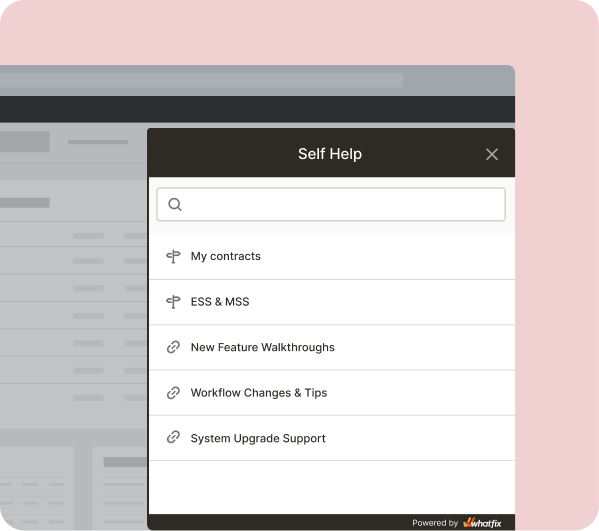
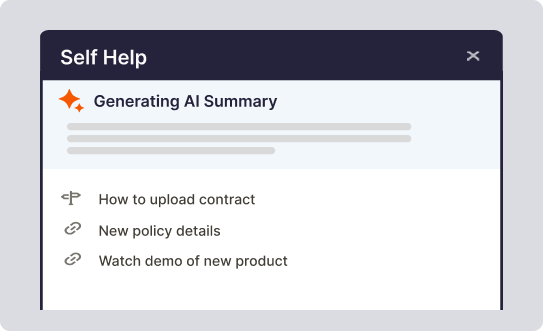
Whatfix’s Self Help feature provides on-demand answers within the accounting system itself, surfacing context-aware guidance, policies, and how-to articles without users having to leave the task or raise a ticket.
By delivering answers in context (filtered by workflow, screen, and user role), Whatfix reduces desktop strain, increases autonomy, and sustains adoption over time across accounting processes.
4. Analytics for Leaders
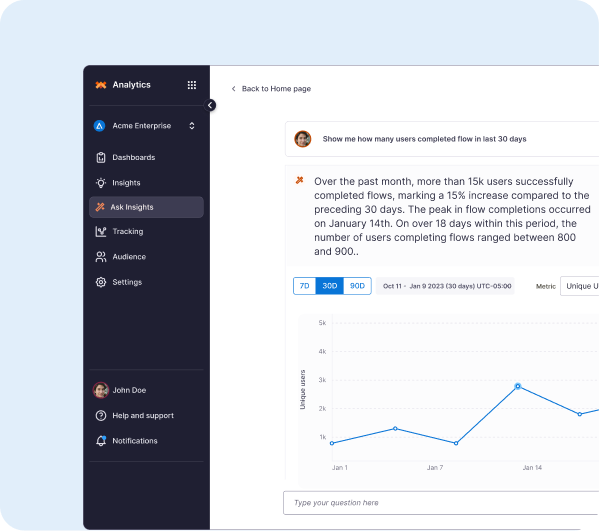
Whatfix Product Analytics gives CIOs visibility into how users engage with workflows, highlighting drop-offs, underused features, and compliance risks. Leaders can act quickly by deploying targeted nudges or walkthroughs where friction occurs.
5. Whatfix Mirror
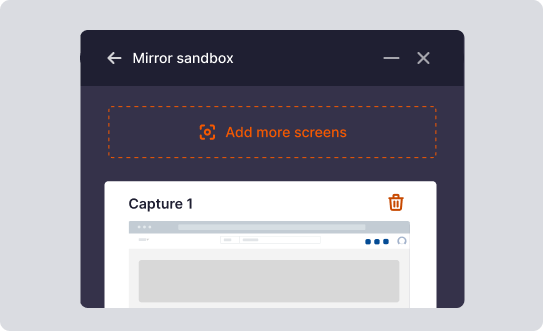
Whatfix Mirror creates a high-fidelity, no-risk training environment that replicates production data and workflows without touching live systems. Finance teams can practice complex tasks such as period close, revenue recognition steps, or supplier onboarding and master the process before go-live. This speeds proficiency, reduces errors in production, and supports ongoing skill reinforcement.
Measuring Success: KPIs for Accounting Software Adoption
Adoption isn’t a sentiment; it’s a set of measurable outcomes. For accounting systems, success is reflected in operational KPIs that reveal how deeply and effectively the platform is used.
- Time-to-close books are reduced: Shorter financial close cycles signal improved workflow efficiency and system proficiency. When users complete tasks like reconciliations or approvals directly within the platform, close timelines shrink, enabling faster reporting and better agility during fiscal periods.
- Reduction in manual errors: A decline in spreadsheet-based rework, data entry mistakes, and misrouted approvals indicates successful platform engagement. Embedded field validations, real-time prompts, and guided inputs reduce human error and boost data integrity.
- Higher compliance rates and audit readiness: Improved in-system usage correlates directly with stronger audit trials and policy adherence. CIOs can track the completion of compliance-critical workflows and monitor whether users are bypassing or abandoning required steps.
- Decrease in finance system support tickets: Lower volumes of helpdesk tickets for issues like login errors, form confusion, or how-to questions strongly indicate user confidence and self-sufficiency. It also reflects the effectiveness of in-app support and training mechanisms.
- Employee satisfaction and productivity in finance teams: Adoption success isn’t just operational; it’s cultural. Surveying finance teams on ease of use, onboarding experience, and time spent on core tasks can reveal whether the system is empowering users or creating friction.
Software Adoption Clicks Better With Whatfix
Adoption is the differentiator between failed implementations and true transformation. Without it, even the most advanced accounting platforms fall short, unable to deliver the compliance, efficiency, and insight they promise.
With Whatfix, CIOs and finance leaders gain a purpose-built solution to drive sustained adoption at scale. From real-time onboarding to contextual compliance nudges and analytics-powered insights, Whatfix ensures your finance systems are not just implemented, but fully embraced.
Whether your teams are transitioning to a new accounting system or optimizing existing financial tools, Whatfix empowers them to work confidently and compliantly reducing friction, accelerating time-to-value, and maximizing return on software investment.
See how Whatfix accelerates accounting software adoption, book a demo today.