WalkMe is a digital adoption platform (DAP) that overlays enterprise applications with in-app guidance, self-service support, and adoption analytics to help employees complete workflows correctly. Founded in 2011, the Israeli-based company was acquired by SAP in 2024.
WalkMe has a strong market presence, yet enterprise teams often encounter friction when they attempt to scale their DAP program beyond a single application rollout with the platform. The hard part is operating a digital adoption program like a release-managed content function: governance, QA, localization, environment controls, and outcome measurement that survive enterprise-level security reviews and have a measurable impact on key business outcomes.
Whether you are shortlisting vendors for an enterprise DAP RFP, have an upcoming renewal decision and want to explore alternative options, or have already made a decision to replace WalkMe, this guide compiles six alternatives for creating in-app guidance, managing the user content lifecycle, simulation training, and adoption analytics, organized around rollout safety, governance at scale, and measurable workflow outcomes.
Our selection criteria uses feedback from real customers, public reviews, and our own internal DAP research. It also maps to the realities of large organizations (multiple business-critical apps, frequent change cadence, and controlled workflows) to help leaders select the right DAP partner for their unique needs.
TL;DR: Which WalkMe alternative should you choose?
- Whatfix – For an AI-powered, enterprise-wide DAP with strong governance, support for web and desktop applications, pre-launch simulation training via Mirror, and adoption analytics to continuously optimize workflows and prove value realization.
- Pendo – For product-led adoption strategies owned by digital and product teams.
- Userlane – For mid-market IT teams looking for an adoption solution for web-based apps that are willing to trade features for a more cost-conscious solution.
- Apty – For process reinforcement in operational workflows within web-based apps only.
- Assima – For training realism and safe practice environments to improve readiness before go-live, without in-app guidance capabilities.
- Spekit – For enablement and knowledge delivery focused solely on CRM execution and RevOps workflows.
1. Whatfix
Details:
- Founded: 2014
- Similar to: WalkMe, Pendo
- Typical roles: Director of Enterprise Applications, Enterprise Application Owner, CIO staff, L&D or enablement lead, service desk manager
- Typical customers: 2,000+ employees, multi-region operations, mission-critical enterprise software, high-volume internal users, regulated industries with controlled or audited workflows.
What Is Whatfix?
Whatfix DAP is an enterprise-grade digital adoption platform built to accelerate digital transformation outcomes across mission-critical applications. It drives measurable impact through contextual in-app guidance, in-app self-service support, and adoption analytics tied to workflow performance. Agentic AI automates content operations, personalizes guidance by role and behavior, surfaces optimization opportunities, and can execute tasks end to end.
Whatfix also supports simulation-based readiness through Mirror to create risk-free sandbox environments for user training pre-live use and to validate workflows. It also provides deeper behavioral measurement and adoption insights tied to business outcomes through its Product Analytics platform, designed with enterprise application owners in mind.
Key Features
- Flows: Step-by-step guidance for completing critical workflows consistently, built to support enterprise rollout patterns and repeatable process execution.
- Smart Tips: Field-level and UI-level contextual help that reduces errors during high-stakes transactions.
- Pop-Ups: Targeted in-app communications for go-lives, policy changes, and workflow updates.
- Task List: Role-based checklists that standardize onboarding and ensure completion of required tasks.
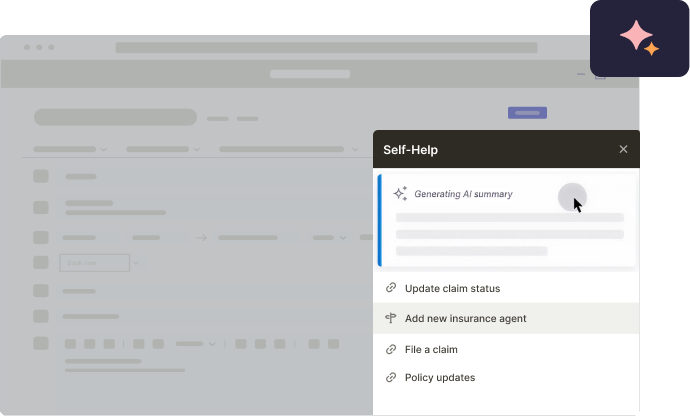
- Self Help: Embedded self-service support that surfaces help content in the moment of need to reduce tickets during stabilization windows.
- Mirror Simulations: Safe practice environments that help users build proficiency before production access is widespread.
- AI Roleplay: Pair voice and chat AI roleplay with Mirror simulations and guided experiences to create a unified, hands-on approach to training and preparing teams completing high-risk tasks, and who often engage with customers.
- Adoption Analytics: Analyze application usage, guidance engagement, and task completion to benchmark adoption, identify areas of improvement, and tie digital investments to business outcomes.
How does Whatfix compare to WalkMe?
| Evaluation area | Whatfix | WalkMe |
| G2 user reviews (updated 2/26/2026) | 4.6 out of 5 stars across 514 reviews (#1 overall DAP on G2) | 4.5 out of 5 stars across 542 reviews |
| Ecosystem | Independent, with official partnerships across dozens of ISVs, from Microsoft, Icertis, Bullhorn, Guidewire, and more. | SAP owned. This creates a conflict of interest for non-SAP applications (from WalkMe’s product roadmap that prioritizes SAP ecosystem integrations to non-SAP vendors not wanting SAP working within their ISV application environments. |
| Content lifecycle management and pre-production validation | Structured preview environments, including sandbox for testing content. Clear “Draft → Ready → Product” workflow with auto-testing, bulk promotion, auto-insights, and rollback all available in one dashboard. Full version history, auto-testing, and rollback capabilities. | Includes content preview and test environment. Enterprise version control features are an add-on capability. |
| Scale across apps | Enterprise-wide, guiding users through cross-application workflows and accelerating outcomes from digital transformation projects. | App-centric, meaning deployments are centered on single applications, creating data silos and inconsistent workflows. |
| Compatible on | Desktop, mobile, and web applications, including Citrix (VDI) apps and custom-built apps. | Focus on SAP applications. Built for web-based apps. |
| AI capabilities | Agentic AI meets DAP. AI Agents include Authoring Agent for content lifecycle management, Guidance Agent for in-app content contextualization, and Insights Agents for intelligent adoption insights. AI search is integrated with Self Help and AI Roleplay to prepare teams with adaptive experiences. | GenAI capabilities like AI chat, information summarization, and writing assistance. Lacks agentic AI features that perform tasks and take action independently. |
| Simulation training | Easily replicate applications to create risk-free sandbox environments (Mirror) for hands-on training to master workflows before completing real tasks in the production environment. Paired with AI roleplay and in-app guidance, Whatfix provides a holistic approach to task mastery, team readiness, and user adoption. | None. |
Main differences between Whatfix and WalkMe: Whatfix is an enterprise-grade, application-agnostic digital adoption platform built to optimize adoption across the entire technology ecosystem. With agentic AI and Mirror for pre-production validation, it drives measurable transformation outcomes at scale. Following its acquisition by SAP, WalkMe’s product direction has taken on a more SAP-first orientation—an advantage for SAP-centric organizations, but one that may impact roadmap flexibility and broader innovation across multi-application environments.
Main similarities between Whatfix and WalkMe: Both support enterprise in-app guidance and runbooks for safe rollout operations, including version history and rollback.
Why do companies use Whatfix?
- Drive time-to-proficiency improvements before and after ERP, CRM, or HCM implementation or change by guiding users through the highest-risk workflows.
- Reduce ticket spikes during stabilization by shifting common “how do I” questions into in-app self-service.
- Reduce user errors, deflect rework, and improve compliance on critical tasks to drive incremental growth with hands-on training pre-usage and in-content workflow guidance and support.
- Instrument workflow outcomes and intervene using adoption and drop-off signals by role, region, and tenure.
What do real customers say about Whatfix?
- “We switched to Whatfix from WalkMe mostly due to pricing options and because Whatfix’s features and capabilities seemed more advanced. While any migration requires time and effort, the Whatfix team helped us complete it with minimal impact on the end users,” said Tony Pappagallo, Digital Adoption Program Manager at Ingram Micro, in their G2 review.
- “WalkMe was noticeably cagey in demonstrating their AI features. It felt like we were pulling information from them, rather than being guided through their strengths. By contrast, Whatfix brought a far more human approach. While our initial evaluation focused on core DAP features, Whatfix AI features became a major value add. It has the potential to dramatically reduce the content creation and update cycles,” said Francis Cappabiance, L&D leader at American Tower.
- “With Whatfix, we’ve experienced a reduction in support tickets thanks to AI-powered resource aggregation, quicker user adoption of new processes, and more effective change management through contextual tips and pop-ups. Additionally, its robust analytics empower organizations to make data-driven decisions regarding user adaptability,” said Reon H., Application Analyst in their G2 review.
TL;DR for Whatfix
- Whatfix is best for: Enterprises that need governed rollout operations across multiple business-critical apps, plus simulation readiness and adoption analytics that use outcome-based measurement.
- Whatfix is not best for: Teams seeking a lightweight, single-application onboarding tool or primarily focused on product-led growth use cases, rather than enterprise-wide adoption, governance, and digital transformation outcomes.
- When to choose Whatfix over WalkMe: Renewal or replacement decisions driven by content governance fatigue, rollout risk, or weak measurement credibility across a complex app landscape, specifically for organizations using non-SAP applications. Organizations looking to invest in vendors that are prioritizing agentic AI designed for content lifecycle management, task governance, application adoption analytics in its product roadmaps.
2. Pendo
Details:
- Founded: 2013
- Similar to: WalkMe, Whatfix
- Typical roles: Product leaders, digital platform owners, analytics leaders, application owners
- Typical customers: Digital product teams and enterprises that want strong usage analytics plus in-app guidance
What Is Pendo?
Pendo is a product experience platform that combines user insight, in-app guidance, and user communication, commonly owned by product and digital teams.
Key Features
- Product analytics: Understand usage, paths, and feature engagement for prioritization and adoption programs.
- In-app guidance: Build walkthroughs and guidance patterns to drive onboarding and feature uptake.
- User feedback: Collect feedback and sentiment signals, including NPS, without heavy engineering lift.
How does Pendo compare to WalkMe?
| Evaluation area | Pendo | WalkMe |
| Core philosophy | Speed and experimentation | Control with rollback |
| Draft to production controls | Lightweight | Structured |
| Pre-production validation | Limited | Moderate |
| Version history and rollback | No | Yes |
| Environment separation | Partial | Yes |
| Scale across apps | Product-centric | App-centric |
Main differences between Pendo and WalkMe: Pendo typically wins in organizations where product analytics ownership and product-led onboarding drive decisions, while WalkMe fits enterprise enablement programs that prioritize controlled change operations.
Main similarities between Pendo and WalkMe: Both deliver in-app guidance and adoption measurement, with different emphases in operating model and risk controls.
Why do companies use Pendo?
- Drive feature adoption with strong behavioral analytics tied to product decisions.
- Coordinate onboarding and messaging from product teams across user segments.
TL;DR for Pendo
- Best for: Product-led organizations that want analytics-first adoption programs.
- Watch-outs: Enterprise app rollouts with strict governance and controlled workflows can demand stronger lifecycle controls than product teams expect.
- When Pendo is the better fit: Customer-facing product onboarding and feature adoption programs owned by product orgs.
3. Userlane
Details:
- Founded: 2015
- Similar to: WalkMe, Whatfix
- Typical roles: CIO staff, transformation leaders, app owners, enablement and change teams
- Typical customers: Enterprises driving adoption across many web-based applications
What Is Userlane?
Userlane is a no-code digital adoption platform that delivers in-app guidance and contextual help across applications and pairs it with analytics to track adoption and value realization.
Key Features
- In-app Guides and Tooltips: Interactive step-by-step assistance and contextual help inside business applications.
- Announcements and in-app engagement: In-app communications and prompts to drive adoption for new workflows and changes.
- Analytics (including HEART): Usage and value realization measurement across enterprise applications, plus content performance tracking.
- App discovery: Visibility into application usage to surface shadow IT and duplicate tools.
How does Userlane compare to WalkMe?
| Evaluation area | Userlane | WalkMe |
| In-app guidance | Strong interactive guidance across apps | Strong enterprise guidance toolkit |
| Analytics | HEART plus content analytics | Strong adoption insights |
| Operating footprint | Multi-app enterprise adoption programs | Multi-app enterprise adoption programs |
| Best-fit ownership | Transformation and app ownership teams | Enterprise enablement and app ownership teams |
Main differences between Userlane and WalkMe: Userlane emphasizes standardized value realization scoring and cross-application insight, while WalkMe programs often center on governed rollout operations and controlled change at the application layer.
Main similarities between Userlane and WalkMe: Both address enterprise software adoption with in-app guidance plus measurement and segmentation.
Why do companies use Userlane?
- Improve task success and reduce training effort by embedding guidance where work happens.
- Track adoption and content performance to prioritize interventions by role and app.
TL;DR for Userlane
- Best for: Enterprises that want cross-application visibility plus guided adoption for web-based tools.
- Watch-outs: Validate environment controls and release operations early if your program has strict change windows.
- When Userlane is the better fit: Teams looking for a DAP with strong analytics framing for value realization across the stack.
4. Apty
Details:
- Founded: 2018
- Similar to: WalkMe, Whatfix
- Typical roles: IT operations managers, application owners, shared services leaders
- Typical customers: Enterprises focused on process compliance and standardized workflow execution across web apps
What Is Apty?
Apty is a digital adoption platform positioned around guiding users through enterprise applications and reinforcing standardized process execution, often paired with automation concepts for repetitive work.
Key Features
- In-app guidance: Contextual walkthroughs and prompts for completing tasks correctly inside enterprise apps.
- Process reinforcement: Focus on driving consistent execution of business processes across teams.
- Automation adjacency: Positioning around pairing guidance with automation for repeatable steps.
How does Apty compare to WalkMe?
| Evaluation area | Apty | WalkMe |
| Core focus | Process adoption and reinforcement | Enterprise guidance plus controlled change programs |
| Typical ownership | IT ops and app owners | Enterprise enablement and app owners |
| Best-fit environment | Web-based enterprise applications | Broad enterprise application coverage |
Main differences between Apty and WalkMe: Apty typically fits teams that want to standardize execution and reinforce process compliance, while WalkMe is commonly deployed as a broader enterprise guidance layer with mature program patterns.
Main similarities between Apty and WalkMe: Both target workflow execution inside enterprise apps and aim to reduce friction and support burden.
Why do companies use Apty?
- Reduce errors in operational workflows by guiding users step-by-step.
- Improve consistency across teams when processes span multiple systems.
TL;DR for Apty
- Best for: Teams that want to standardize workflow execution and reduce variance across users.
- Watch-outs: Validate analytics depth and governance workflows if executive reporting and release operations are top priorities.
- When Apty is the better fit: Process-heavy operations teams prioritizing consistency and adherence.
5. Assima
Details:
- Founded: 2002
- Similar to: WalkMe, Whatfix (training and enablement overlap)
- Typical roles: L&D leaders, transformation PMO, ERP program owners, IT training teams
- Typical customers: Large enterprises that need high-fidelity practice environments for ERP, CRM, HCM, and other complex systems
What Is Assima?
Assima is a systems training platform focused on hyper-realistic simulations and practice-based learning for enterprise software, with an emphasis on day-one readiness and reducing risk from user mistakes.
Key Features
- Hyper-realistic simulations: High-fidelity replicas of enterprise applications for safe practice and muscle-memory building.
- Practice-based readiness: Training approach designed to prepare users before go-live exposure to production environments.
- Performance support concepts: Enablement support paired with training to sustain proficiency.
How does Assima compare to WalkMe?
| Evaluation area | Assima | WalkMe |
| Core strength | Simulation-based training and readiness | In-app guidance overlay for live systems |
| Risk reduction approach | Safe practice before day one | Controlled change and rollback inside production programs |
| Best-fit ownership | L&D and transformation programs | Enablement and app ownership programs |
Main differences between Assima and WalkMe: Assima tends to lead when training realism and practice environments are the primary constraint, especially for complex ERP-style workflows. WalkMe tends to lead when in-app overlay guidance inside live systems is the primary lever.
Main similarities between Assima and WalkMe: Both target faster proficiency and fewer mistakes during enterprise transformation, with different primary mechanisms.
Why do companies use Assima?
- Train users safely on complex, high-risk systems without depending on production access.
- Improve go-live readiness when sandbox access is limited or unstable.
TL;DR for Assima
- Best for: Enterprise programs where simulation fidelity and practice environments decide readiness.
- Watch-outs: Many enterprises still need in-app guidance inside production after go-live to sustain proficiency and handle change.
- When Assima is the better fit: ERP-scale transformation programs led by L&D and PMO teams that prioritize readiness before access.
6. Spekit
Details:
- Founded: 2018
- Similar to: WalkMe (enablement overlap), knowledge and enablement platforms
- Typical roles: Revenue operations, enablement leaders, sales leaders, systems owners
- Typical customers: Organizations that want just-in-time enablement across tools, commonly centered on systems like Salesforce
What Is Spekit?
Spekit is positioned as a just-in-time enablement platform that delivers training and knowledge in the flow of work across applications, often centered on CRM and revenue workflows.
Key Features
- In-app enablement: Embedded answers and guidance inside the tools people use, commonly for CRM-driven workflows.
- Knowledge and content management: Capabilities for keeping enablement content current.
- Enablement analytics: Visibility into content consumption and engagement to improve training relevance.
How does Spekit compare to WalkMe?
| Evaluation area | Spekit | WalkMe |
| Core strength | Just-in-time enablement and knowledge delivery | Enterprise in-app guidance programs across core apps |
| Typical footprint | Often starts in revenue and CRM workflows | Broad enterprise transformation and enablement |
| Best-fit ownership | Enablement and RevOps | CIO org, app owners, enterprise enablement |
Main differences between Spekit and WalkMe: Spekit often fits domain-specific enablement programs where knowledge delivery and training reinforcement drive adoption, while WalkMe is commonly deployed as a broader enterprise DAP layer across multiple mission-critical systems.
Main similarities between Spekit and WalkMe: Both aim to reduce friction and improve proficiency by surfacing guidance where work happens.
Why do companies use Spekit?
- Standardize how frontline teams execute CRM and revenue workflows.
- Reduce time spent searching for answers and ramp new team members faster.
TL;DR for Spekit
- Best for: CRM-heavy teams that want embedded enablement and knowledge tied to execution.
- Watch-outs: Enterprise-wide programs across many systems may require a more formal DAP operating model and governance.
- When Spekit is the better fit: Sales and service enablement programs that need fast content delivery inside a few core tools.
Is Whatfix right for you?
Whatfix fits enterprise buying committees that treat adoption as an operational discipline, not a one-time enablement project.
The best indicator is your environment: multiple business-critical applications, frequent workflow changes, controlled processes, and leadership that wants measurable outcomes such as time-to-proficiency, ticket reduction, workflow completion, and error-rate improvement. With Whatfix, enterprises receive a digital adoption partner that provides a unified solution for:
- Governance at scale across hundreds of apps with explicit lifecycle controls and enterprise-wide operating patterns.
- Pre-production validation plus simulation readiness through Mirror, built for safe practice and rollout confidence.
- Outcome-driven measurement across guidance, support, and behavior so adoption work ties to workflow economics and executive metrics.
- Put agentic AI to work across content lifecycle management, guidance contextualization, data analysis, and autonomous task completion.
Did we mention we’re the #1 rated DAP in G2’s most recent Spring 2026 report?
Explore the full capabilities of the Whatfix Digital Adoption Platform or schedule time with our digital adoption experts.