












Procurement modernization helps organizations automate manual supply chain processes, apply AI across sourcing and purchasing workflows, and make better use of supplier, contract, and spend data. When software rollouts are well executed, these investments reduce procurement costs, shorten cycle times, strengthen supplier relationships, improve compliance, and free up enterprise teams to focus on more strategic work.
Realizing those procurement transformation outcomes requires more than deploying new S2P technology. New platforms, redesigned workflows, and AI-powered capabilities only create value when teams understand how to use them, adopt new ways of working, and consistently execute the right processes. For procurement application owners and process owners, modernization therefore requires sustained attention to user readiness, workflow adoption, in-the-flow enablement, process friction, and ongoing optimization after go-live.
This guide provides an enterprise digital transformation roadmap for procurement teams modernizing core sourcing and procurement technologies, helping them to turn investments into consistent workflow execution and measurable outcomes.
What Is Procurement Transformation?
Procurement transformation is the coordinated redesign of how an organization sources, purchases, manages suppliers, and pays for goods and services. It brings together process improvement, modern technology, connected data, governance, and user enablement to improve performance across the source-to-pay lifecycle.
At the enterprise level, procurement transformation typically aims to
- Simplify and automate sourcing, requisition, approval, ordering, and payment workflows
- Direct employees toward approved buying channels and preferred suppliers
- Connect procurement, ERP, accounts payable, contract, and supplier systems
- Improve spend visibility, supplier data, and decision-making
- Embed policy and compliance controls into everyday purchasing
- Prepare employees and suppliers to execute new processes successfully
- Measure cycle times, process adoption, off-system spend, and realized value
Procurement Modernization vs. Procurement Transformation
Procurement modernization renews the underlying technology and process foundation. It may involve replacing legacy applications, moving procurement systems to the cloud, improving integrations, automating manual tasks, or consolidating fragmented data.
Procurement transformation has a broader scope. It changes how people, workflows, controls, data, and technology work together to produce better procurement outcomes.
Explore the State of Enterprise Digital Transformation ROI Report to learn how organizations connect technology adoption and workflow performance with measurable business value.
6 Signs It’s Time to Modernize Your Core Procurement Systems
Legacy procurement technology often manifests as workflow drift, user friction, limited visibility, and increasing reliance on manual workarounds. Here are six signals that your core procurement systems and processes may be due for modernization.
1. Redundant, Manual Processes Slow Approvals
Procurement teams still relying on email, spreadsheets, manual data entry, or repeated handoffs often experience long approval cycles and inconsistent execution. When routine purchase requests, sourcing events, invoice approvals, or vendor onboarding require employees to manually transfer information between systems, modernization can automate repetitive tasks and create more standardized workflows.
2. Limited Cost and Spend Visibility
Fragmented systems make it difficult for procurement leaders to understand where money is being spent, which suppliers account for that spend, and where savings opportunities exist. Modern procurement platforms consolidate purchasing and supplier data, giving teams greater visibility into category spend, contract utilization, purchasing patterns, and opportunities to reduce unnecessary costs.
3. Poor Supplier Performance Management
When supplier information, performance metrics, contracts, and risk data live across disconnected systems, procurement teams struggle to evaluate suppliers consistently. Modernization creates a centralized foundation for tracking supplier performance, monitoring risk, managing relationships, and making sourcing decisions based on current data rather than fragmented records.
4. Employees Routinely Bypass Procurement Workflows
Frequent off-system purchasing, maverick spend, incomplete purchase requests, or repeated process exceptions can signal that procurement workflows are too difficult or poorly supported. Application and process owners should examine where users abandon approved processes, identify the source of friction, and redesign both the workflow and employee experience around it.
5. Procurement Data Is Fragmented Across Systems
Procurement processes increasingly span ERP, sourcing, contract management, supplier management, finance, and other enterprise applications. When those systems fail to share clean, consistent data, teams spend significant time reconciling records and correcting errors. Modernization can improve integrations, standardize data flows, and create a more reliable system of record across the procurement lifecycle.
6. Existing Systems Cannot Support AI and Advanced Automation
Older procurement systems may lack the data structure, integrations, APIs, and workflow capabilities required to support AI-powered sourcing, intelligent recommendations, predictive analytics, and advanced automation. When legacy architecture limits the organization’s ability to introduce these capabilities, modernization becomes necessary to create the technical and process foundation for more intelligent procurement operations.
Why Procurement Modernization Fails After Go-Live
Modernization underperforms when implementation teams optimize for technical deployment but overlook how work will be executed, supported, and improved in production. Here are five reasons why procurement transformation often fails to realize value after rollout:
- Legacy complexity is digitized: Teams recreate existing forms, approval chains, policies, and exceptions inside the new platform. Automation makes the same process more consistent without removing unnecessary steps or unclear decision rights.
- Cross-application workflows break: Missing integrations, inconsistent data, and unclear handoffs between procurement, contract, ERP, supplier, and payment systems force users to re-enter information or manage exceptions manually.
- Employees and suppliers enter new systems unprepared: Generic user training and software onboarding fail to prepare procurement software users (buyers, approvers, procurement teams, accounts payable teams, and suppliers) for their specific workflows and exception paths.
- Workarounds feel easier: Excessive fields, blanket approvals, and poorly timed controls push employees toward email, spreadsheets, purchasing cards, or direct contact with suppliers.
- Ownership and visibility weaken after go-live: Implementation teams exit while responsibility for workflow performance, data quality, adoption, controls, and support becomes fragmented. High-level usage data can also conceal workflow abandonment, errors, and friction within specific roles or business units.
The Procurement Transformation Roadmap
Here are eight steps to help enterprise teams, procurement application managers, and S2P cross-functional workflow managers modernize core procurement systems and realize their underlying business value.
1. Baseline priority workflows and business outcomes
Prioritize workflows based on transaction volume, business impact, compliance risk, and user friction. These may include requisition-to-order, supplier onboarding, guided buying, approvals, or invoice exceptions.
For each workflow:
- Map how work happens across roles and applications
- Capture delays, errors, workarounds, and off-system activity
- Baseline cycle time, rework, exceptions, compliant spend, and support demand
- Set a measurable target with a defined timeframe
For example, reduce the median requisition-to-order time from 5 days to 3 days while increasing compliant requisitions from 82% to 95%.
2. Simplify intake, approvals, exceptions, and decision rights
Redesign the workflow before configuring it in the new platform. Digitizing unnecessary steps will preserve the same delays in a different interface.
- Create one intake path that adapts to the purchase type and risk
- Remove fields and approval steps that add little value
- Define approval and exception logic for common purchasing scenarios
- Clarify who can make each decision and when escalation is required
Validate the future-state workflow with buyers, approvers, and procurement teams before implementation.
3. Define the target source-to-pay architecture and data ownership
Map how information will move between procurement applications from intake through payment. For each handoff, define the data exchanged and the authoritative system. Document when synchronization occurs and how failures will be resolved.
Assign an owner to each critical data domain. Clean duplicate or incomplete records before migration. Test integrations through end-to-end workflows to confirm that information remains accurate across systems.
4. Embed procurement controls into redesigned workflows
Translate procurement policies into system rules that govern transactions within the purchasing workflow. Configure controls such as:
- Approved catalogs and preferred-supplier rules
- Risk-based approval thresholds
- Budget and contract checks
- Required documentation
- Segregation-of-duties rules
Apply controls according to transaction value and risk. Test routine and high-risk scenarios to confirm that controls prevent non-compliant activity without creating unnecessary workarounds.
5. Provide role-based onboarding and training
Procurement transformation affects each role differently. Build role-based training around the workflows, data requirements, decisions, and exceptions each user must handle.
Combine hands-on training before go-live with guided onboarding inside the live platform. A digital adoption platform like Whatfix enables organizations to:
- Prepare users in Whatfix Mirror through realistic simulation training
- Deliver role-specific Flows and Task Lists inside the procurement application
- Collect feedback during training and rollout
Provide suppliers with clear guidance on registration, portal access, catalog updates, and invoice submission. Measure readiness through successful task completion rather than attendance alone.
6. Embed in-app performance support
Training builds initial proficiency. Contextual support helps users complete unfamiliar or infrequent tasks once they are working in the live application.
With Whatfix, application owners can:
- Explain fields and process requirements through Smart Tips
- Surface relevant SOPs and policies through Self Help
- Provide contextual instructions for approvals and exceptions
- Communicate workflow changes through Pop-Ups and Beacons
This gives users immediate help without requiring them to leave the procurement workflow or contact support.
7. Validate readiness and manage cutover
Set go-live criteria for technology, integrations, data, controls, employees, suppliers, support, and analytics. Run end-to-end rehearsals for routine purchases and high-risk exceptions.
Create a cutover plan covering data reconciliation, open transactions, access changes, support coverage, escalation paths, and rollback procedures. Base the go-live decision on whether critical workflows can operate successfully.
8. Measure value and continuously improve workflows
Use workflow analytics to identify where users abandon tasks, repeat steps, make errors, request help, or move off-system. Compare these signals with a scorecard covering:
- Adoption: Approved-channel usage, catalog utilization, and preferred-supplier selection
- Workflow performance: Cycle time, first-time-right completion, rework, and touchless invoice processing
- Controls: Compliant spend, PO coverage, and policy exceptions
- User enablement: Task completion, help usage, time-to-proficiency, and support demand
- Business value: Cost per transaction, realized savings, early-payment discounts, and supplier performance
For requisition-to-order modernization, track compliant requisition-to-order cycle time alongside approved-channel usage. This prevents faster processing from masking continued off-system purchasing.
Assign a target, data source, and owner to every metric. Review critical failures daily after launch, adoption weekly during stabilization, business value monthly, and workflow priorities quarterly. Use the findings to select and prioritize the appropriate process, technology, data, policy, or enablement improvements.
How Whatfix Accelerates Procurement Modernization Adoption and Maximizes Value
A modern source-to-pay platform provides the technology foundation. Whatfix helps enterprises turn that investment into consistent execution by connecting pre-launch readiness, in-app guidance, self-service support, and workflow analytics across the procurement lifecycle.
Prove readiness before go-live
Whatfix Mirror creates realistic replicas of procurement applications where buyers, approvers, and procurement teams can practise critical workflows without affecting production systems or live transactions.
Role-based simulations and assessments help transformation teams identify proficiency gaps before launch. Users can practise creating requisitions, navigating approvals, managing exceptions, and applying new controls before receiving production access.

Reinforce compliant workflows in the flow of real work
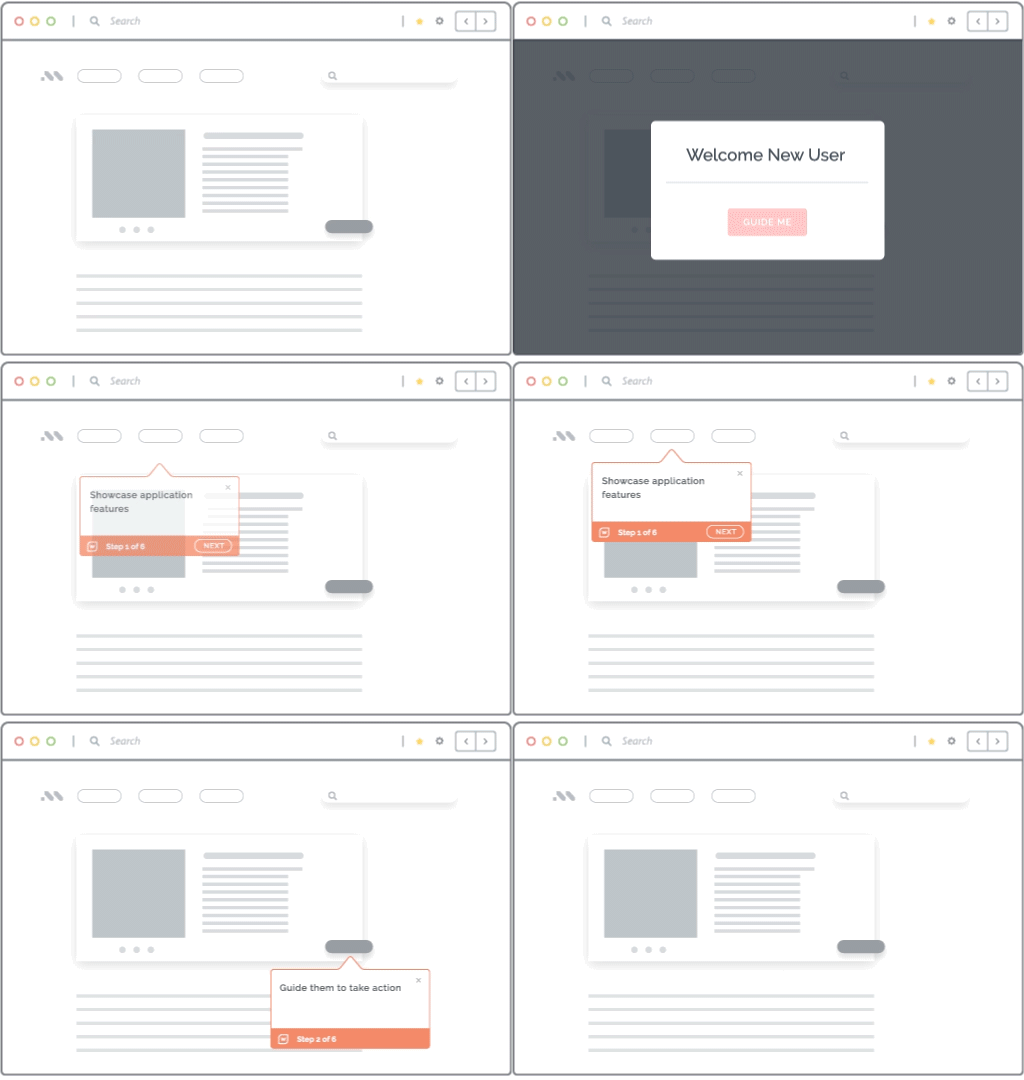
Whatfix DAP overlays live procurement and contract applications with contextual guidance. Organizations can guide employees through requisitions, approvals, supplier selection, contract workflows, and exception handling while reinforcing required policies.
Smart Tips and field guidance help users provide accurate information. Flows and Task Lists guide complex processes. Self Help surfaces relevant SOPs and policy content inside the application, reducing reliance on procurement and IT support.
Identify friction and improve procurement performance
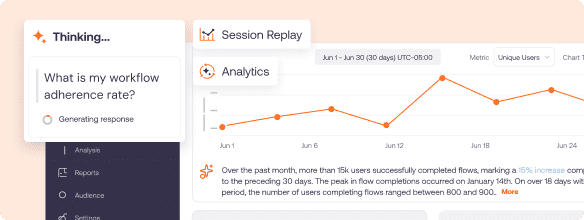
Whatfix Product Analytics tracks user journeys, workflow completion, drop-offs, errors, help usage, and adoption across different cohorts.
Application owners can use these insights to determine whether friction requires workflow redesign, system configuration, cleaner data, additional training, or contextual support. They can then measure whether each intervention improves adoption, compliance, cycle time, and support demand.
3 Examples of Procurement Transformation Success Stories
Procurement transformation creates value when employees follow governed workflows, enter accurate data, and receive support while completing complex purchasing and contract tasks.
These examples show how organizations have used Whatfix to improve procurement and contract workflow adoption, reduce errors, strengthen compliance, and accelerate value realization.
Vizient Reduced Contract Workflow Errors by 93%
Vizient implemented Icertis to modernize contract management across its legal and procurement functions. Incorrect document uploads, complex workflows, and limited in-app support created contract errors, rework, compliance risk, and longer execution times.
Vizient’s procurement transformation strategy and results
Vizient embedded Whatfix guidance and Self Help inside Icertis to clarify required fields, prevent incorrect uploads, automate NDA steps, and surface contract SOPs within the workflow. The organization reduced contract workflow errors by 93%, shortened average contract execution time from 33.5 to 14 days, and saved 618 hours by reducing Level 1 support questions.
Key takeaway from Vizient’s procurement transformation
Procurement controls are more effective when they prevent errors inside the workflow. Contextual guidance can improve compliance and data accuracy while reducing contract delays, rework, and support demand.
bioMérieux Achieved 88% Icertis Adoption and Saved 1,293 Hours
bioMérieux introduced Icertis to improve the creation, review, approval, storage, and management of more than 12,000 contracts. Its legal and procurement teams initially depended on recurring training and support calls to navigate complex contract workflows.
bioMérieux’s contract transformation strategy and results
bioMérieux embedded Whatfix within its Icertis environment to provide role-based Flows, Smart Tips, Pop-Ups, Self Help, and behavioral insights. The organization achieved 88% user adoption, increased its NPS by 9%, resolved more than 347 user queries through Whatfix, and saved 1,293 hours between January 2024 and February 2025.
Key takeaway from bioMérieux’s procurement modernization
Role-based guidance and embedded support can replace repetitive training with scalable assistance at the moment of need. Application owners can also use behavioral data to identify workflow friction and improve enablement over time.
Adecco Increased CLM Adoption by 40% and Halved Contract Cycle Time
The Adecco Group consolidated fragmented regional contracting processes into an Icertis CLM environment embedded within Salesforce. The rollout needed to support multiple roles, languages, contract categories, and regulatory requirements across more than 60 countries.
Adecco’s contract transformation strategy and results
Adecco delivered persona- and region-specific Whatfix guidance across contract creation, approval, and termination workflows. It increased CLM adoption by 40%, reduced contract cycle time by 50%, achieved 98% compliance with mandatory clauses, and reduced email-based status chasing by 80%. Support queries per 100 users also fell by approximately 40% during the first 90 days.
Key takeaway from Adecco’s procurement transformation
Global transformation requires enablement that reflects regional processes, user roles, and regulatory requirements. Contextual support can standardize governed workflows while accommodating the variation found across enterprise operations.
Procurement Modernization Clicks With Whatfix
Whatfix helps enterprises prepare procurement users before go-live, guide compliant workflows in production, provide support at the moment of need, and identify friction across source-to-pay processes.
Request a personalized Whatfix demo to see how Whatfix can improve user readiness, workflow adoption, compliance, and value realization across your procurement transformation.