












Core banking modernization is a strategic requirement for banks and financial institutions that need real-time services, faster product launches, open architectures, AI-enabled operations, and more responsive customer experiences. Yet core platforms sit at the center of deposits, payments, lending, servicing, and other mission-critical workflows, making them among the most complex systems in the enterprise to replace or rearchitect.
That complexity regularly slows digital transformation efforts. A global study of more than 500 banking CIOs found that 94% of banking modernization programs exceed planned timelines as integration dependencies, security requirements, process complexity, and operational risks emerge. Successful modernization requires banks to redesign workflows, migrate incrementally, maintain business continuity, and prepare employees to perform effectively in new systems from day one.
This guide explains how banking leaders can modernize core systems while reducing implementation risk, accelerating user readiness and digital adoption, and translating technology investment into measurable operational and business outcomes.
Defining Core Banking System Modernization
Core banking modernization is a complete transformation of how banks deliver, manage, and scale financial services. It replaces rigid, decades-old infrastructures with flexible, cloud-based platforms that support continuous innovation and real-time operations.
Traditional cores were built for transactional reliability, but they’ve become barriers to agility and integration. Modernization introduces a new foundation, one that connects every part of the banking ecosystem, from customer-facing channels to back-office processes, through open APIs and real-time data flows.
Core banking modernization includes:
- Modern core platform replacement or transformation, using platforms like Temenos, Finacle, FIS, or Fiserv to enable real-time data processing and extensible APIs.
- Re-engineering key banking workflows such as account management, fund transfers, loan origination, servicing, payments, reconciliation, and exception handling to operate in real time.
- Implementing digital onboarding and self-service account setup to simplify KYC processes and enhance customer experiences.
- Integrating customer-facing experiences with backend systems for a unified, omnichannel banking environment.
- Adopting cloud-native, API-driven architectures that provide scalability, interoperability, and seamless integration with fintechs, payment gateways, and partner ecosystems.
- Embedding AI and advanced analytics to drive real-time fraud detection, credit scoring, personalized recommendations, and predictive decision-making.
Why Banks Are Modernizing Core Systems
Legacy cores limit banks’ ability to launch products, use real-time data, adopt AI, and respond to regulatory change without increasing cost and risk. Here are the five core pillars of why banks and financial institutions are modernizing core systems:
- Increase change agility and reduce transformation risk: Legacy systems make even minor changes expensive and disruptive. Modern architectures let banks update individual capabilities, integrate new services, and release changes without destabilizing the broader environment.
- Deliver real-time experiences and launch products faster: Modern cores support immediate transaction processing, balance updates, onboarding, and servicing while making it easier to configure new products, connect partners, and enter new markets.
- Build a trusted data foundation for AI and automation: Fragmented, delayed data limits fraud detection, credit decisioning, personalization, and intelligent automation. Modernization improves access to governed, real-time data across banking operations.
- Reduce operational friction and costs: Disconnected systems lead to duplicate entry, manual reconciliation, user errors, higher support tickets, and inconsistent workflows. Modernization helps streamline processes, improve employee productivity, and reduce rework.
- Strengthen resilience, security, and regulatory responsiveness: Aging systems make security updates, audit reporting, and regulatory changes harder to manage. Modern platforms improve monitoring, fault isolation, controls, and transaction integrity.
Common Banking Modernization Failure Points
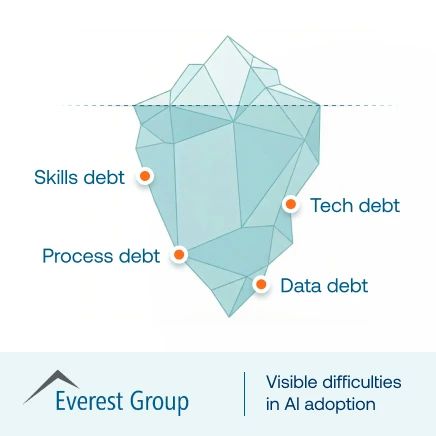
Core banking modernization programs often run into trouble when technical complexity, process redesign, risk controls, and workforce readiness are treated as separate workstreams instead of interdependent parts of the transformation. Here are five core traps banking IT teams often fall for when modernizing core systems:
1. Hidden Dependencies and Poor Data Readiness
Legacy cores often contain undocumented business rules, tightly coupled integrations, duplicate data, and local workarounds accumulated over decades. When these dependencies surface late, banks face migration delays, reconciliation issues, broken downstream workflows, and additional remediation work.
2. Scope Expands Without a Clear Business Outcome
Modernization programs lose momentum when teams prioritize feature parity, replicate legacy customizations, or add requirements without tying them to measurable outcomes. This increases cost and complexity while preserving inefficient processes that the modernization effort was intended to improve.
3. Testing Misses End-to-End Banking Workflows
Testing individual modules or integrations does not fully expose how real banking processes behave across systems, roles, approvals, controls, and exception paths. Weak end-to-end testing can lead to failed transactions, compliance risks, servicing issues, and operational disruption after go-live.
4. Employees Are Unprepared for Redesigned Workflows
New technology often changes how branch employees, operations teams, service agents, and other users complete critical tasks. Without role-based training, effective change management, and in-workflow guidance, users are more likely to make errors, rely on workarounds, and struggle to adopt redesigned processes.
5. Modernization Stops at Go-Live
Banks can complete a technical migration while still falling short of expected business value. Without ongoing digital adoption measurement, workflow analysis, support data, and accountable process owners, friction
A Core Banking Modernization and Value-Realization Roadmap
Use this eight-step roadmap to connect modernization decisions with operational continuity, employee readiness, and measurable business value.
1. Assess the Current Core and Build the Business Case
Start by identifying where the current core restricts growth, efficiency, resilience, or customer service. Involve application owners, IT, operations, product, data, risk, change leaders, support teams, and employees who use the system.
Assess:
- Core modules, applications, integrations, data, and batch processes
- Critical workflows, business rules, exceptions, and manual workarounds
- Support tickets, errors, control failures, and skills dependencies
- Run costs, change costs, release speed, and system performance
Use this baseline to define three to five measurable outcomes, such as faster product launches, fewer manual exceptions, higher straight-through processing, improved availability, or lower support demand. Assign accountable owners for the application, workflows, data, risk, adoption, and value realization.
2. Simplify What Will Move to the New Core
Avoid carrying outdated products, workflows, and customizations into the new environment. Review each capability with business, technology, operations, risk, and end-user representatives to determine whether it still creates value or meets a genuine control requirement.
Focus on:
- Consolidating redundant products, applications, and data stores
- Removing unnecessary approvals, handoffs, and manual workarounds
- Standardizing common workflows across products and regions
- Classifying each capability for retention, redesign, replacement, or retirement
This creates a focused migration scope and prevents the new core from inheriting the complexity that made the legacy environment difficult to change.
3. Define the Target Architecture and Operating Model
Design how the modernized core will support both technology operations and day-to-day banking work. Map its connections with digital channels, payments, lending, fraud, compliance, data platforms, and external partners.
The target operating model should define:
- Future workflows, roles, approvals, handoffs, and exception paths
- Data ownership, access, quality, and reconciliation
- Security, audit, privacy, resilience, and regulatory controls
- Service ownership, incident management, and employee performance support
- Where users will need automation, validation, user training, or in-app guidance
The outcome should be an agreed technical design, workflow model, control framework, and support structure.
4. Select the Modernization Approach and Sequence
Core modernization is rarely one all-or-nothing decision. Select the appropriate approach for each banking domain based on its condition, business value, urgency, dependencies, and migration risk.
- Optimize or encapsulate stable capabilities when access or integration is the main constraint.
- Replace progressively when specific domains such as deposits, lending, or payments restrict growth.
- Introduce a parallel core for separable products, markets, or customer segments.
- Replace the full core when it is unsupported or incompatible with the target operating model.
- Retire duplicate applications and low-value functionality.
Sequence the work around complete, measurable business workflows. Each wave should deliver value that employees can adopt while reducing the complexity faced by subsequent waves.
5. Prepare the Data, Integrations, Controls, and Workforce
Readiness extends beyond completing the technical build. Before migration, confirm that the data, controls, operating procedures, employees, and support teams are prepared for the new environment.
Preparation should include:
- Cleansing and mapping data with clear reconciliation rules
- Validating integrations, controls, permissions, and exception procedures
- Capturing undocumented business rules from experienced employees
- Assessing how each role, workflow, and responsibility will change
- Creating role-based communications, simulation-based training, process documentation, and performance support.
Set clear readiness criteria for data accuracy, control performance, employee proficiency, and support capacity. Migration should proceed only when both the system and its users can operate safely in the target environment.
6. Pilot the Technology and Prove User Readiness
Choose a domain that is contained enough to manage safely but meaningful enough to demonstrate value.
Use the pilot to test:
- Business rules, integrations, data movement, and reconciliation
- Performance, resilience, security, and regulatory controls
- End-to-end workflows, approvals, and exception handling
- Employee accuracy, time to proficiency, and support requirements
Let representative users practice critical workflows and failure scenarios in a production-like environment or software simulation. Define exit criteria before the pilot begins and scale only when transaction accuracy, operational readiness, and user proficiency meet the required thresholds.
7. Roll Out with In-App Support and Hypercare
Move products, accounts, or customer groups in controlled waves. Run the legacy and modern cores in parallel where necessary, and transfer additional volume only after balances, transactions, workflows, and controls have been reconciled.
Support each rollout with:
- Role-based onboarding for affected employees
- Contextual guidance and validation inside priority workflows
- Checklists, searchable self-help, and accessible SOPs
- Targeted change communication about process and system
- Clear escalation, rollback, and support procedures
Use structured hypercare to monitor incidents, errors, workflow abandonment, help usage, support tickets, and employee feedback. Resolve recurring friction before progressing to the next rollout wave.
8. Decommission the Legacy Core and Optimize Value
Modernization remains incomplete while the bank still pays for and depends on the legacy environment. Give decommissioning its own owner, budget, acceptance criteria, and deadline. Retire each component once its data, reports, integrations, and operational dependencies have been removed.
Compare results with the original baseline across:
- Technology: Availability, latency, incidents, and release frequency
- Operations: Processing time, errors, exceptions, and rework
- Adoption: Workflow completion, time to proficiency, help usage, and workarounds
- Business: Product-launch time, cost to serve, compliance, customer experience, and revenue impact
Use product analytics to identify friction by workflow, role, product, or region. Determine whether each gap requires changes to the platform, workflow, data, guidance, training, or support, and maintain a workflow optimization backlog until the expected value is realized.
Core Banking System Modernization Case Studies
These case studies show how financial institutions have used contextual guidance and self-service support to improve engagement, reduce support demand, and increase application value.
ICICI Bank Reduced Commercial Banking IT Support Tickets by 50%
ICICI Bank implemented Whatfix to replace email-based education with guided onboarding and contextual support inside its Corporate Internet Banking platform. Flows, Self Help, Task Lists, and Smart Tips helped customers independently manage users, add beneficiaries, and make payments, contributing to a 50% reduction in commercial banking IT support tickets and a five-point improvement in corporate customer NPS.
The takeaway from ICICI Bank’s transformation:
Digital self-service creates value only when customers can use it confidently. Contextual onboarding accelerates engagement while reducing service and support demand.
Old Mutual Reduced Advisor Support Calls by 33%
Old Mutual embedded Whatfix across two mission-critical advisor applications to replace difficult-to-scale training with contextual Flows, Self Help, and real-time updates. This helped Old Mutual reduce advisor support calls by 33%, achieve an 88% Self Help success rate within six months, and drive daily Whatfix engagement among 73% of advisors.
The takeaway from Old Mutual’s transformation:
Banks need to sustain adoption as applications, products, and regulations change. Embedded guidance and self-service support reinforce new workflows without increasing training or support capacity.
How Whatfix Accelerates Core Banking Value Realization
Core modernization creates the technology foundation. Whatfix helps banks translate that investment into consistent workflow execution by connecting pre-launch readiness, contextual guidance, self-service support, and user analytics across the transformation lifecycle.
Prepare Banking Employees Before Go-Live
Whatfix Mirror creates interactive replicas of banking applications where employees can practise new workflows without affecting production data or live operations.
Role-based simulations and assessments help transformation teams prepare tellers, relationship managers, loan officers, operations teams, and support staff for the processes they will perform. Teams can identify proficiency gaps before cutover and provide targeted remediation rather than relying solely on training completion rates.
Guide and Govern Banking Workflows in Production
Whatfix DAP overlays banking applications with contextual Flows, Smart Tips, Task Lists, field validation, Pop-Ups, and Beacons. These experiences guide employees through processes such as customer onboarding, account servicing, loan origination, payment processing, KYC, and exception management.
Guidance can be targeted by role, location, application, or user behavior. This helps banks reinforce approved processes, reduce user errors, communicate changes, and support consistent execution across branches, operations teams, and regions.
Deliver Support at the Moment of Need
Whatfix Self Help brings SOPs, policies, training resources, and process documentation into a searchable support center inside the applications. Employees can find relevant answers without leaving their workflow or raising a routine support request.
This embedded support reduces dependency on application-support teams while helping employees resolve questions during unfamiliar, infrequent, or high-risk tasks.
Identify Friction and Continuously Improve Performance
Whatfix Product Analytics tracks feature usage, workflow completion, abandonment, errors, and user journeys across role-based cohorts. In-app Surveys add qualitative feedback that helps teams understand why users encounter friction.
Application and process owners can use these insights to determine whether an issue requires changes to the platform, workflow, training, guidance, or support content. Measuring performance after each intervention creates a continuous optimization cycle tied to adoption, operational performance, and modernization ROI.
Explore Whatfix for digital banking and request a demo to see how Whatfix can accelerate user readiness, workflow adoption, and value realization across your banking technology stack.